
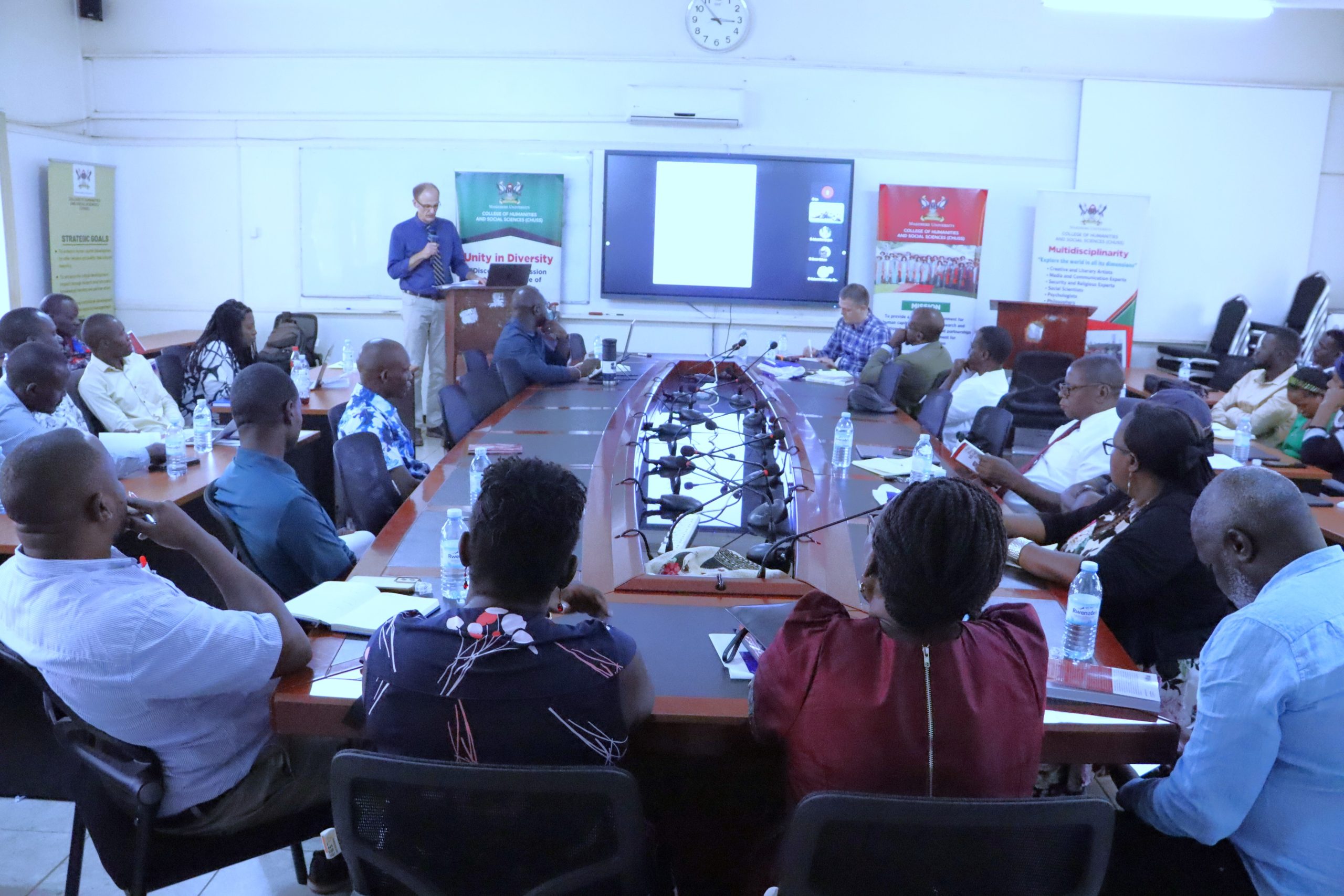
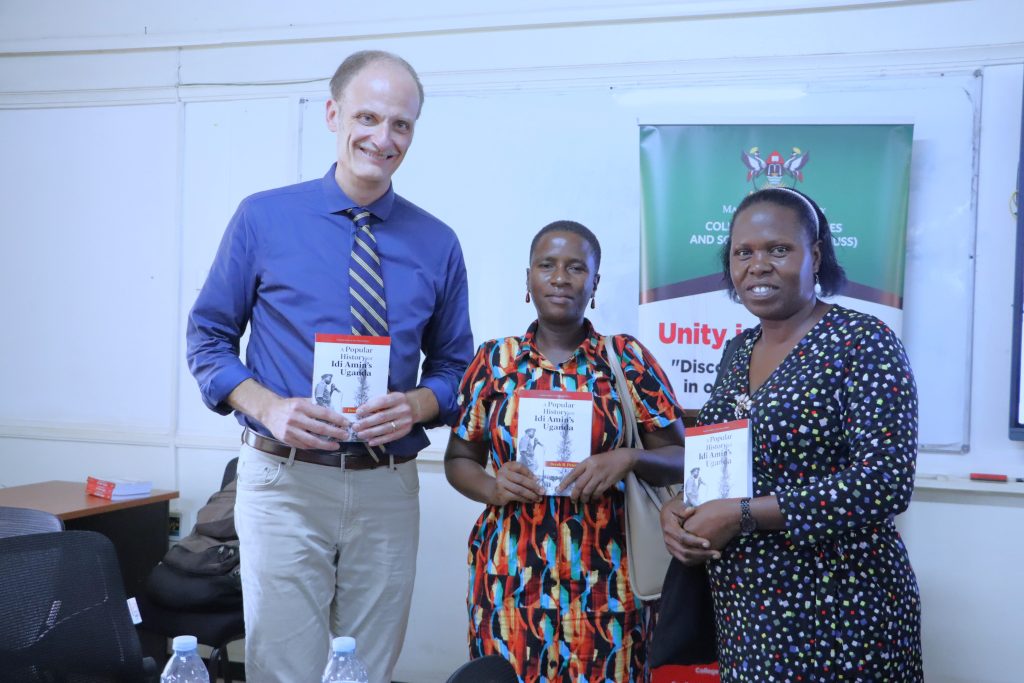
Scholars, legal professionals, and historians gathered at Makerere University on Wednesday 21st October for the official book launch of A Popular History of Idi Amin’s Uganda, authored by renowned historian Dr. Derek Peterson. The event, held in the smart room at the College of Humanities and Social Sciences (CHUSS), featured keynote reflections, critical reviews, and discussions on how ordinary citizens navigated life, bureaucracy, and agency under one of Africa’s most infamous regimes.
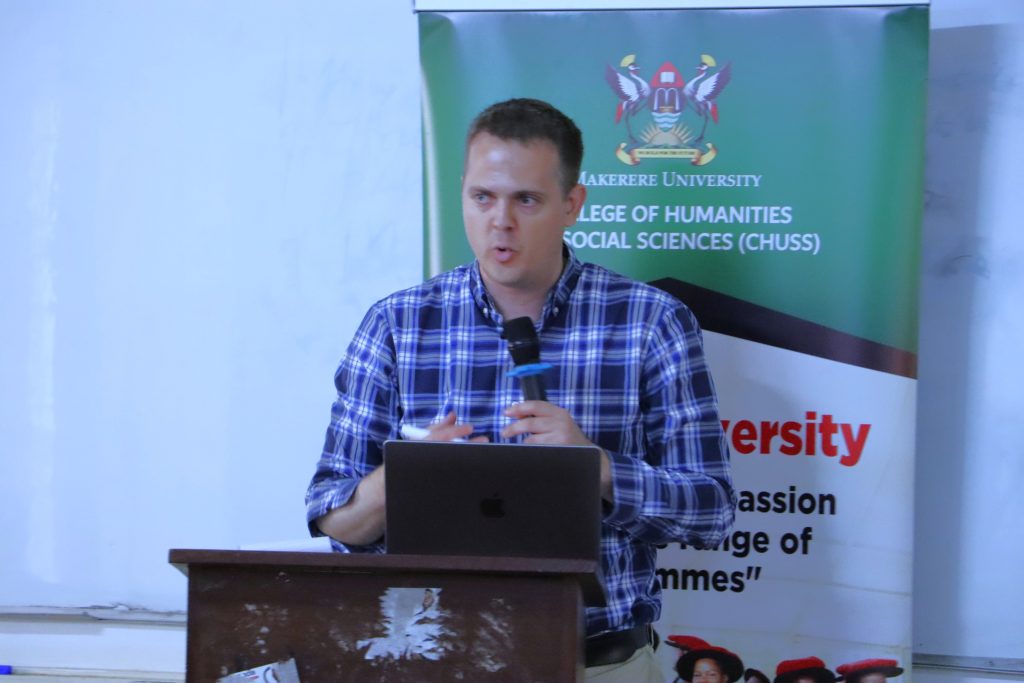
The publication is the culmination of 14 years of intensive archival preservation and research across Uganda. Speaking at the launch, Dr. Peterson detailed the arduous process of salvaging and digitizing vast collections of endangered government records from provincial attics, basements, and flood damaged facilities in districts such as Kabarole, Jinja, Kabale, as well as the archives of the Uganda High Court, Mengo Court, and the Uganda Broadcasting Corporation (UBC).
Reframing the Amin Era: Beyond the “State of Blood”
While traditional historical accounts often characterize General Idi Amin’s eight-year rule primarily through the lens of state violence and erratic dictatorship, Dr. Peterson’s work offers a nuanced counter perspective. The book explores “history from below,” detailing how ordinary Ugandans termed “commoners” actively engaged with state paperwork, local governance, and public life to carve out civic spaces and secure their survival.
“The men and women who served Idi Amin’s military government were prolific correspondents, inveterate writers of reports, and compulsive keepers of records,” Dr. Peterson noted during his address. “In a time of great uncertainty and overwhelming anxiety, people worked to secure their lives and reputations by making themselves inescapably present in government paperwork.”
Among the centerpiece narratives presented was that of Peter Wankulu, a sugar factory clerk from Jinja who produced complex cut and paste collage posters advocacy for Pan African unity and directly challenged both continental leaders and President Amin himself.
Panelists Praise Fresh Perspective and Archival Rescue
Guest speakers and reviewers commended the book for expanding the historical consensus without sanitizing or minimizing the regime’s well documented human rights abuses.
David Fredrick Kisitu Mpanga, an esteemed legal professional, reflected on the book’s ability to treat history not as a static autopsy, but as a dynamic tool for understanding contemporary governance.
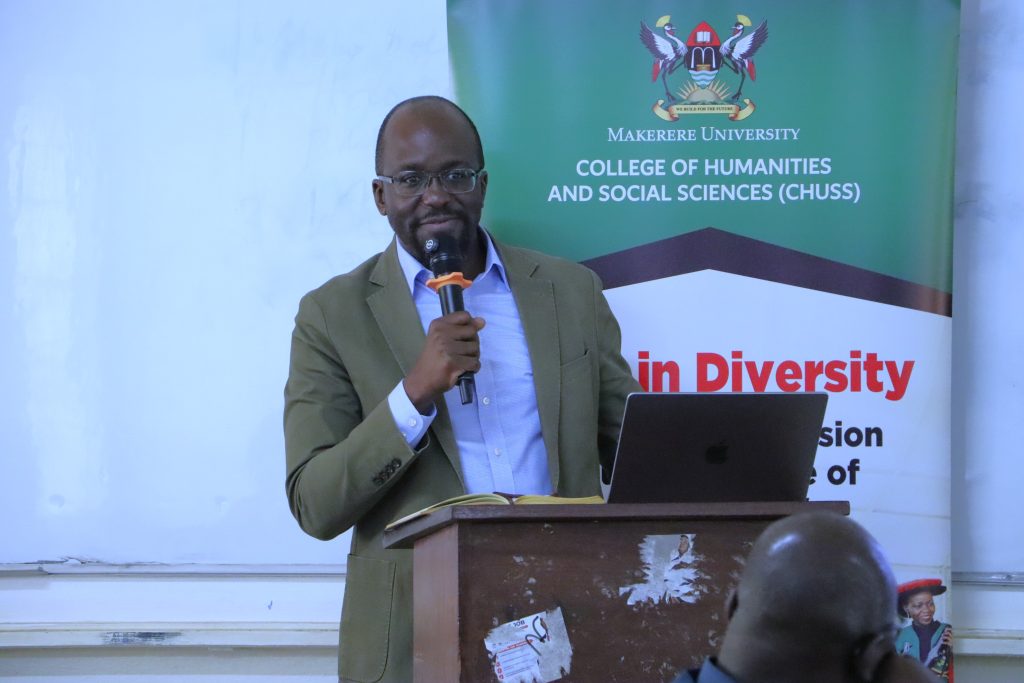
“Historians are not coroners standing over a corpse; they are doctors working on living beings, journalists documenting current realities, and prophets helping us understand the future,” the reviewer remarked. “Life went on under Amin. Bringing out these ordinary experiences isn’t revisionism it gives us a fuller, multi-dimensional picture of our past.”
Academic reviewers also highlighted the book’s alignment with broader scholarship on Ugandan political development, noting its examination of post-Amin political transitions such as the 1979 Moshi Conference and the United National Liberation Front (UNLF) which laid early foundations for modern Ugandan statecraft and military involvement in governance.
The Urgency of Preservation
The event concluded with a strong call to action regarding the state of institutional memory and record preservation in Uganda and across the African continent. Speakers pointed out the irony that one of the largest single digitized government archives in Africa currently resides at Mountains of the Moon University in Fort Portal a result of local collaborative preservation efforts rather than centralized state funding. Panelists urged public institutions, universities, and policy makers to prioritize modern digital archiving to prevent future loss of historical data as governance transitions increasingly to digital and mobile platforms.
The event was attended by members of academia, representatives from the Uganda Broadcasting Corporation, the Uganda Museum, and civil society organizations.
By Onesmus Atuhaire and Madeleine Kisuule