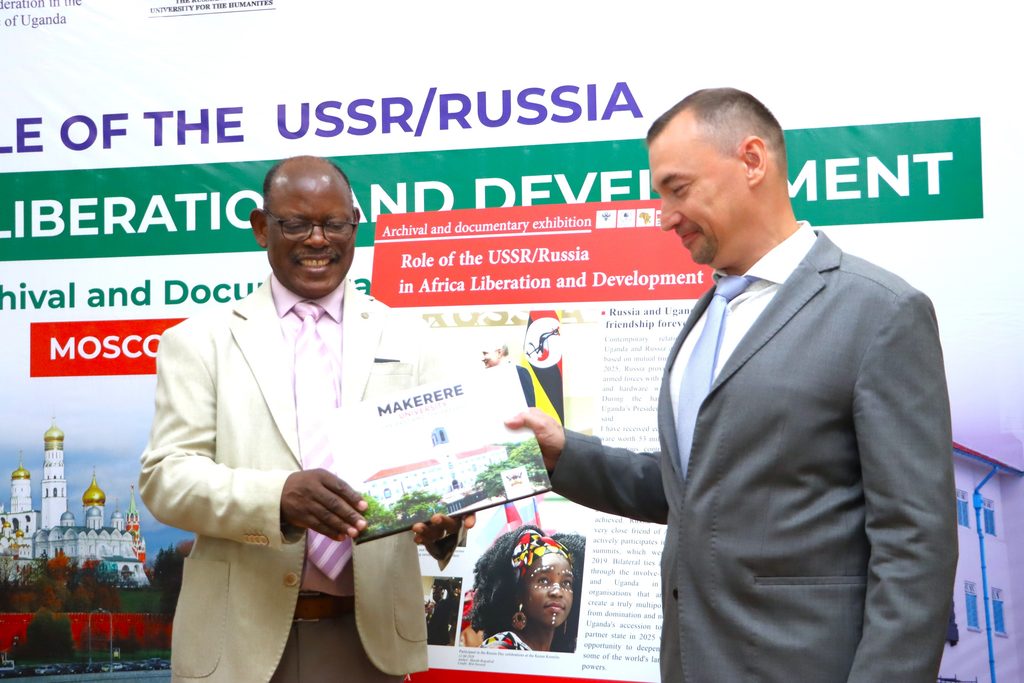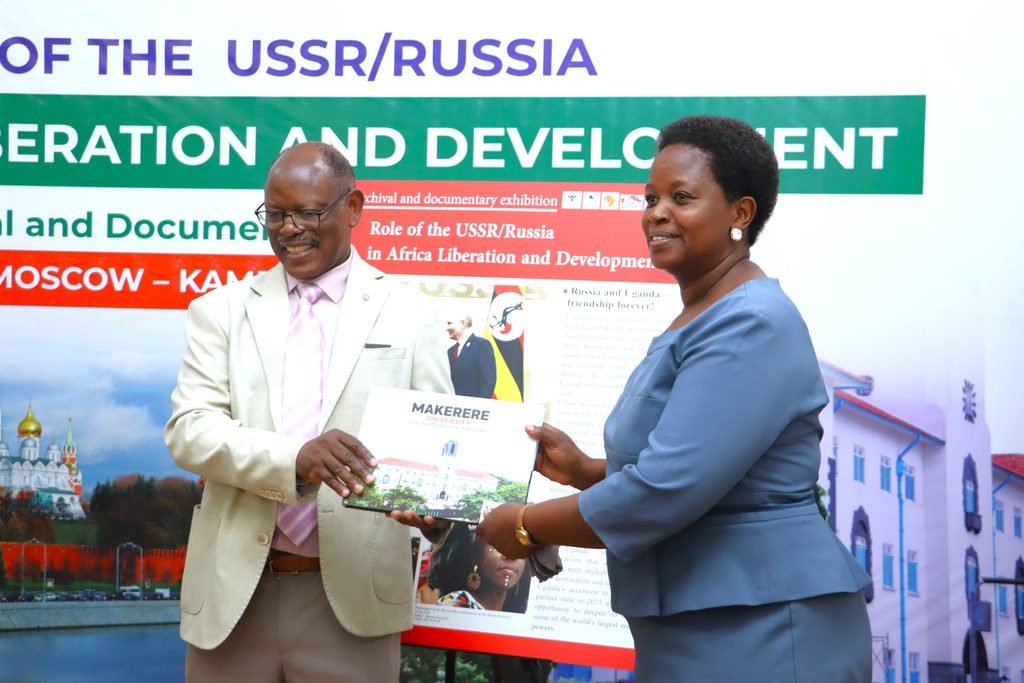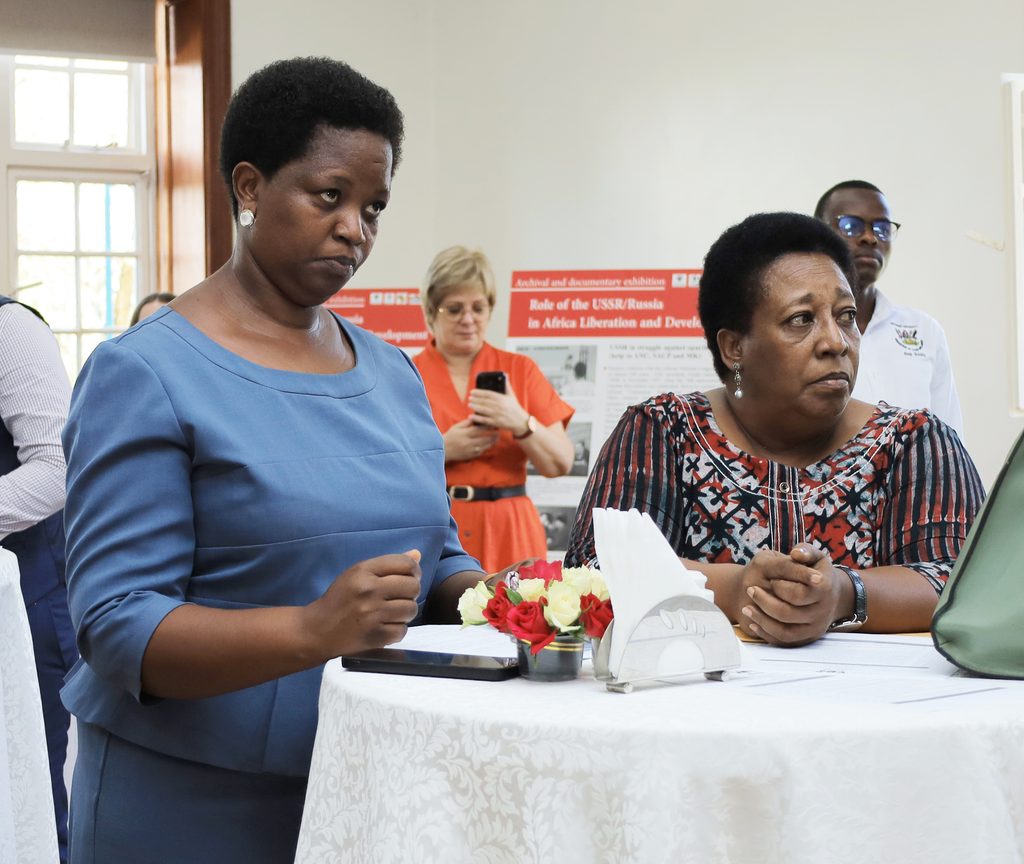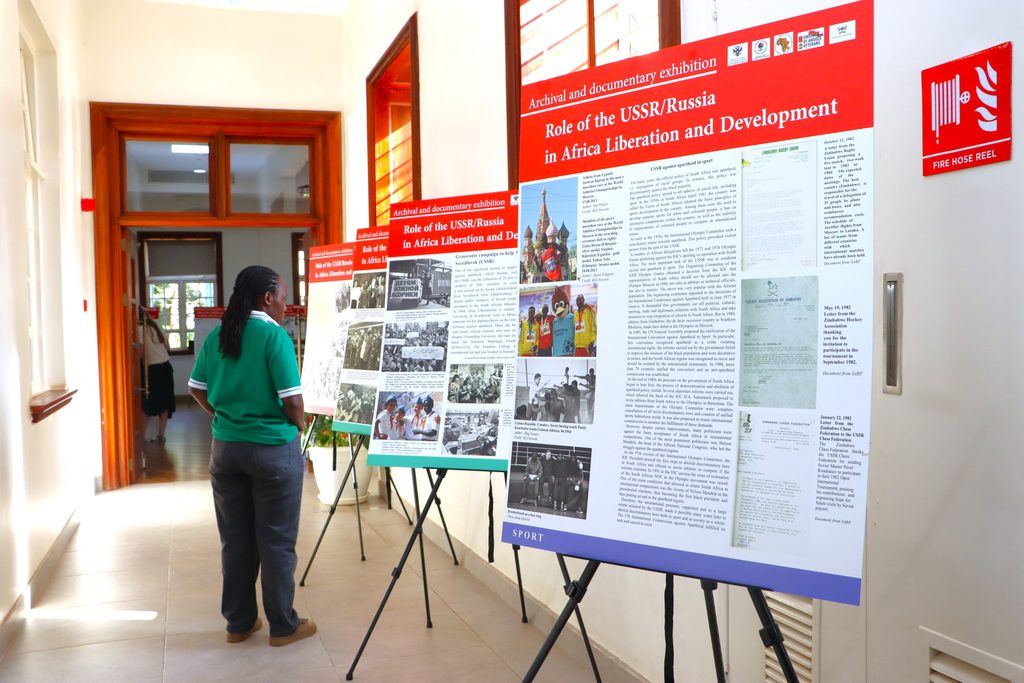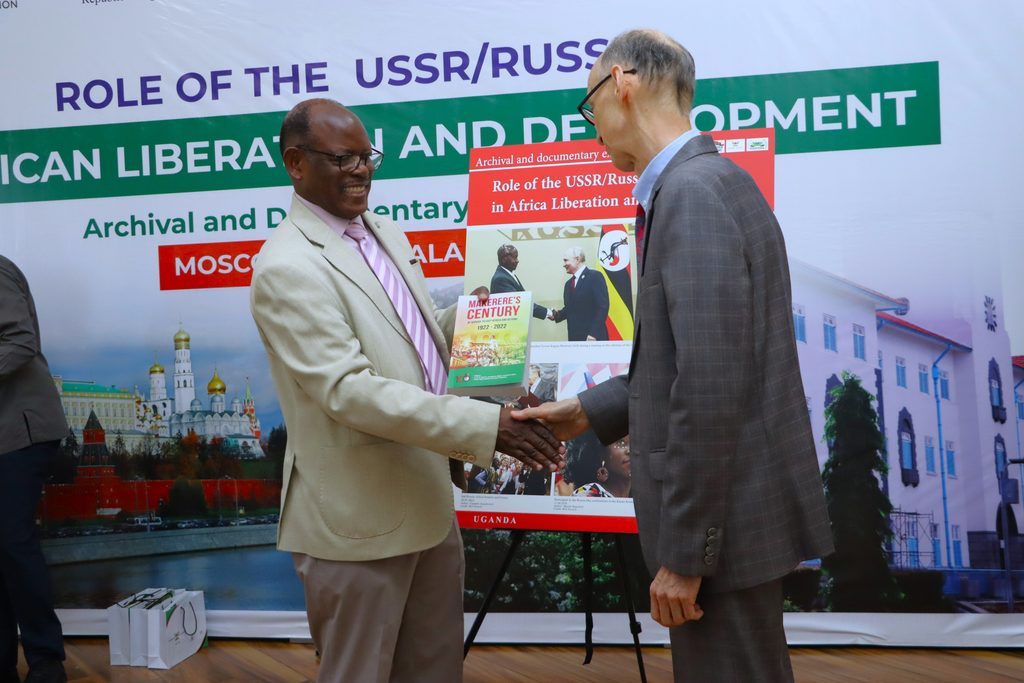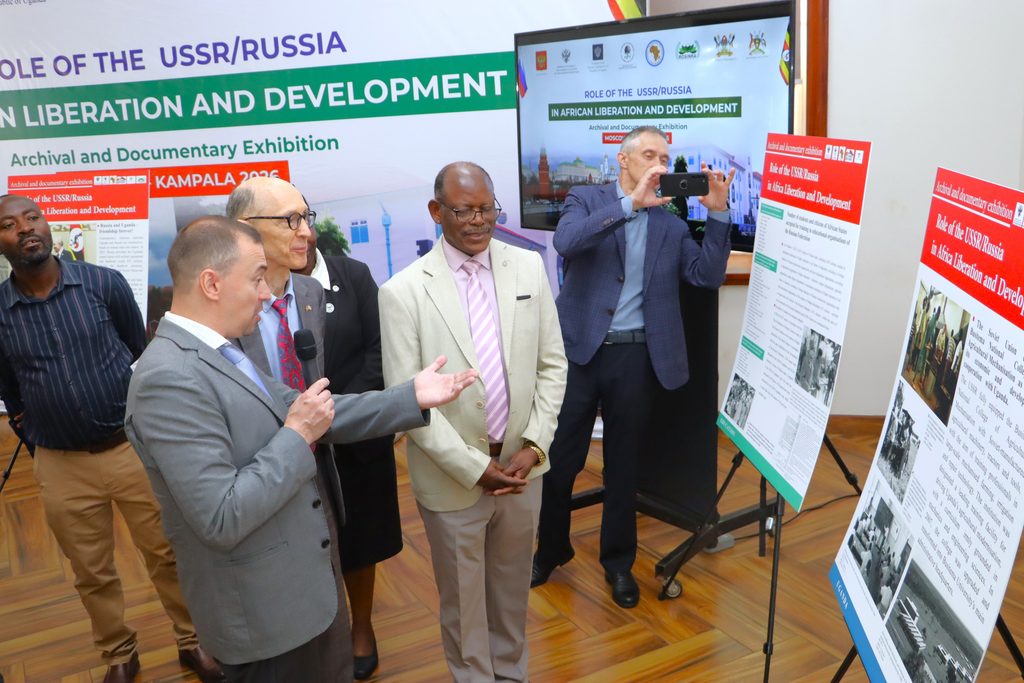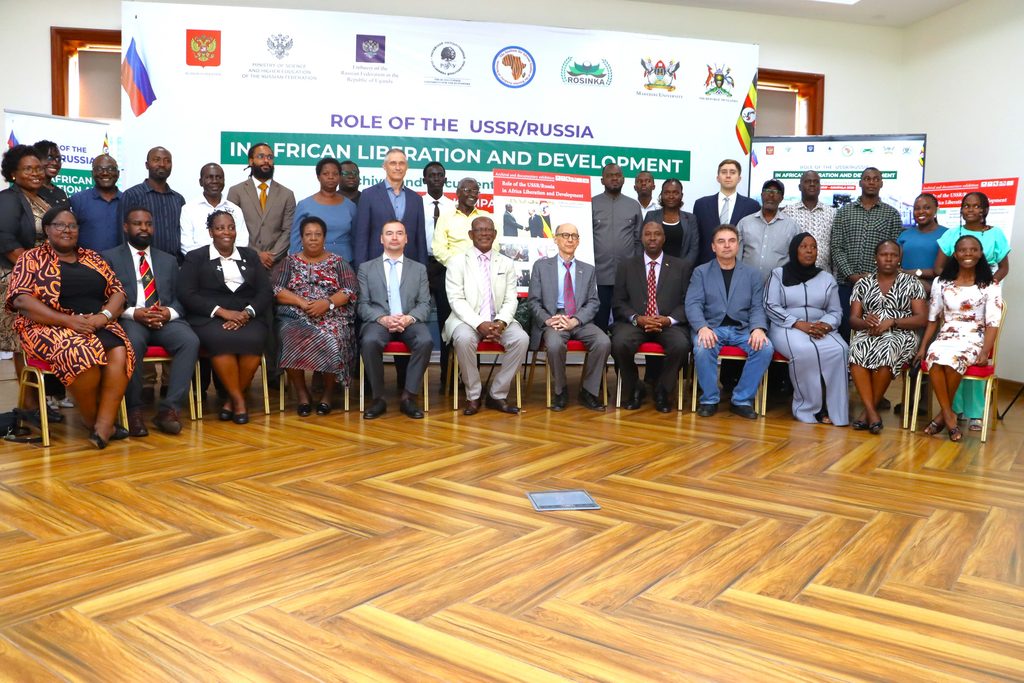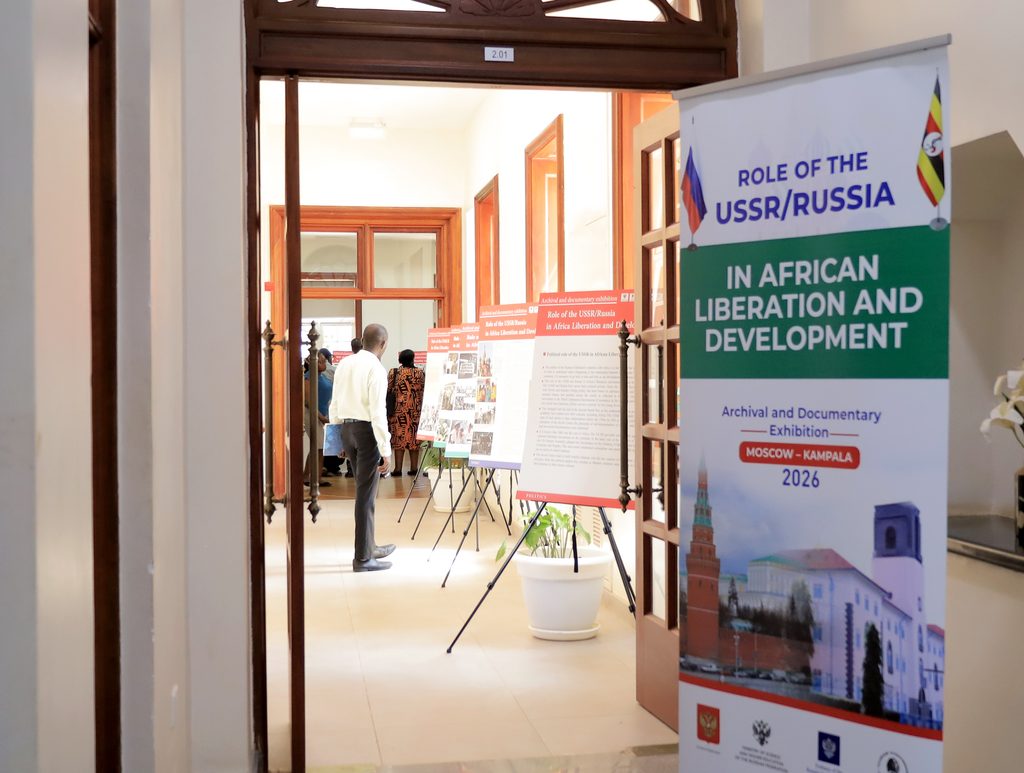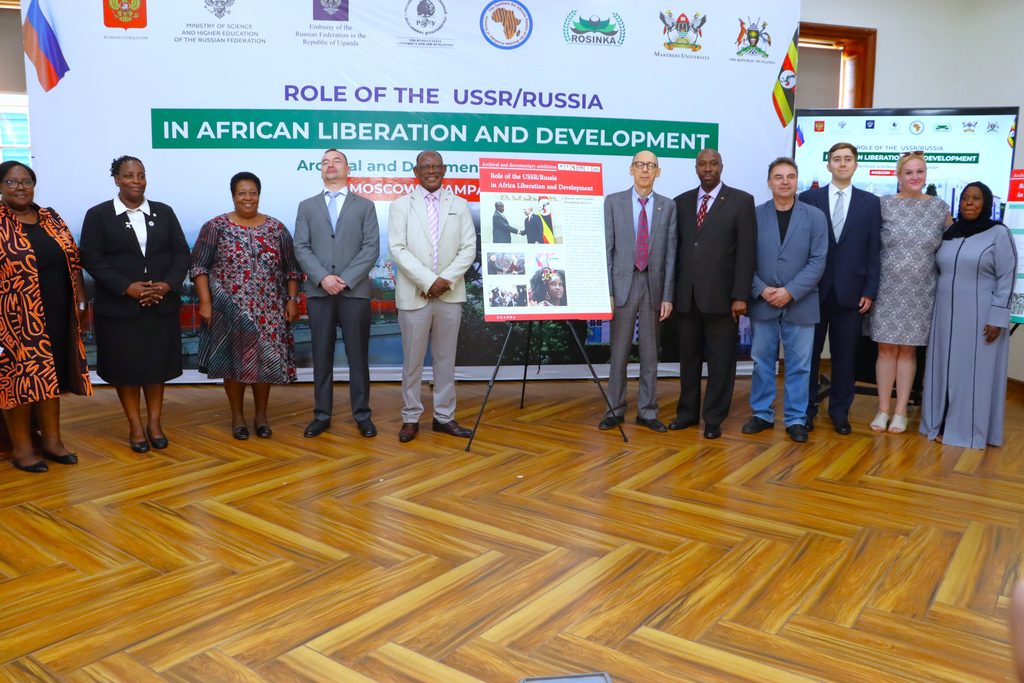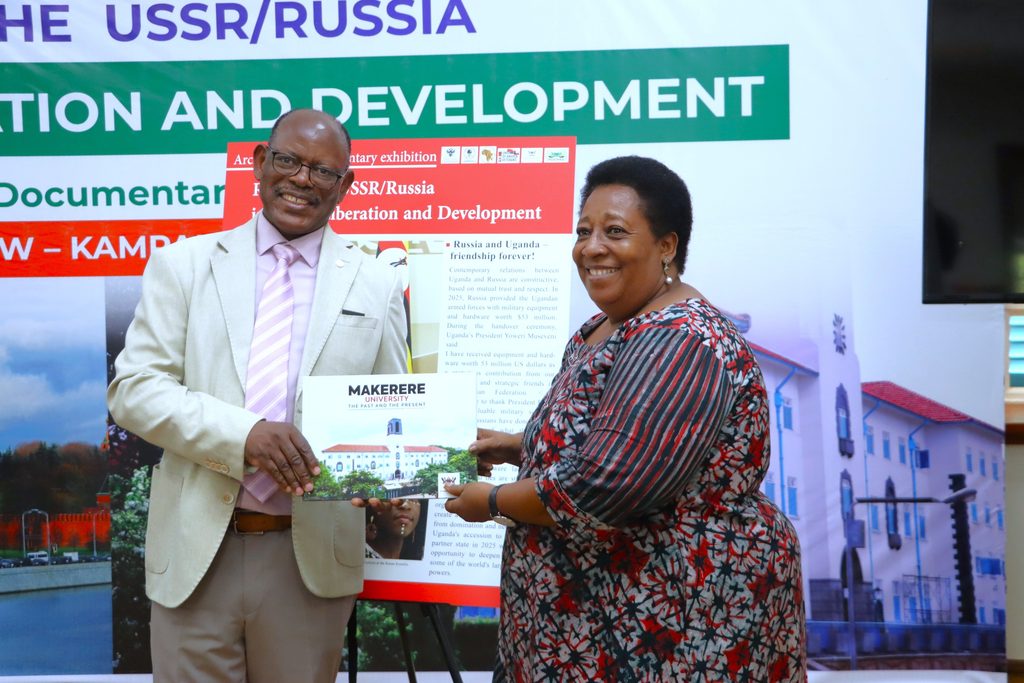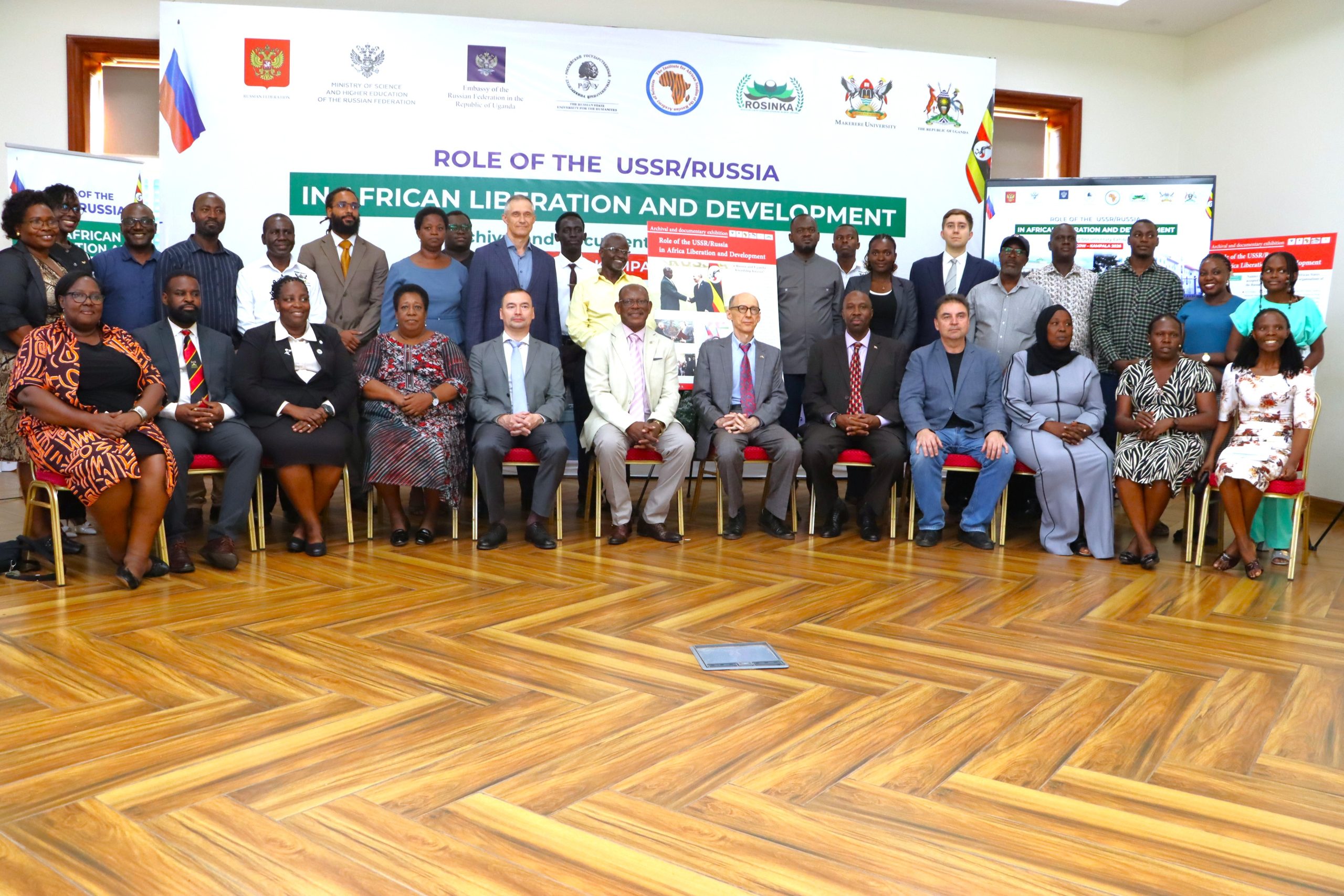
The exhibition highlights historical ties between Uganda and Russia while calling for stronger academic collaboration, historical research and educational partnerships.
Makerere University has hosted an archival and documentary exhibition examining the role of the former Soviet Union (USSR) and the Russian Federation in Africa’s liberation and development, highlighting decades of cooperation in education, agriculture, healthcare, industry and diplomacy. The exhibition will be mounted at the College of Humanities and Social Sciences for public viewing for a month.
The exhibition, titled The Role of the USSR/Russia in African Liberation and Development, was officially opened by the Russian Ambassador to Uganda, Sergey Lobanov, at Makerere University in Kampala. It brings together historical documents and archival materials that trace the Soviet Union’s support for African liberation movements and its contribution to the development of newly independent African states.
Organised by Makerere University’s College of Humanities and Social Sciences (CHUSS), through the Department of History, Archaeology and Heritage Studies, in partnership with the Russian State University for the Humanities and the Coordinating Council of Russian Compatriots in Uganda, the exhibition seeks to preserve shared historical memory and promote further academic and cultural cooperation.
Speaking at the opening, Makerere University Vice-Chancellor Prof. Barnabas Nawangwe called for recognition of Russia’s historical contribution to Africa’s liberation, arguing that understanding the past is important for appreciating present partnerships and shaping the continent’s future.
Russia’s historical contribution to Africa deserves recognition
Prof. Nawangwe, who studied in the former Soviet Union, reflected on the historical significance of Soviet support for African liberation movements and the development of Uganda after independence.
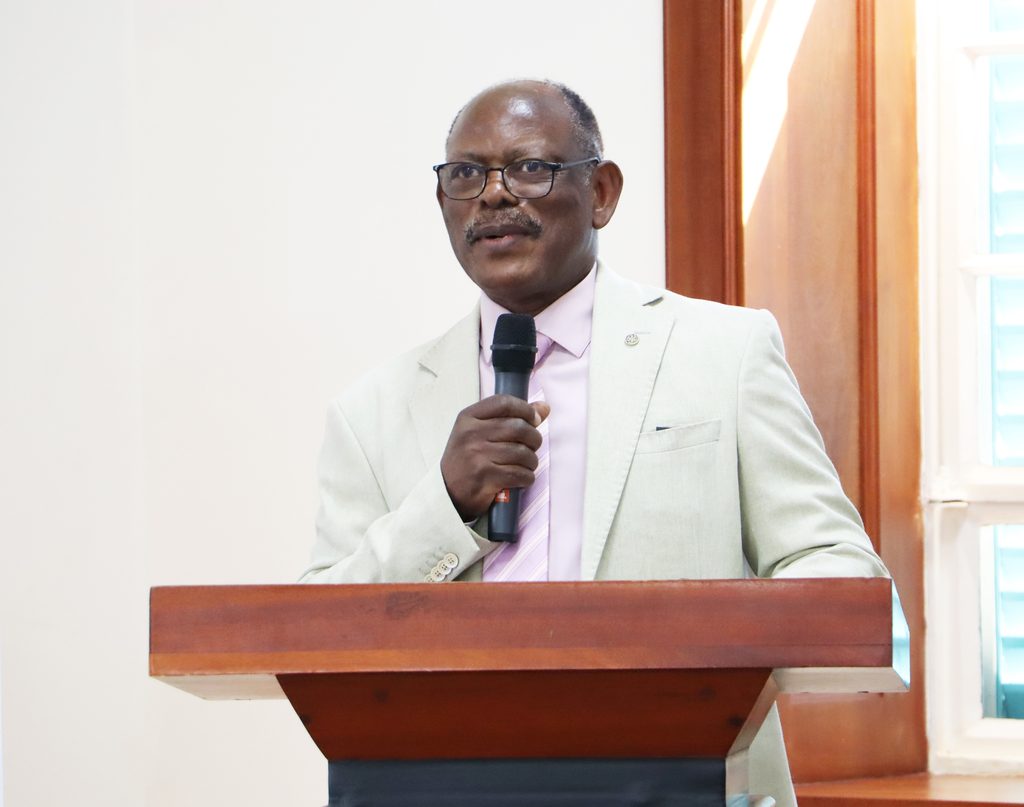
He noted that Russia’s contribution extended beyond political solidarity to practical investments in Uganda’s economy, including agricultural training, industrial development and scholarships for Ugandan students.
“I have tried to search everywhere and I realised that Russia had no role in slavery,” Prof. Nawangwe said, adding that he also found no Russian role in colonialism.
He argued that the Soviet Union’s support for African liberation movements and its contribution to the defeat of Nazi Germany formed an important part of the historical context in which Africa’s liberation struggles unfolded.
Prof. Nawangwe cited the establishment of a mechanised agricultural training institution at Busitema and the construction of a textile spinning mill in Lira as examples of Soviet-era cooperation intended to support Uganda’s productive capacity.
He also recalled that many Ugandans received scholarships to study in the Soviet Union, returning home to serve in different sectors, including education, medicine, engineering and public administration.
The Vice-Chancellor welcomed the exhibition as an opportunity for younger generations to learn about these historical connections, noting that many students today may have limited knowledge of the Soviet Union and its involvement in Africa’s liberation struggles.
He further highlighted the growing cooperation between Makerere University and Russian institutions, including emerging discussions around the theory of noonomy and plans to establish an African Centre of Excellence in Noonomy at Makerere.
“Our relations with the institutions in Russia are growing. They are on mutual understanding, mutual benefit, with no strings attached,” Prof. Nawangwe said, expressing optimism about the future of the partnership.
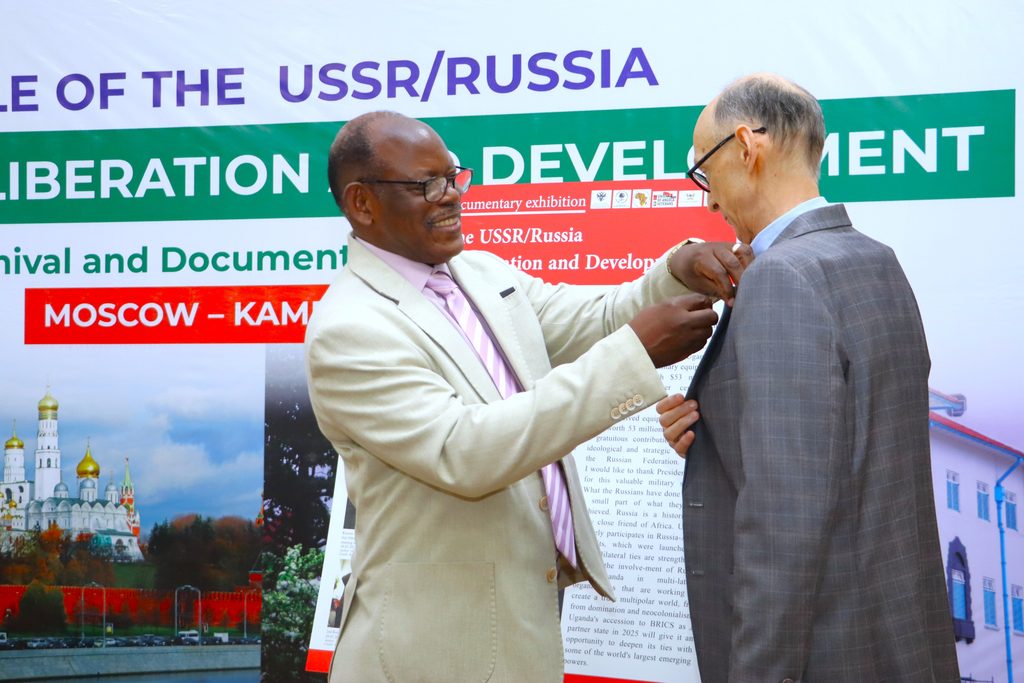
He encouraged students and visitors to engage with the exhibition and use its historical materials to deepen their understanding of Africa’s past and its international relationships.
Russia-Africa relations built on historical solidarity
Russian Ambassador Lobanov Sergey described the exhibition as evidence of the longstanding relationship between Russia and African countries, rooted in mutual respect, friendship and opposition to colonial rule.
He noted that the Soviet Union had supported African aspirations for independence and contributed to international efforts to end colonialism, including its role in the adoption of the United Nations Declaration on the Granting of Independence to Colonial Countries and Peoples.
“African friends remember, and we really appreciate it, that our country, which was the Soviet Union back then, supported their desire to break free from the shackles of colonial rule, of colonial dependence,” Ambassador Lobanov said.
He added that Soviet cooperation extended to the development of national economies, education and healthcare systems across Africa.
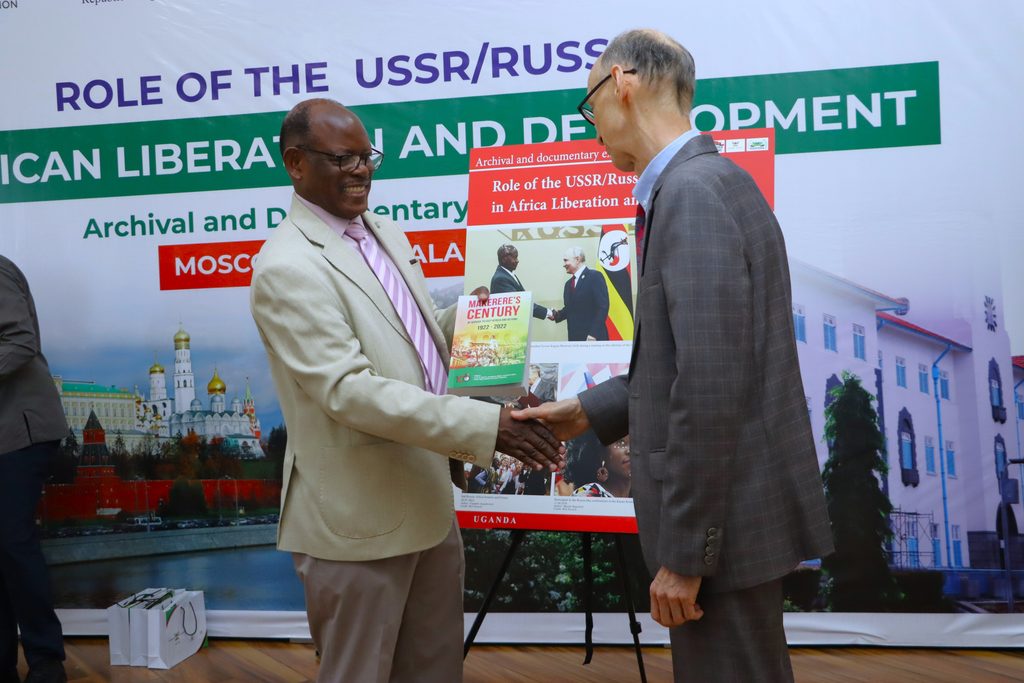
The ambassador observed that relations between Russia and African countries had evolved since the dissolution of the Soviet Union in 1991, with renewed emphasis on economic cooperation, diplomacy and partnerships within international and regional platforms.
He described Uganda as an important partner for Russia and expressed hope that the third Russia-Africa summit, scheduled to take place in Moscow, would provide further opportunities to strengthen bilateral relations.
Ambassador Lobanov thanked Makerere University, the Russian State University for the Humanities and the Coordinating Council of Russian Compatriots in Uganda for organising the exhibition.
He officially declared the exhibition open, commending the organisers for providing a platform through which the historical relationship between Russia and Africa could be explored and discussed.
Ministry of Education calls for stronger academic partnerships
Representing the Minister of Education and Sports and the Permanent Secretary, Chief Education Officer for Education Standards and Quality Assurance, Mary Frances Atima, said the exhibition provided an opportunity to reflect on the historical relationship between Uganda and Russia while identifying ways to strengthen cooperation in education and research.
She emphasised that educational partnerships remain important in building human capital, exchanging knowledge and developing the professional skills required for national development.
“The story of Uganda’s liberation and development cannot be fully understood without examining the contributions of international partners, the exchange of ideas and the role of education in preparing Africans to take responsibility for their country’s future,” Atima said.
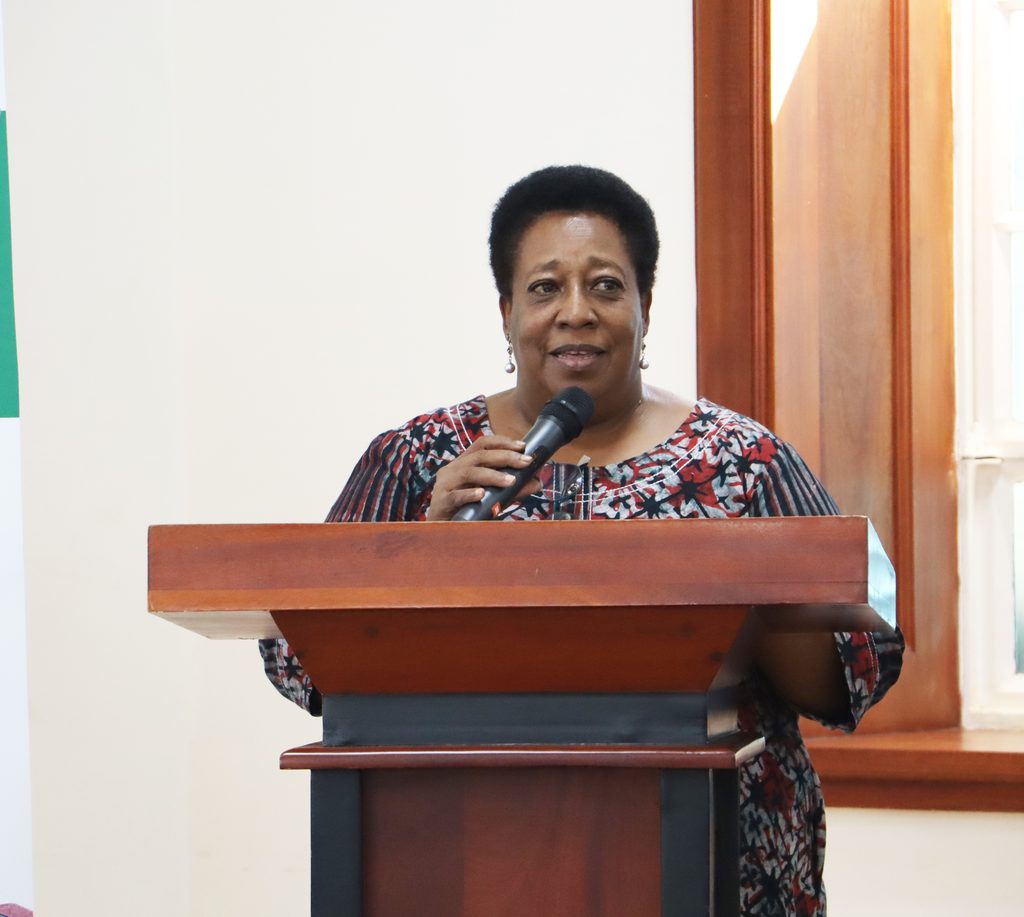
She noted that historical educational links between Africa and the Soviet Union had enabled many African students to pursue studies in medicine, engineering, agriculture, science and other disciplines essential to national development.
Atima said Uganda continues to prioritise human capital development, access to quality education, science, technology, engineering and mathematics (STEM), research and innovation under its national development agenda.
She identified scholarships and student exchanges, research collaboration, and language and cultural exchange as areas where Uganda and Russia could deepen their cooperation.
According to Atima, the Russian government currently offers Uganda a scholarship quota of 50 students annually. She encouraged the relevant institutions to widely publicise application requirements and deadlines to ensure that eligible students can access the opportunities.
She also called for partnerships to deliver measurable outcomes through student and staff exchanges, joint research publications, completed training programmes and improved graduate outcomes.
“Political relationships may evolve over time, but the knowledge acquired by a student, the skills developed by a researcher and the institutions strengthened through academic cooperation can benefit societies for generations,” she said.
Atima urged students and young researchers to explore the exhibition, engage with the historical materials and use the available digital resources and QR codes to support further inquiry.
Ministry of Foreign Affairs highlights Uganda-Russia diplomatic ties
Representing the Permanent Secretary of the Ministry of Foreign Affairs, Karugaba Michael Abooki said Uganda’s diplomatic relationship with the Soviet Union was established shortly after independence, laying the foundation for decades of political, educational and technical cooperation.
He noted that Uganda established diplomatic relations with the Soviet Union on 13 October 1962, four days after independence, and opened its embassy in Moscow in 1964.
Abooki said the relationship had evolved from solidarity during the struggle against colonialism to a broader partnership focused on economic development, scientific cooperation and investment.
“For the nations that were still colonies, this voice of solidarity of the Soviet Union mattered a lot because it brought hope that a world superpower was now advocating for our freedom,” he said.
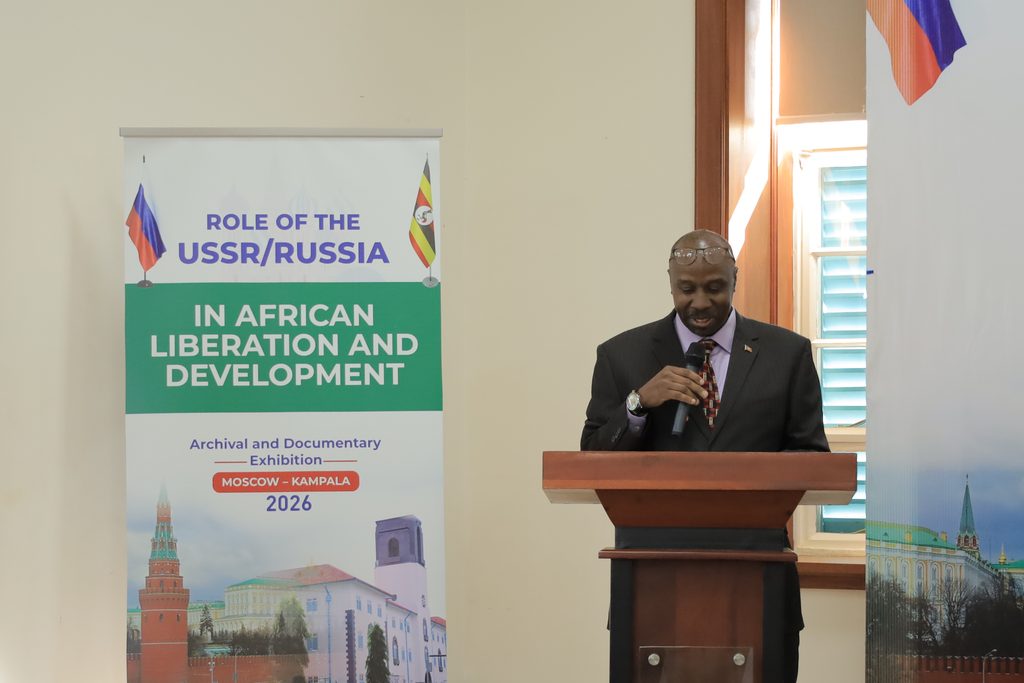
He explained that Ugandans who studied in Soviet and Russian universities returned home to contribute to national development as doctors, engineers, agronomists, teachers and administrators.
Abooki further noted that the establishment of the Uganda-Russia Intergovernmental Commission on Economic, Scientific and Technical Cooperation in 2015 provided a framework for advancing bilateral development priorities.
He said Uganda’s partnership with Britain, Russia, India, China and South Africa (BRICS), which began in January 2025, also offered opportunities to expand cooperation in trade, finance, technology and other areas.
He highlighted agro-industrialisation, tourism, manufacturing, science, technology and innovation as priorities under Uganda’s tenfold growth strategy, alongside energy, information and communication technology, and human capital development.
Abooki encouraged Makerere University and other Ugandan institutions to strengthen academic exchanges, collaborative research and partnerships with Russian universities.
“Our friendship with the Soviet Union and Russia today began with a hope for independence, but is now being built on a new foundation for prosperity,” he said.
Russian State University for the Humanities calls for preservation of historical memory
In a recorded address, Prof. Vera Zabotkina, Acting Vice-Rector for International Cooperation at the Russian State University for the Humanities, described the exhibition as part of a wider academic project supported by Russia’s Ministry of Science and Higher Education and implemented in collaboration with Makerere University.
She said the exhibition examines colonialism and the liberation struggles that shaped the political and social development of African countries.
Zabotkina highlighted Uganda’s early diplomatic and economic ties with the Soviet Union, including agreements signed in the 1960s and subsequent cooperation in industry, agriculture and healthcare.
She cited Soviet assistance in the establishment and equipping of an agricultural training institution at Busitema, the development of the textile industry in Lira and medical support to Mulago National Referral Hospital.
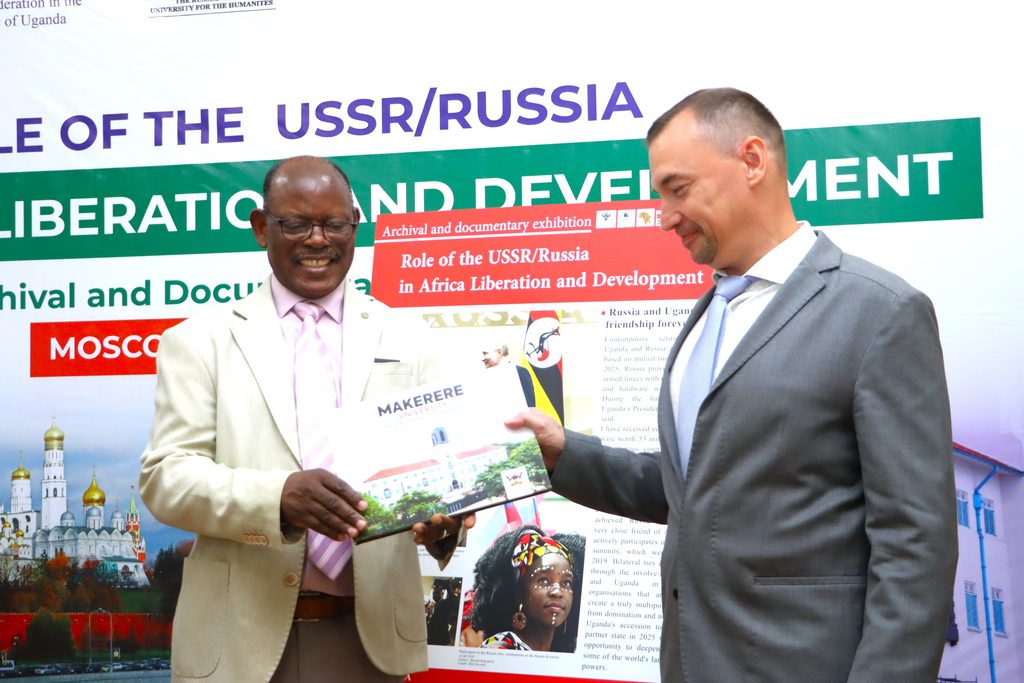
She said the exhibition draws on documents from state and private archives and covers military, health, political, cultural, educational and sporting assistance.
“It is not enough to protect the tangible heritage. It is important to build on it,” Zabotkina said, stressing the importance of preserving historical memory for future generations.
She expressed hope that the exhibition would encourage constructive dialogue between Uganda and Russia and create opportunities for further academic engagement.
Exhibition presents a pan-African perspective
Dr. Alexander Zotin, Director of the Centre for African Studies, said the exhibition was designed to examine the Soviet Union’s involvement in Africa’s liberation struggles from a continental perspective rather than focusing on one country.
He explained that the exhibition formed part of a broader project that had been presented at several locations, including Zimbabwe and South Africa.
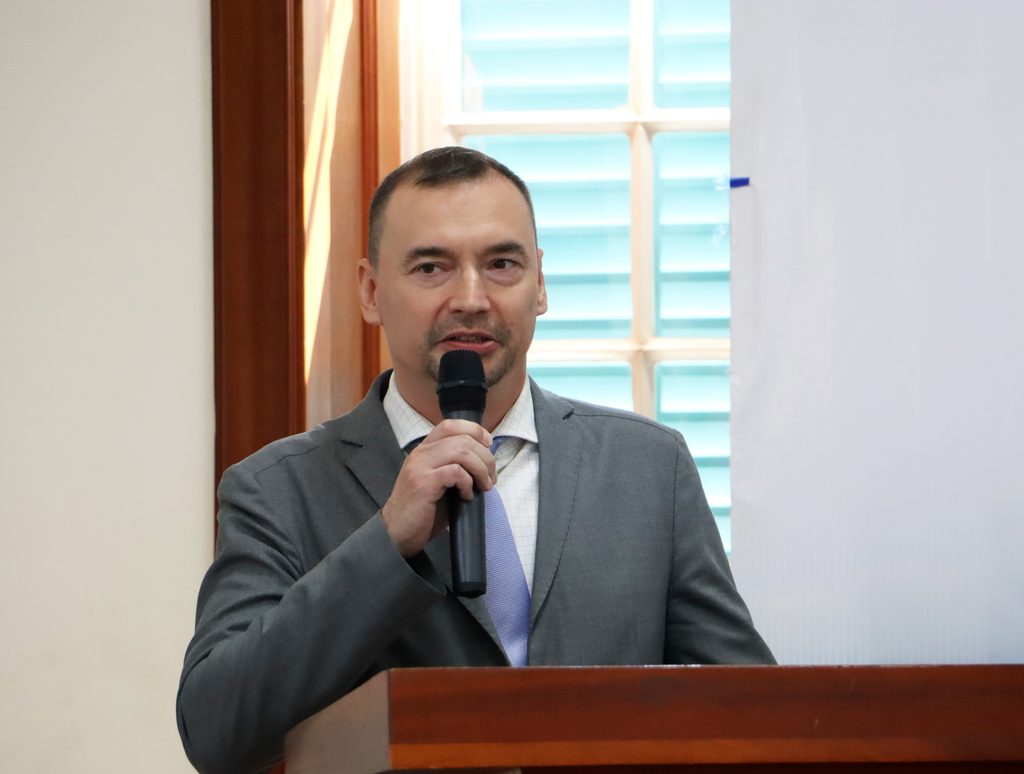
“The theme of our exhibition is the role of the Soviet Union and Russia in African liberation,” Zotin said, noting that the materials document support for liberation movements in Angola, Mozambique, Zimbabwe and South Africa.
He argued that the exhibition was relevant beyond historical study because it offered an opportunity to reflect on continuing struggles against oppression and the importance of human rights.
Zotin invited scholars and students from Makerere and other universities to visit the exhibition and use the materials to advance research into African history and international relations.
Dr. Mikhail Smirnov reflects on personal encounters with Uganda
Associate Prof. Mikhail Smirnov, representing the Institute of Eurasian and Oriental Studies, shared his personal experiences of engaging with Africa over nearly four decades.
A scholar of Swahili at the Russian State University for the Humanities, Smirnov recalled his early work with the Novosti Press Agency in Dar es Salaam and his encounters with Ugandan journalist Robert Kiwanuka during a visit to the Soviet Union.
He said the experience deepened his understanding of the historical experiences shared by African and Soviet peoples, particularly the suffering caused by war.
Smirnov recalled visiting memorial sites with Kiwanuka, including Khatyn in Belarus and a cemetery commemorating victims of the siege of Leningrad.
He said the visits prompted reflections on the effects of war and the importance of remembering the human cost of conflict.
“I hope all our guests at the exhibition enjoy viewing it, and I wish prosperity to the peoples of our countries, and may our traditionally fruitful ties continue to grow together,” he said.
Prof. Robert Wamala calls for research that informs society
Representing the Deputy Vice-Chancellor for Academic Affairs, Prof. Sarah Ssali, the Director of Research, Innovation and Partnerships, Prof. Robert Wamala, commended the organisers for bringing together scholars, diplomats and institutions to examine the historical relationship between Russia and Africa.
He said the exhibition aligned with Makerere University’s ambition to strengthen its position as a research-led institution whose work contributes to practical solutions and societal development.
“History is not merely a record of the past. It is a source for understanding the present and informing the future,” Wamala said.
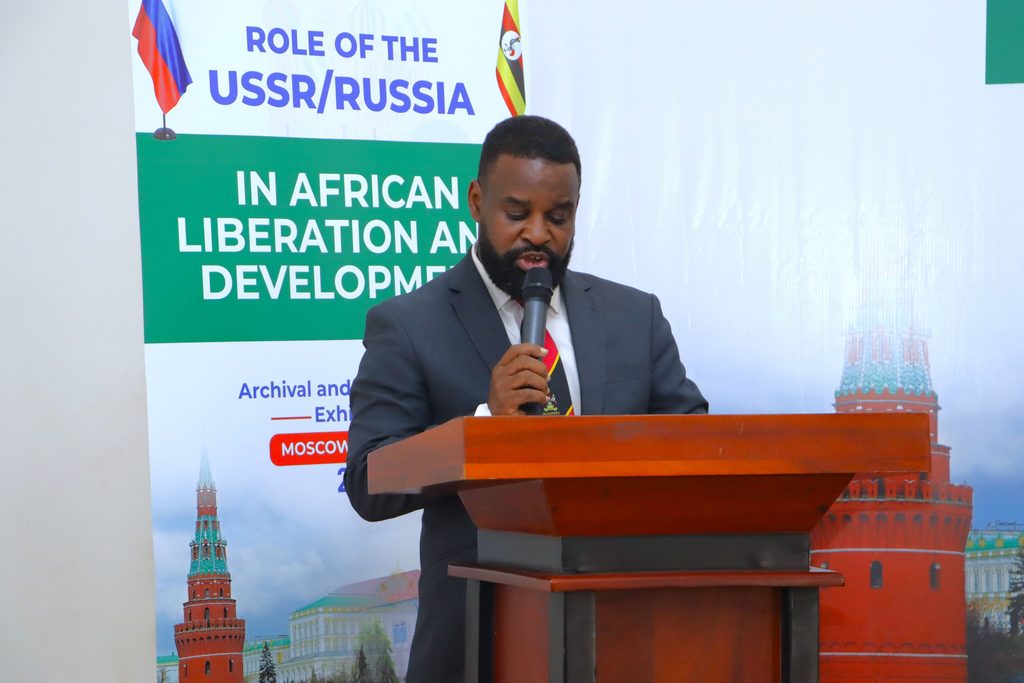
He encouraged researchers to use the exhibition as a starting point for further scholarly inquiry into Uganda’s liberation history, foreign relations and international partnerships.
Wamala also called on the participating institutions to sustain their collaboration beyond the exhibition and translate it into lasting academic value through research, knowledge exchange and joint initiatives.
He thanked the organisers, partner institutions, scholars, activists, diplomats and students whose contributions had made the exhibition possible.
Prof. Sauda Namyalo pledges stronger language and research collaboration
In her vote of thanks, the Dean of the School of Languages, Literature and Communication, Prof. Sauda Namyalo, commended the Russian government for supporting the teaching of Russian in Uganda.
She said the programme had enabled nearly 400 Ugandans to study the language free of charge, expanding opportunities for cultural exchange and international engagement.
Namyalo also highlighted discussions on strengthening collaboration between Makerere University and Russian institutions in research, curriculum development and academic exchange.
“As a linguist and Dean of the School of Languages, Literature and Communication, I was excited that the Russian State University has a very vibrant department of linguistics, where they teach Kiswahili and African Studies,” she said.
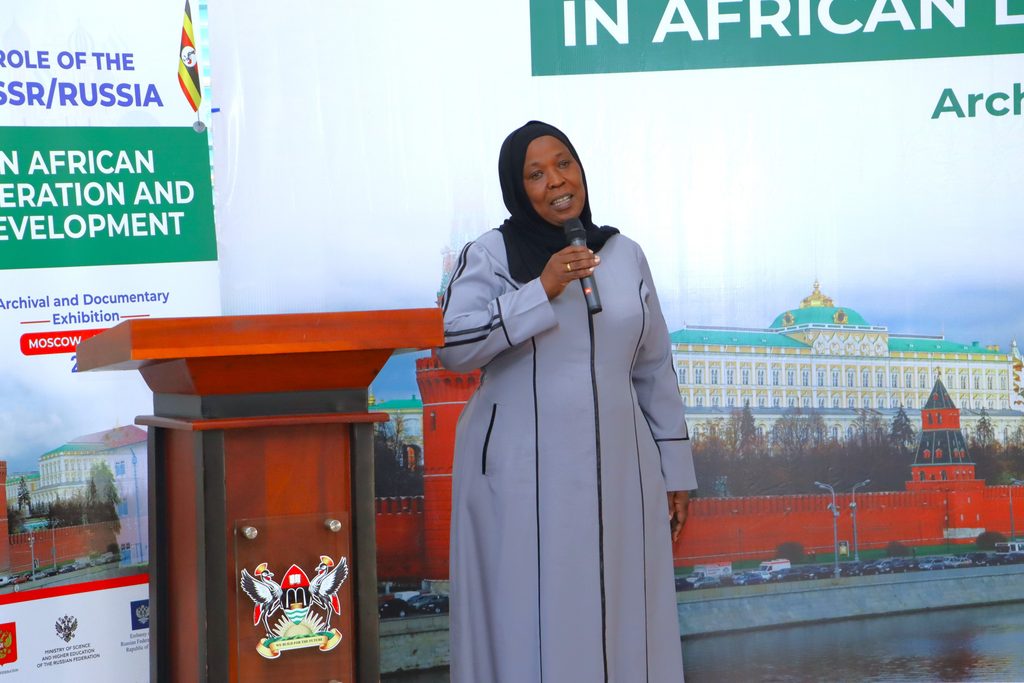
She pledged that Makerere would work to deepen the relationship, including through opportunities for scholars from both countries to visit and work with their counterparts. The exhibition underscores the importance of archival preservation and critical historical inquiry in understanding Africa’s liberation and development. By bringing together historical materials and perspectives from Uganda and Russia, the initiative offers students, researchers and the wider public an opportunity to examine the past while exploring avenues for future academic cooperation.
Story by Jane Anyango
Photo credits: Peninah Nalubega and Onesmus Atuhaire