
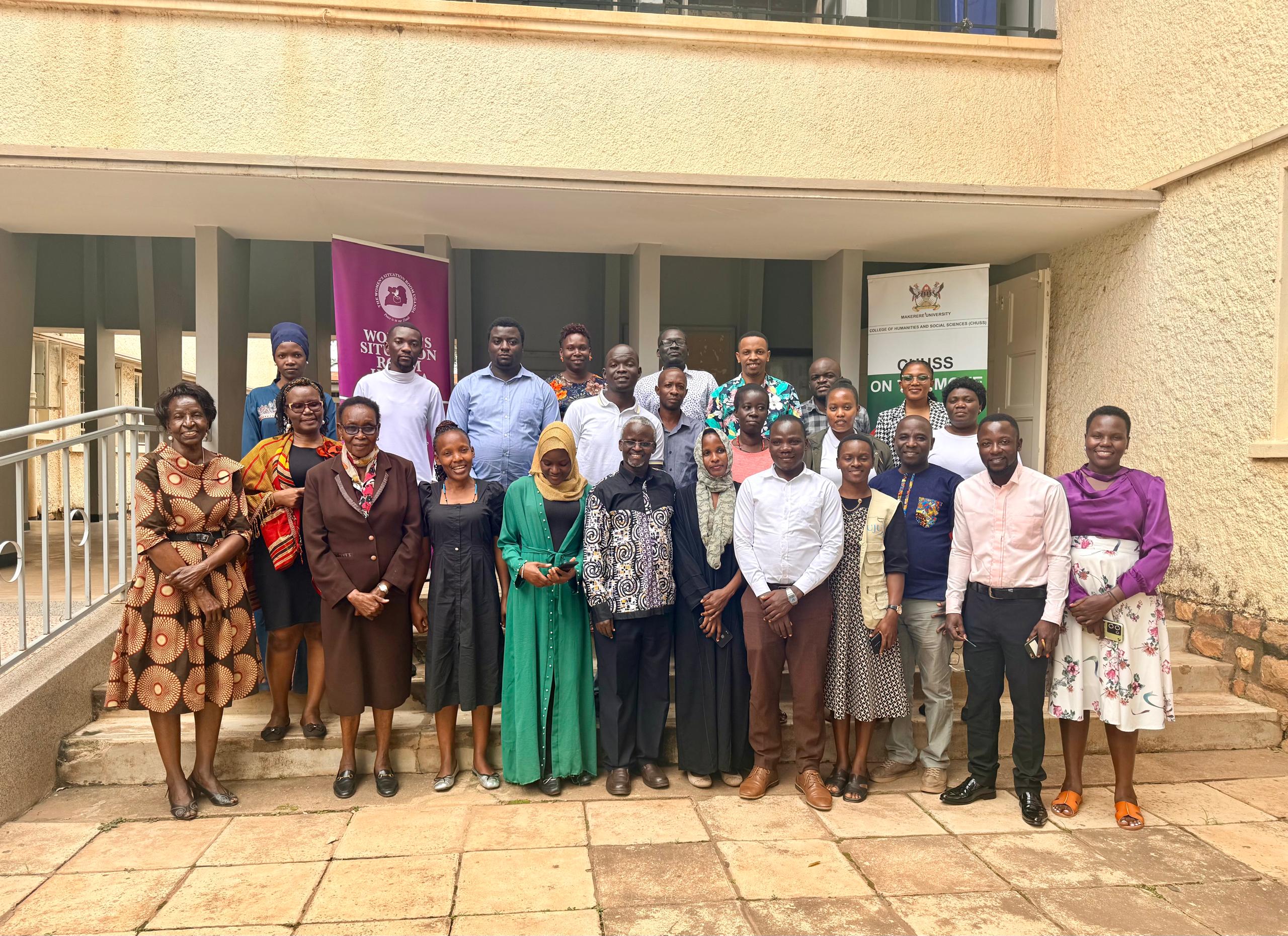
Kampala, Uganda – January 9, 2026
Ahead of the January 15 general elections, Ugandan journalists have undergone specialized training on peace and gender-sensitive reporting to ensure responsible media coverage during the election period. The two-day training, held from 8th to 9th January 2026 at Makerere University’s College of Humanities and Social Sciences Smart Room, was organized by the Women’s Situation Room (WSR) in partnership with various stakeholders and brought together journalists from across print, broadcast, and online platforms.
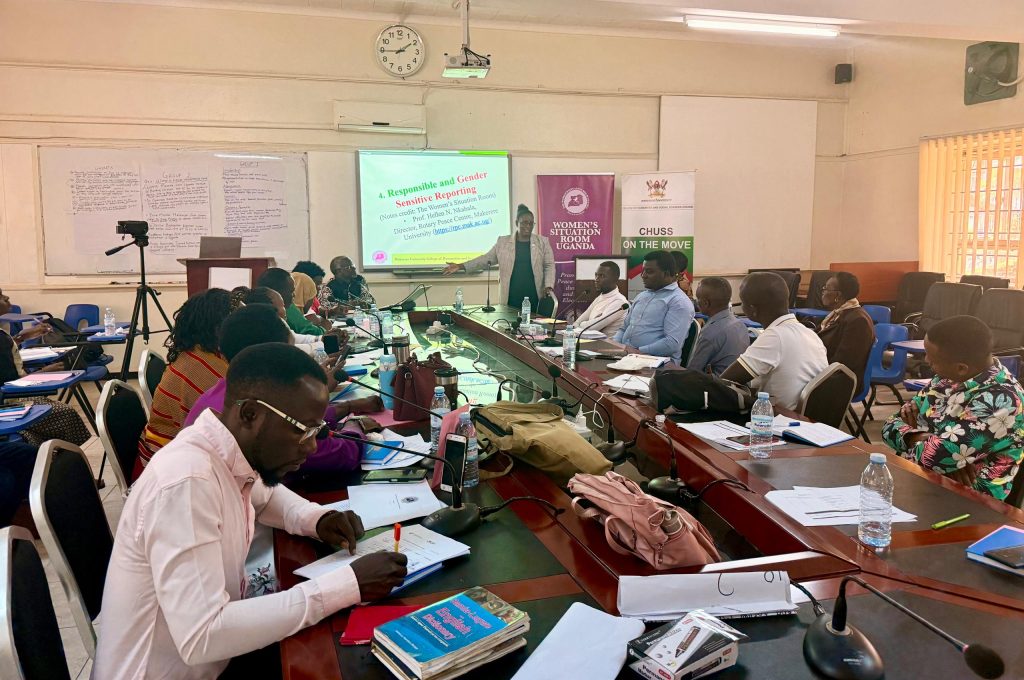
The main objective of the training was to strengthen the capacities of media in reporting and documenting electoral processes in a responsible and gender-sensitive manner. The specific objectives included: strengthening journalists’ skills to cover the 2026 elections in a fair, balanced, gender-sensitive, and non-violent partisan way; enhancing the role of media to enable citizens to be well-informed and actively participate in the election process; ensuring focused and balanced reporting on peace during and after elections; and strengthening partnerships between the WSR and media houses during the election period.
The training covered multiple critical modules. Day one focused on responsible conflict-sensitive reporting, emphasizing principles such as balance, impartiality, and accuracy. Participants explored the role of media as a relayer of the population’s voice, election monitor, catalyst for social cohesion and reconciliation, contributor to the accountability of political actors, and a platform for detecting and debunking digital media misinformation and hate speech.
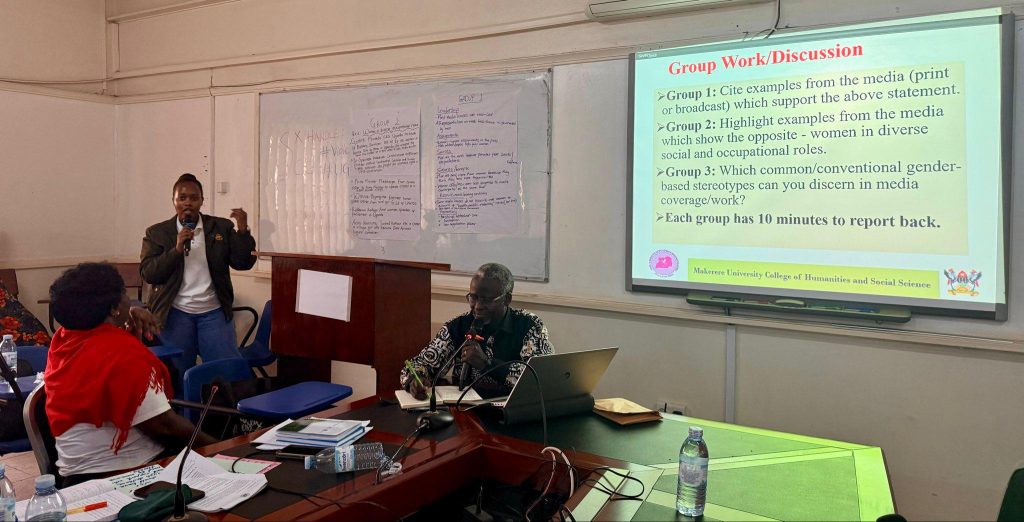
Day two addressed responsible and gender-sensitive reporting. Key aspects included the definition of gender-sensitive reporting, how to become a gender-sensitive reporter, critical elements in reporting with gender awareness, packaging gender-sensitive stories, and a checklist for detecting and avoiding gender-insensitive reporting.
Her Lordship, retired Judge Justice Mary Mayitum, emphasized the importance of peace as the foundation of development and democratic engagement. “Because we value peace more than anything. Without peace, really, you can do nothing. But where there is peace, you can have time to reflect, discuss with others, and join in meaningful dialogue,” she said. She warned that the country’s past conflicts, such as those in Gulu, underscored the necessity of maintaining national harmony.

Justice Mayitum also urged other key election stakeholders to uphold peaceful conduct. “Being peaceful is the very heart of life. We have spoken to police, security personnel, political parties, and the Electoral Commission. We want politicians to have a code of conduct and to understand that it’s okay to think differently without fighting or hating one another,” she added.
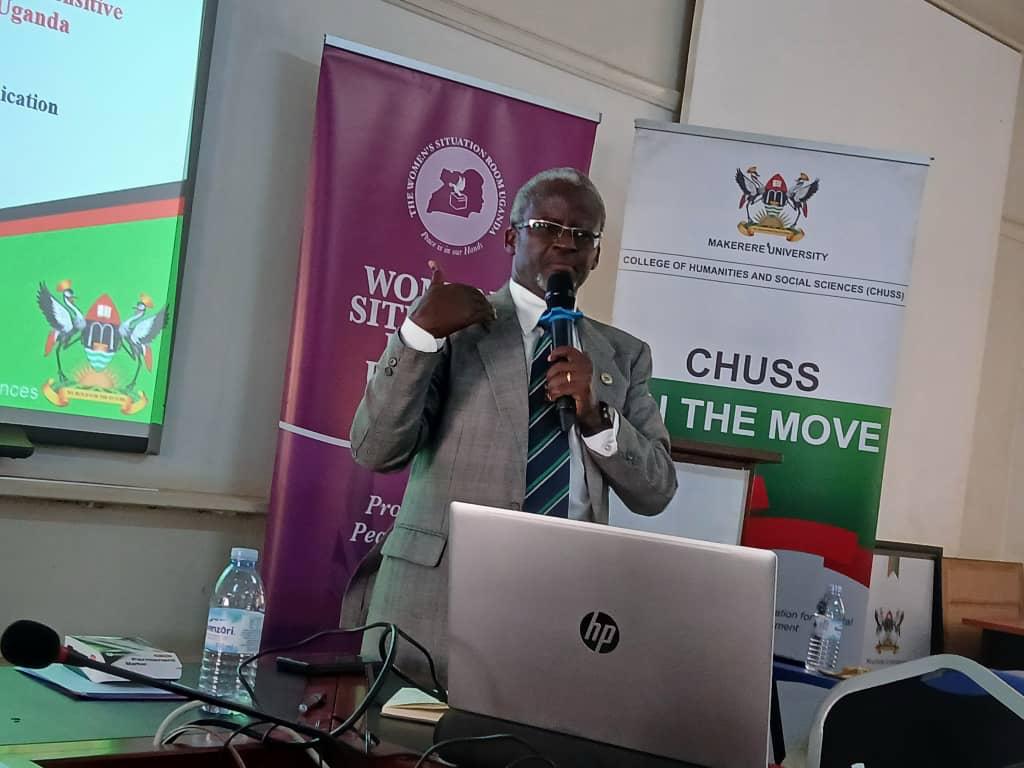
Dr. William Tayebwa, lead facilitator and senior lecturer in the Department of Journalism and Communication at Makerere University, said, “This training is about conflict-sensitive reporting, peace journalism, and gender-sensitive reporting in the context of the elections. The emphasis was on giving female political candidates a voice while ensuring journalists report responsibly on election-related matters.”
Participants described the training as timely and impactful. Tony Banizengabo of CBS Wakiso District said, “We’ve benefited a lot. We’ve been trained to write stories which bring peace, not conflict. Ahead of the elections, we are very ready to be part of peacemakers.”
Dorcas Kimono of UBC TV Kampala added, “It was so timely and rich. We learned how to report without promoting or fueling violence, giving voice to victims without angering them or encouraging violators. This is very vital, especially as we approach the 2026 elections.”
The training aims to equip media personnel with the knowledge and skills to uphold professional ethics while contributing to a peaceful, inclusive, and gender-sensitive electoral process.