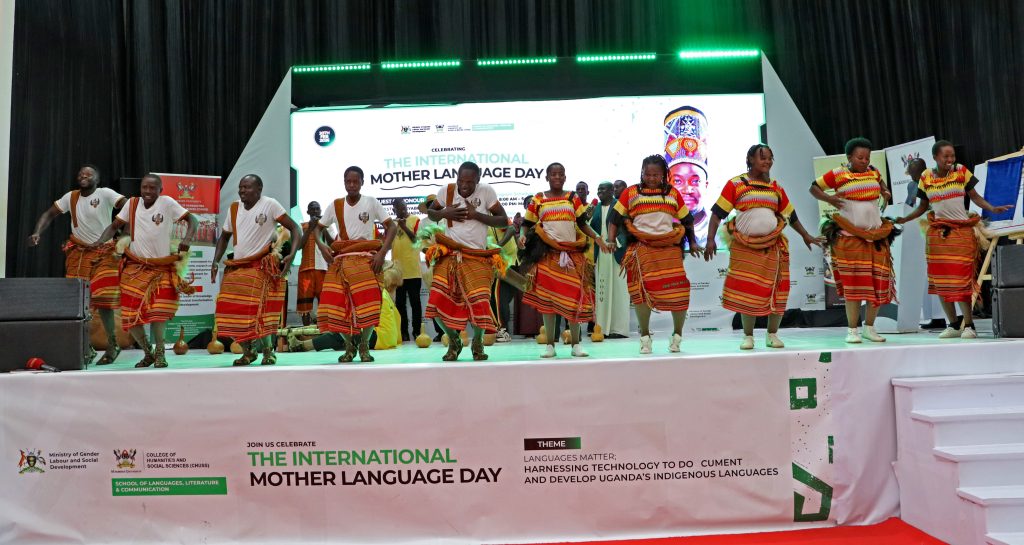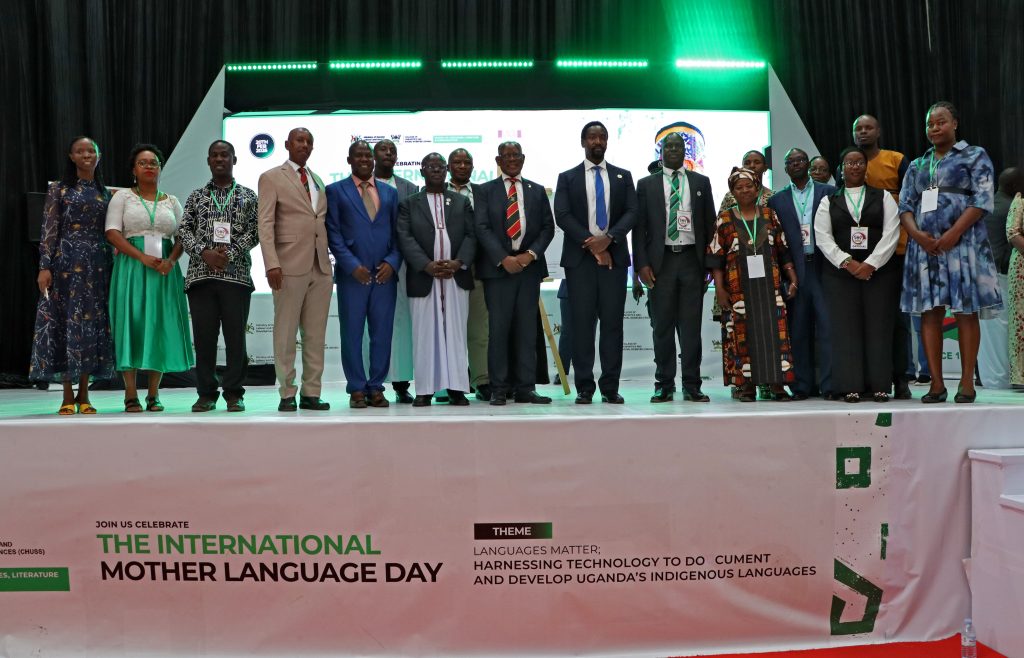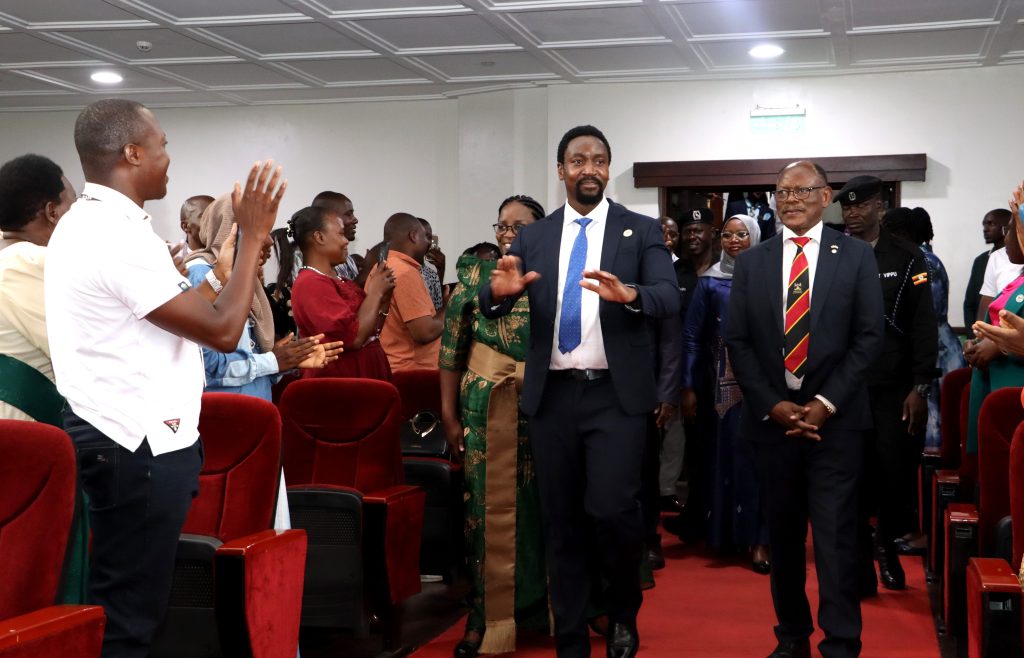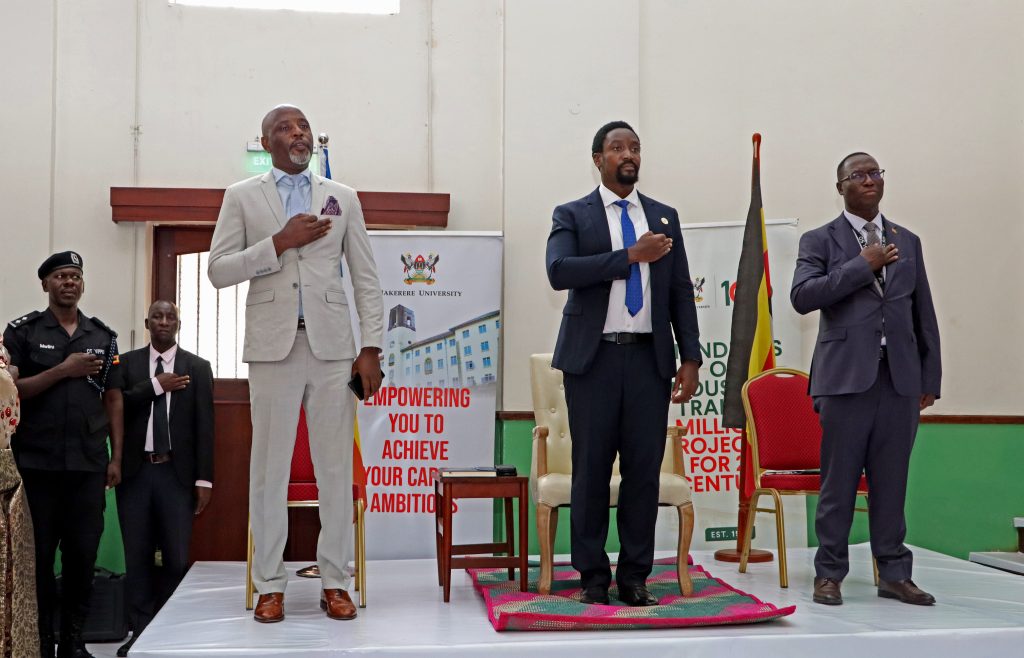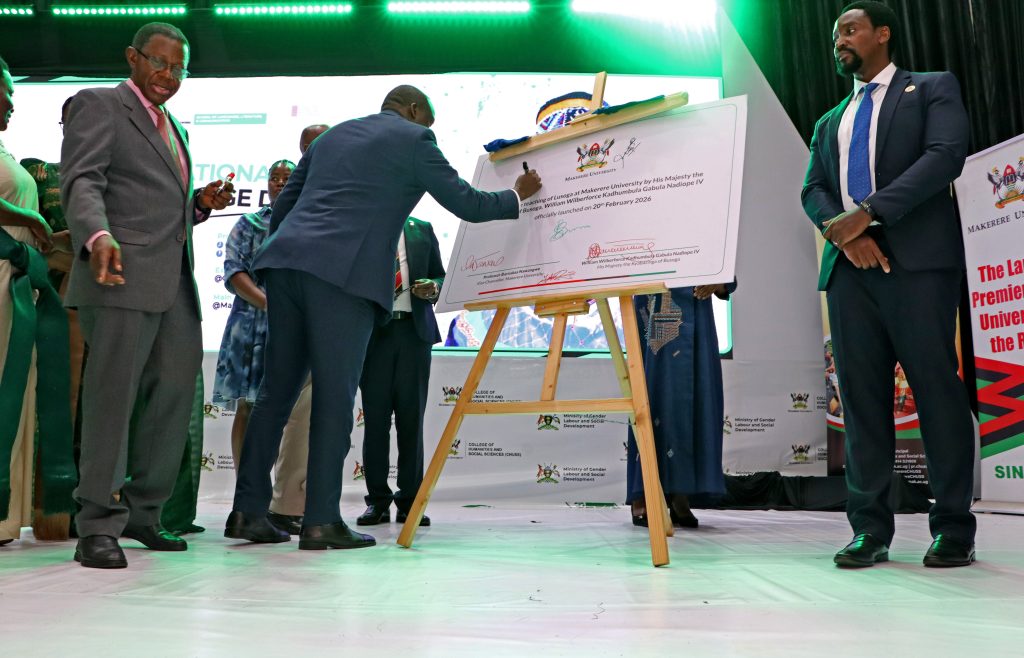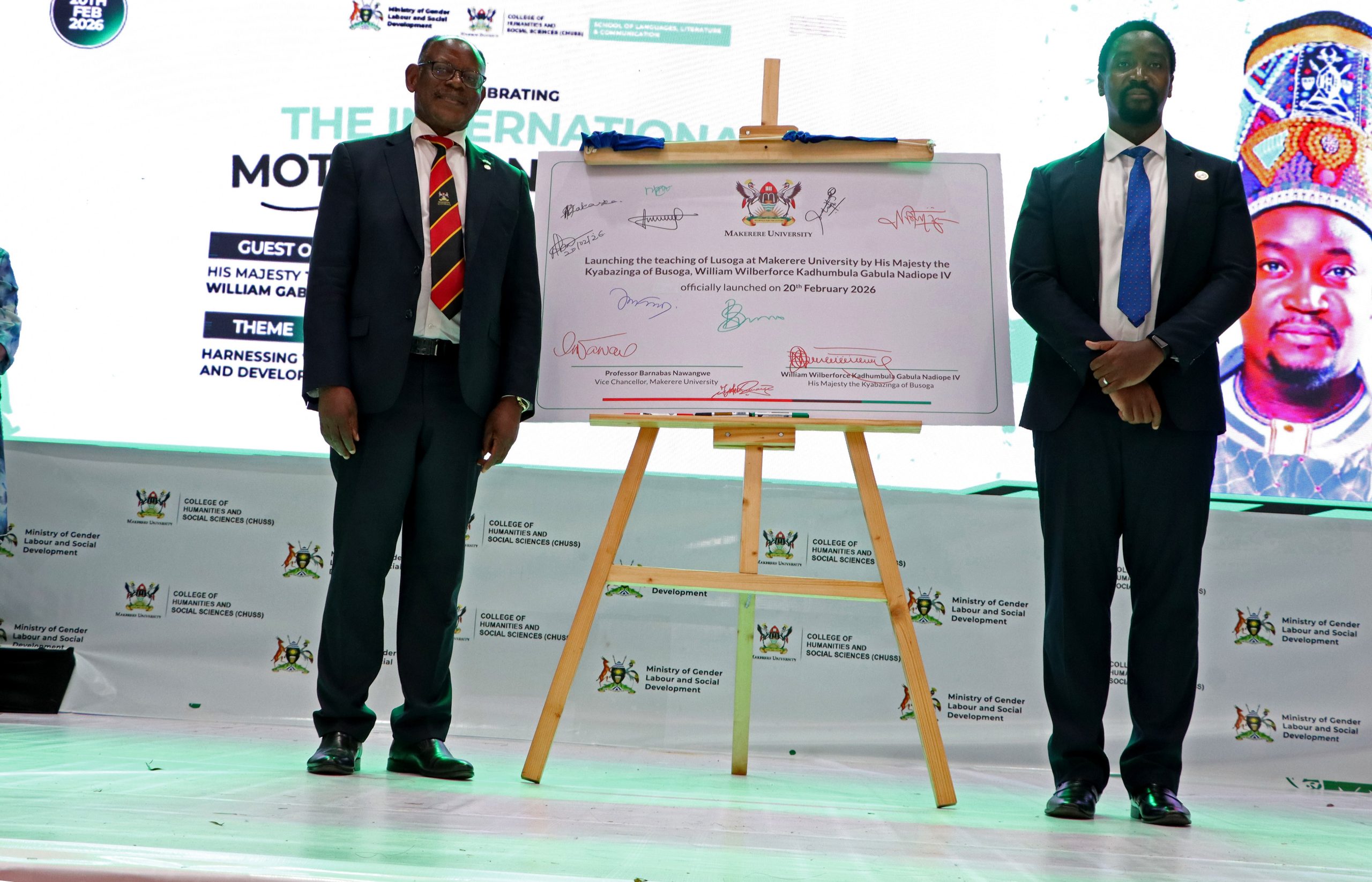
Makerere University has officially launched the teaching of Lusoga, marking a historic expansion of indigenous language scholarship during celebrations of International Mother Language Day 2026.
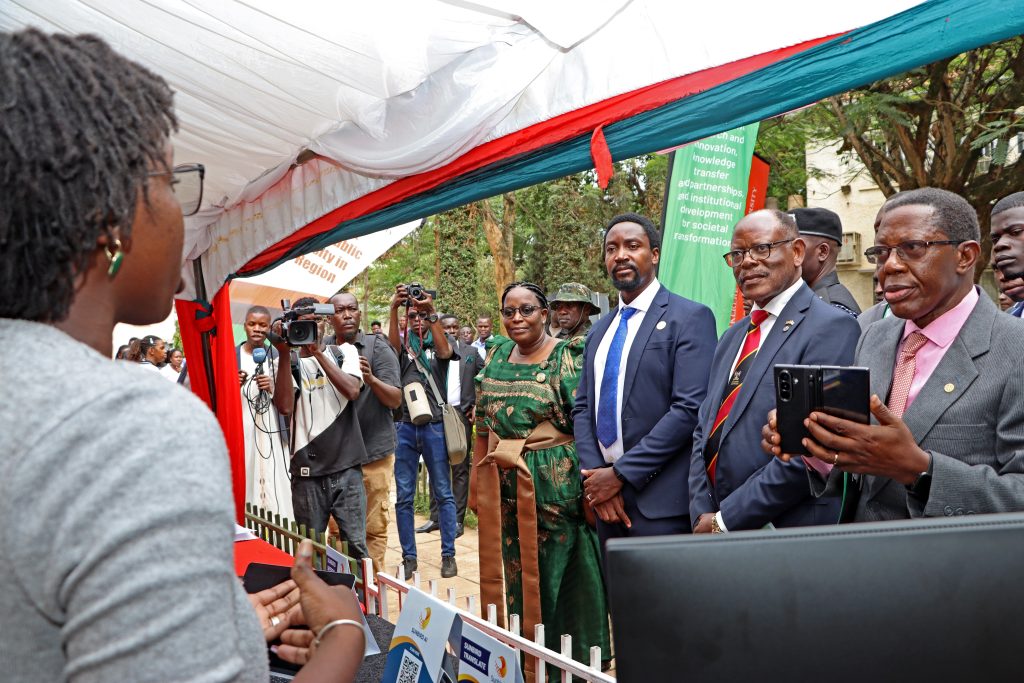
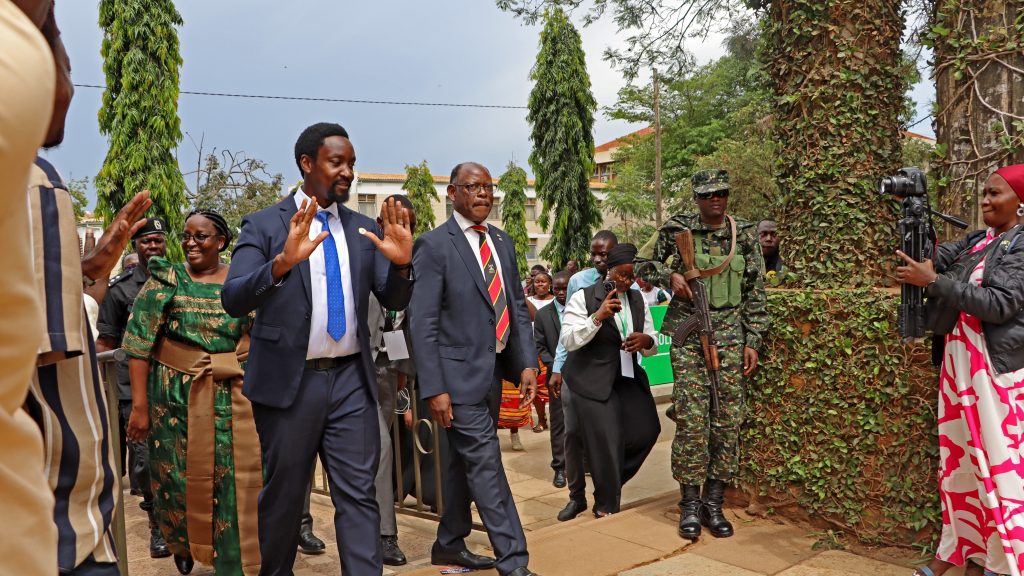
The February 20 event, organised by the Department of African Languages in partnership with the Ministry of Gender, Labour and Social Development, brought together cultural leaders, senior government officials, scholars, publishers, technology innovators and students. The ceremony followed a vibrant exhibition of books authored in Uganda’s indigenous languages and a courtesy call on the Vice Chancellor before the main function at the University Main Hall.
Organised under the theme, “ Languages Matter: Harnessing technology to document and develop Uganda’s indigenous Languages”, The launch was presided over by His Majesty William Gabula Nadiope IV, the Kyabazinga of Busoga as Guest of Honour. Also in attendance were Permanent Secretary Ministry of gender,. Aggrey Kibenge, KCC Executive Director, the Prime Minister of Busoga, university management, principals, deans, heads of department and members of the academic community.
Harness Technology or Risk Losing Our Linguistic Soul
The Kyabazinga described the launch of Lusoga as both symbolic and strategic, saying it elevates the language from community spaces into formal academic recognition at the highest level. He framed International Mother Language Day not merely as a ceremonial observance, but as a national call to safeguard Uganda’s linguistic heritage.
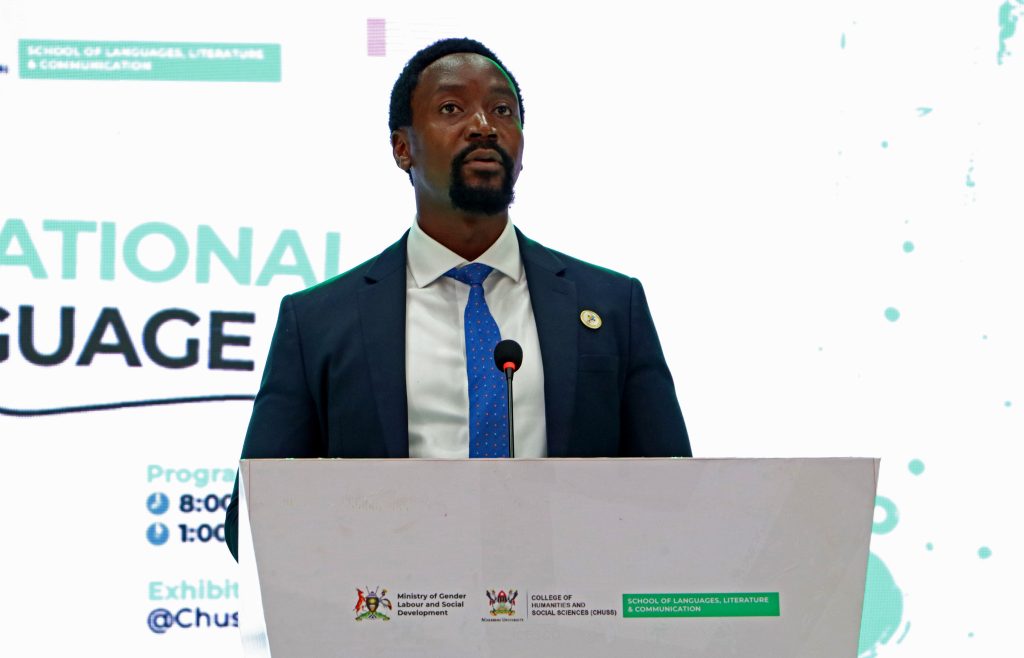
He reminded the audience that Uganda is endowed with more than 50 languages, each representing a distinct worldview and intellectual tradition. Lusoga, he said, is “the heartbeat of Busoga’s identity,” carrying oral traditions, proverbs, songs, customary values and collective memory across generations.
Tracing Makerere’s history of language expansion—from the introduction of Luganda in 1976 to Runyakitara and Luo in the 1990s—he praised the university’s leadership under Vice Chancellor Barnabas Nawangwe for institutionalising indigenous languages at degree level. He said such inclusion strengthens research, curriculum development and professional pathways in media, publishing, translation and public service.
However, the monarch cautioned that many indigenous languages remain marginalised in the digital age. He warned that without deliberate technological integration—digital archives, mobile applications, AI-supported translation tools and online dictionaries—smaller languages could drift toward extinction.
Calling for collaboration among universities, policymakers, technology developers and cultural institutions, he urged stakeholders to treat language preservation as a shared national responsibility. “Every language lost is a piece of humanity lost. Every language preserved is a gift to the future,” he said.
Language Is Economic Infrastructure
The Prime Minister of Busoga Dr. Joseph Muvawala approached the subject from an economic lens, challenging scholars to quantify the relationship between language and development. He proposed the formulation of economic models examining how language influences growth, trade efficiency and labour productivity.
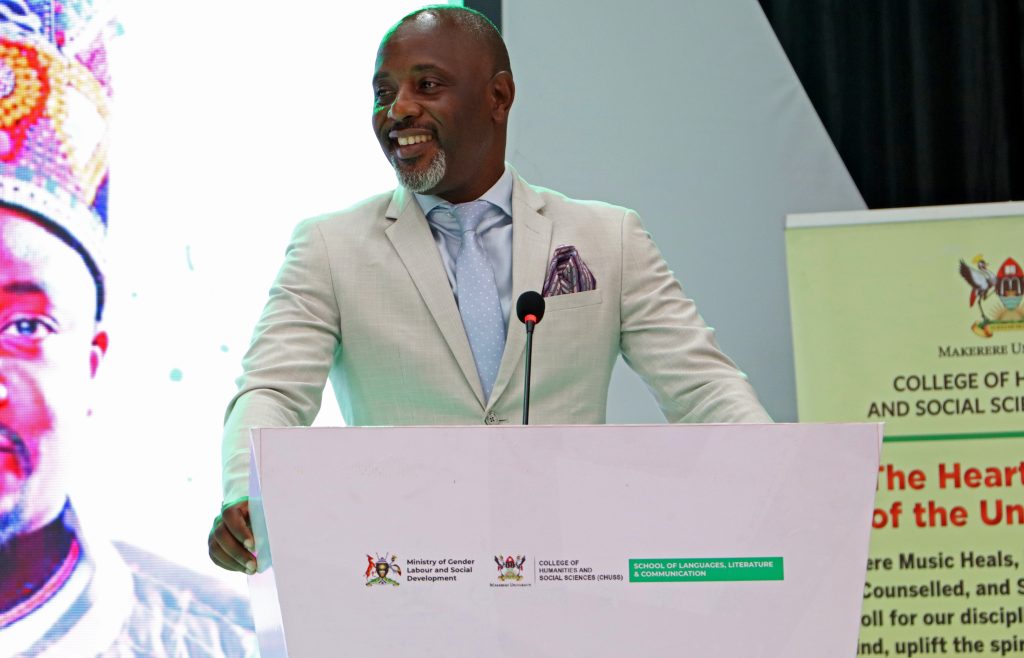
He argued that shared language reduces transaction costs and improves communication efficiency—key determinants in expanding markets and facilitating commerce. In his words, language acts as “economic glue” binding communities and enabling smoother exchange of goods, services and ideas.
Reflecting on debates during his time in the education sector, he criticised the misconception that instruction in mother tongue diminishes intellectual capability. On the contrary, he said, explaining complex concepts in a language learners understand enhances comprehension and accelerates mastery.
He called on Makerere’s academic community to pioneer research that situates language within economic policy frameworks, suggesting that such scholarship could redefine how governments approach linguistic planning and national development strategies.
Concluding, he emphasised that cultural pride and economic pragmatism are not mutually exclusive. Instead, he said, they intersect powerfully when language is recognised as both identity and infrastructure.
Language Preservation Is a Development Imperative
Permanent Secretary Aggrey David Kibenge, representing the Minister of State for Gender and Cultural Affairs, described the day as a convergence of tradition and innovation. He extended appreciation to Makerere for its leadership in linguistic research and acknowledged the Kyabazinga’s role in championing cultural revitalisation.
Kibenge underscored that Uganda’s more than 40 indigenous languages embody ecological knowledge, oral traditions and social philosophies accumulated over centuries. When a language declines, he said, society loses not only vocabulary but entire knowledge systems.
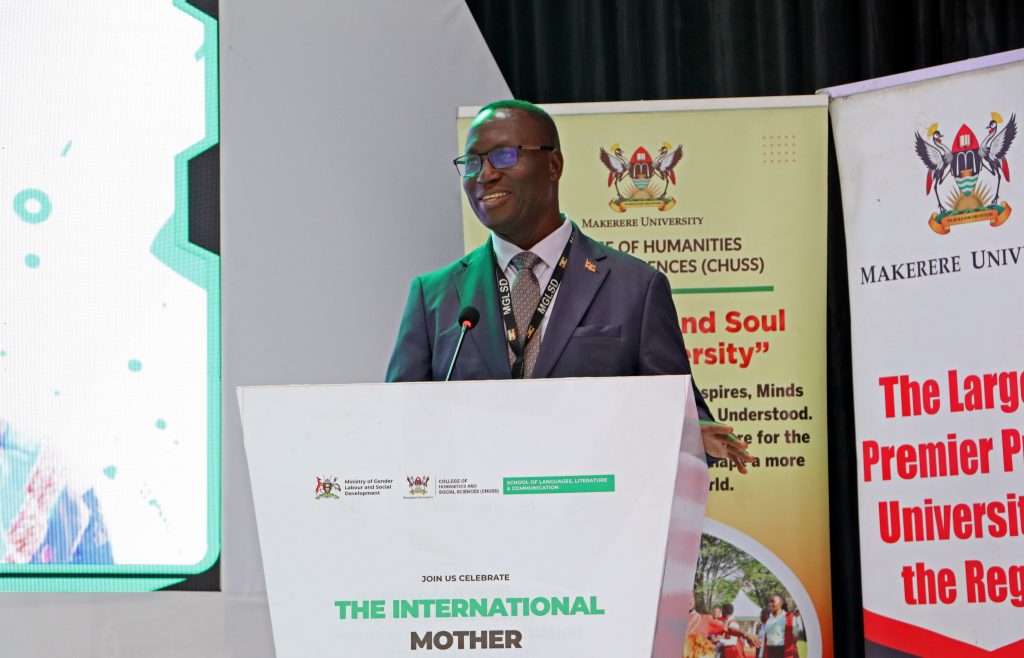
He stressed that language preservation must move beyond sentiment to structured policy action. Government, he said, is committed to promoting multilingual education, strengthening traditional institutions and supporting documentation initiatives.
In the digital era, he added, indigenous languages must occupy space on smartphones, digital platforms and artificial intelligence systems. He called for the digitisation of dictionaries and oral histories, development of language-learning apps, and creation of inclusive digital tools to prevent technological exclusion.
Kibenge concluded with a call to families, educators, media houses and youth to embrace indigenous languages with pride. “Let linguistic diversity be recognised as strength, not division,” he said.
From Documentation to Digital Revolution
Vice Chancellor Prof. Nawangwe contextualised the celebration within global history, noting that International Mother Language Day was recognised by UNESCO in 1999 to promote multilingualism and cultural diversity.
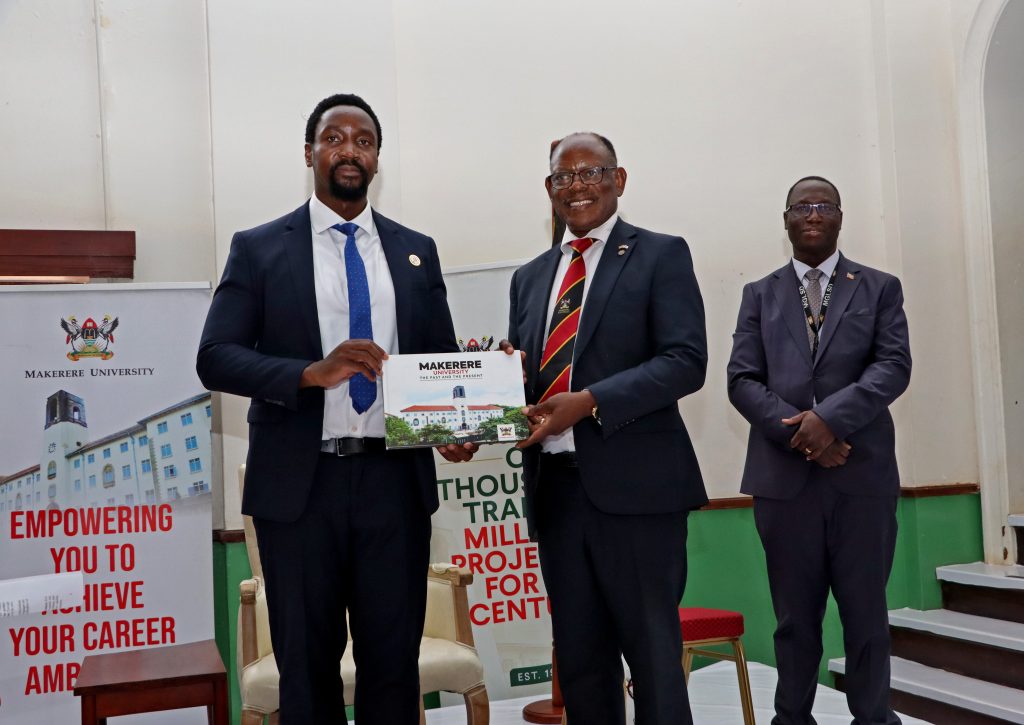
He warned that globally a language disappears approximately every two weeks, a reality that makes institutional intervention urgent. Uganda, with 41 living indigenous languages, stands at a critical crossroads.
Makerere, he said, has proactively expanded its curriculum over decades to include Luganda, Kiswahili, Luo, Runyakitara, Ateso and now Lusoga at undergraduate and postgraduate levels. The School of Languages, Literature and Communication currently hosts more than 20 PhD holders dedicated to indigenous language research.
The university has published grammars, dictionaries and literature while embracing technological innovation. Prof. Nawangwe revealed that developers at Makerere have created applications capable of transcribing English speech into local languages—an advancement he believes could transform science education.
Quoting Nelson Mandela, he emphasised the emotional and cognitive power of communicating in one’s own language. Makerere, he pledged, will ensure that Uganda’s mother tongues not only survive but flourish as respected academic disciplines.
The Principal of the College of Humanities and Social Sciences (CHUSS) at Makerere University, Helen Nambalirwa Nkabala, warmly welcomed the Kyabazinga to the College and the wider university community, describing the occasion as historic and deeply personal.
“Your Majesty, we are happy,” she declared, setting a tone of gratitude and pride as the College hosted the monarch of Busoga at the institution. Her remarks reflected both institutional appreciation and cultural celebration, underscoring the significance of the partnership between academia and cultural leadership.
Prof. Nkabala noted that the function was co-hosted by the Ministry of Gender, Labour and Social Development, whose delegation was led by Permanent Secretary Aggrey Kibenge. She emphasized the longstanding collaboration between the College and the Ministry, stating, “We have walked the journey together through and through.” The partnership, she explained, has been instrumental in advancing social transformation, cultural preservation, and inclusive development initiatives.
In introducing members of the College leadership, Prof. Nkabala acknowledged her predecessors, including Professor Ndolereire and Professor Josephine Ahikire, crediting them for laying a strong academic and administrative foundation. She described CHUSS as “the Mine of Excellent Minds,” asserting that without the humanities and social sciences, the university cannot truly thrive. The College, she said, shapes thinkers, policymakers, cultural custodians, and critical voices essential to national development.
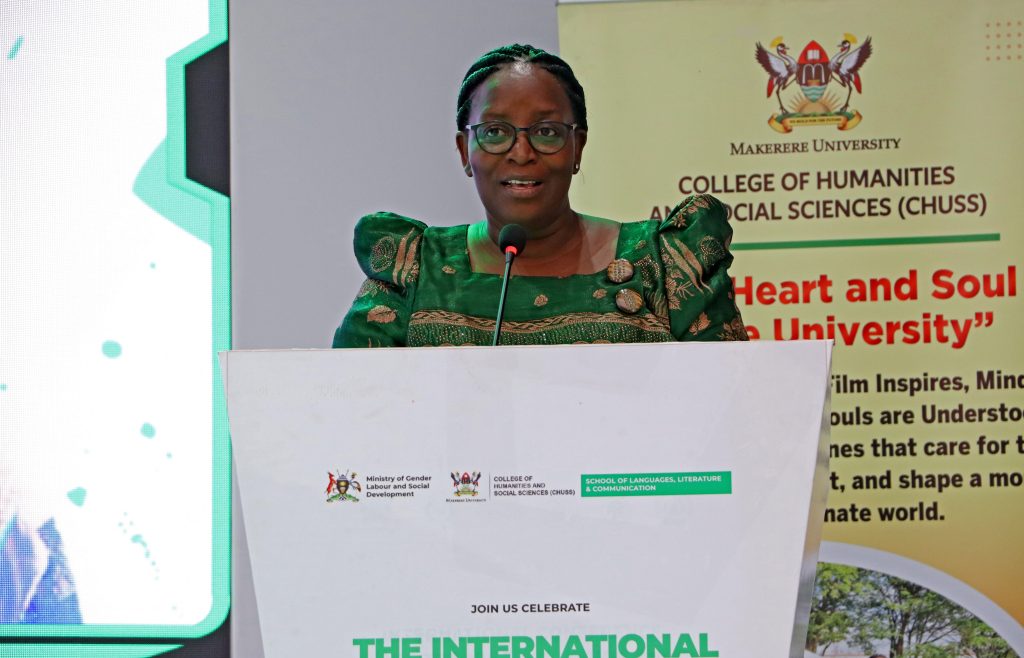
In an emotional moment, the Principal recognized her mother, Mama Mirembe, who had travelled from Busoga to attend the ceremony. She credited her mother with instilling in her a deep appreciation for Lusoga culture and identity. The acknowledgment drew applause from the audience, symbolizing the intergenerational transmission of language and heritage that the day’s event sought to celebrate.
Prof. Nkabala also lauded the Kyabazinga, William Gabula Nadiope IV, for the steps and processes undertaken to secure land in Budondo for the establishment of a university. She expressed Makerere’s gratitude and hope that the efforts would soon be realized. “As a university, we are grateful and pray that the steps are realized to secure land so that Budondo University is established,” she said, framing the initiative as a transformative opportunity for the region.
Concluding her remarks, the Principal made a heartfelt appeal to the Kingdom of Busoga. As the Lusoga language was being launched at the university, she requested the Kingdom’s support in providing scholarships for economically disadvantaged Basoga students. “I request that as we launch Lusoga, the Kingdom helps us with scholarships for Basoga who cannot afford fees to enable them study the language,” she urged.
Her speech wove together gratitude, institutional pride, cultural identity, and a call for inclusive opportunity—affirming Makerere’s commitment to preserving indigenous languages while expanding access to higher education for all.
Beyond the University Gates
Keynote speaker Mrs. ShirleyByakutaga delivered a cautionary narrative drawn from her academic experience in Canada, where an indigenous language dwindled from 50 speakers to just seven over three decades. The lesson, she said, is stark: what is not recorded risks disappearing forever.
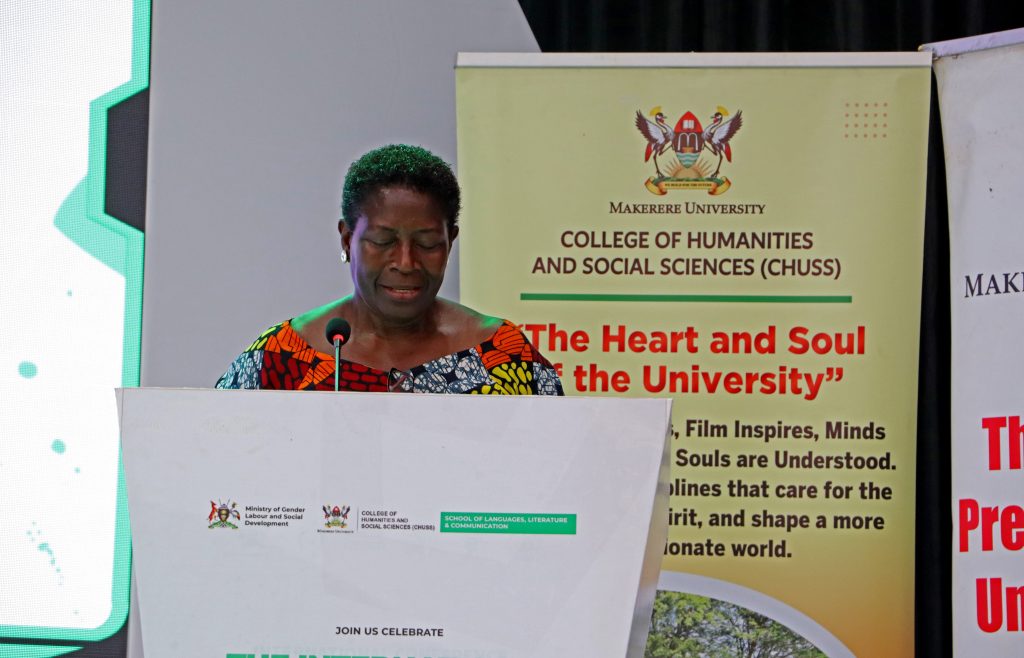
She emphasised that language embodies culture and shapes how communities conceptualise reality, solve problems and relate to one another. Uganda’s estimated 60 or more languages, she warned, face varying degrees of vulnerability due to limited documentation.
While commending Makerere’s leadership, she challenged institutions to extend their efforts beyond academic corridors to grassroots communities, where language vitality is strongest.
She advocated for digital dictionaries, automated translation tools, social media engagement and smartphone applications to anchor languages in everyday digital life.
Her closing appeal envisioned a Uganda where every child can read, write and innovate in their mother tongue—where linguistic diversity is embraced as a bridge to unity and innovation.
Institutionalising Every Ugandan Language
The Convener, Dr. Gilbert Gumoshabe provided a comprehensive overview of the Department of African Languages’ evolution, tracing its roots from the 1976 introduction of Luganda to subsequent additions of Runyakitara clusters and Luo languages in the 1990s.
He detailed the 2024 inclusion of Lusoga and the forthcoming launch of Ateso, supported by scholarships from the Emorimor of Teso. Curricula for Lugbara and Lumasaba are under development, aligning with the department’s goal of ensuring every language examined at secondary level is also represented at Makerere.
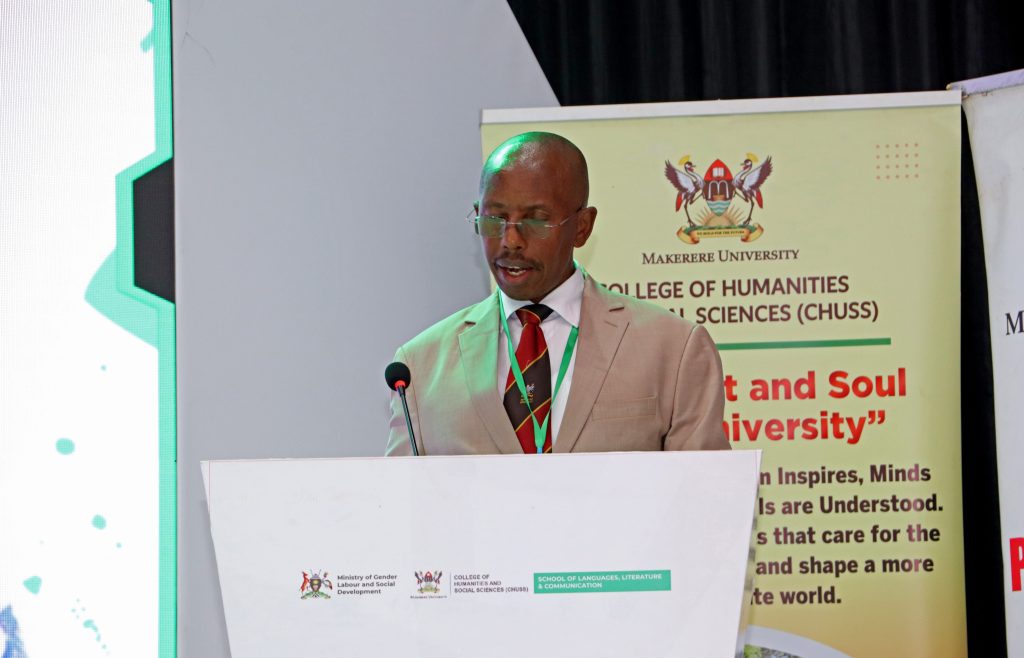
At graduate level, the department offers master’s programmes in African languages and has developed specialised curricula for Kiswahili, Luganda and Runyakitara awaiting final approvals.
Despite these gains, Dr. Gumoshabe acknowledged challenges: limited teaching materials, scarce digital resources and underrepresentation of minority languages. He called for targeted policies to close the technological gap between English and indigenous languages.
He urged the Ministry of Gender to establish a dedicated unit coordinating language development efforts and advocated partnerships with publishers, technology innovators and cultural institutions.
“Our multilingualism is a precious asset for social, political and economic transformation,” he said, reaffirming the department’s mission to preserve, promote and technologically advance Uganda’s mother tongues.
The launch of Lusoga at Makerere signals more than curriculum expansion; it reflects a coordinated national effort to reposition indigenous languages at the intersection of culture, technology, academia and economic development.
As speaker after speaker emphasised, the future of Uganda’s languages will depend not only on celebration, but on sustained research, digital innovation and collective national commitment.