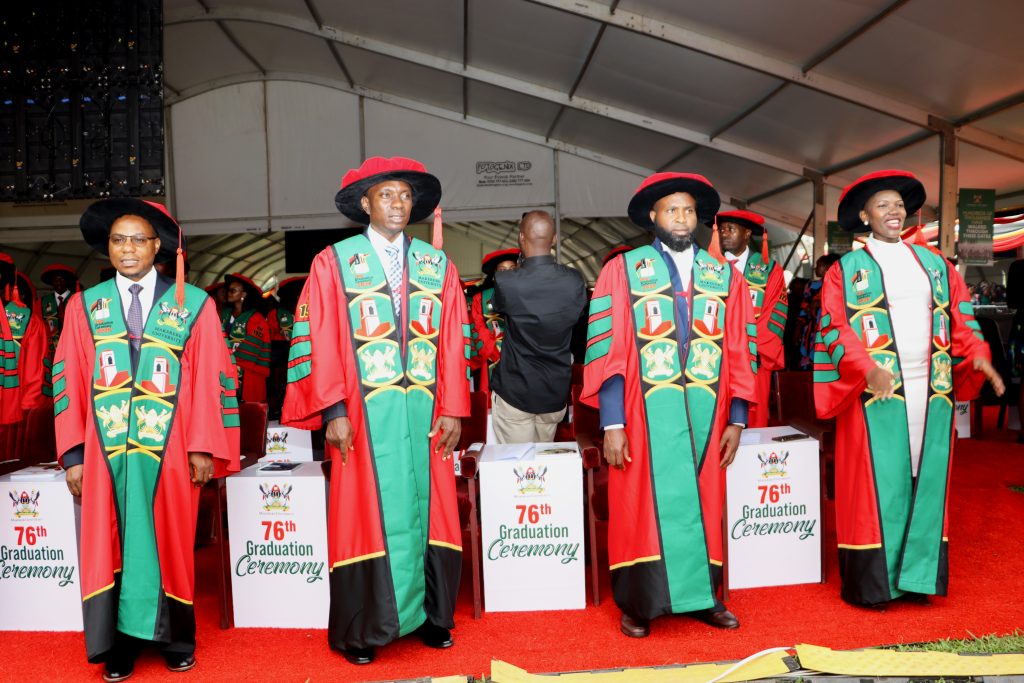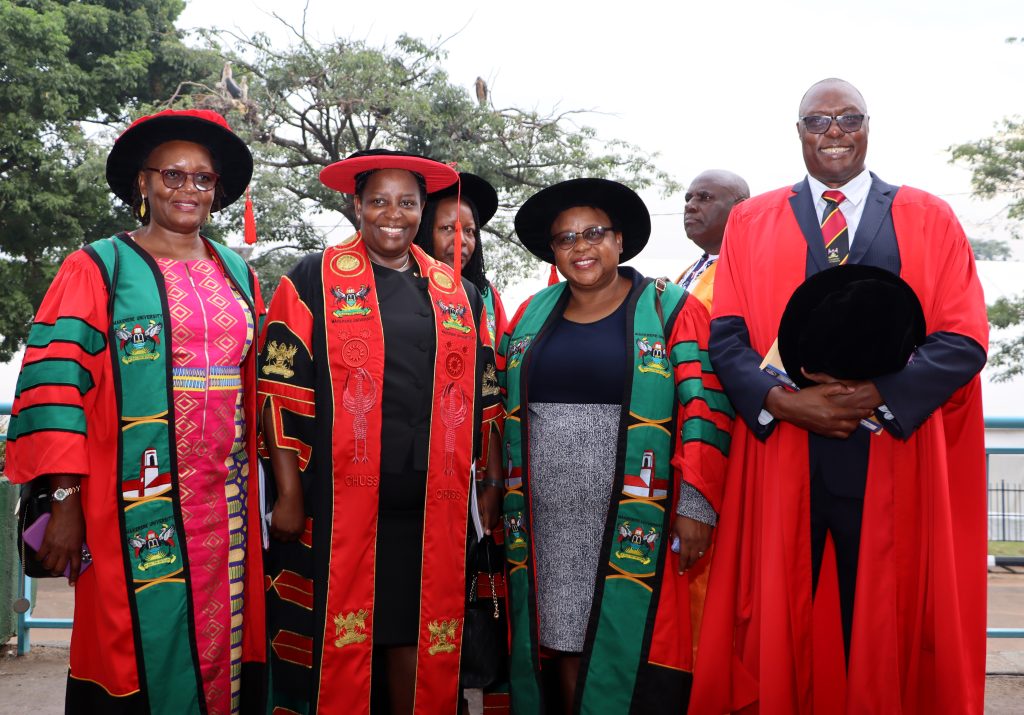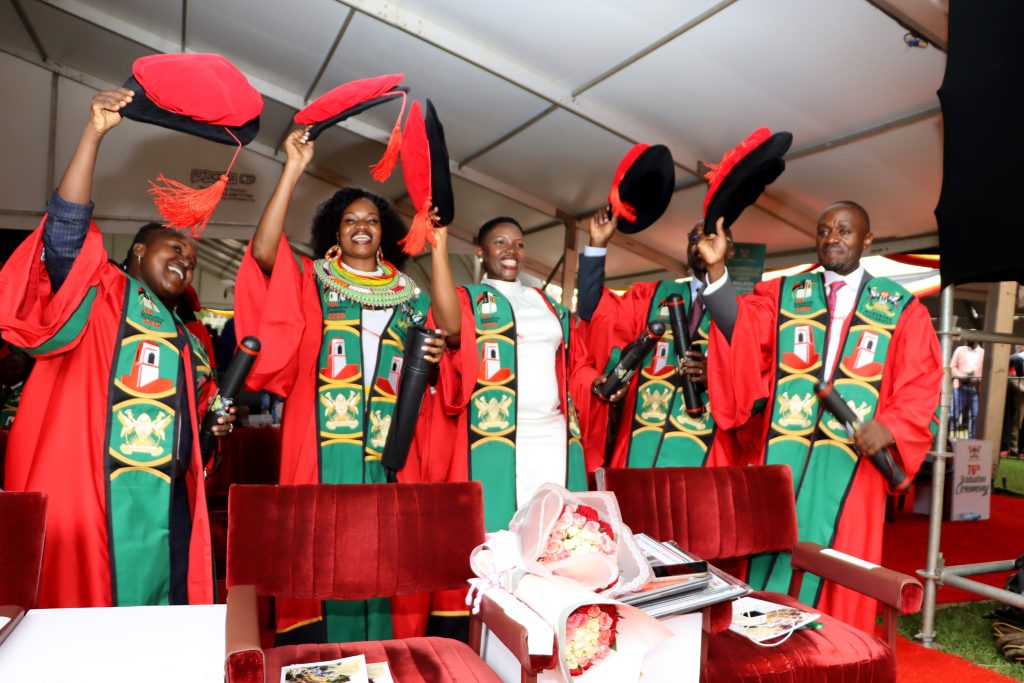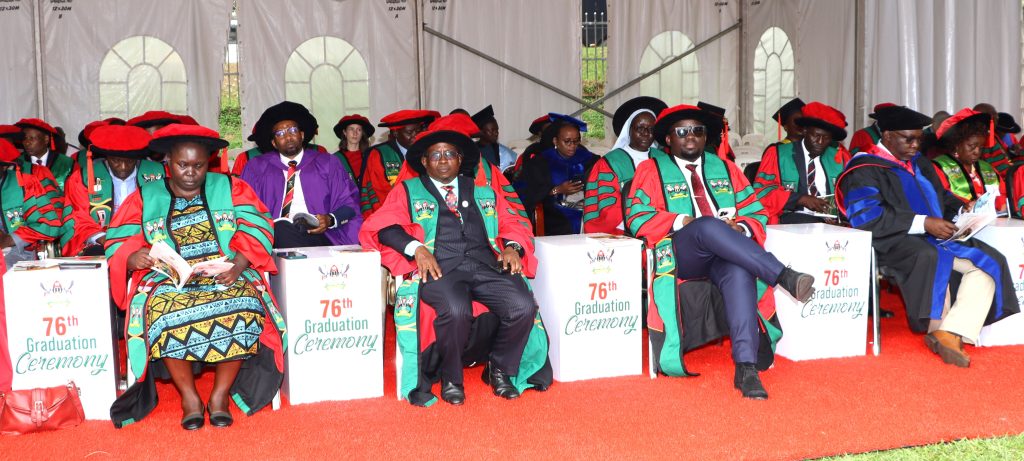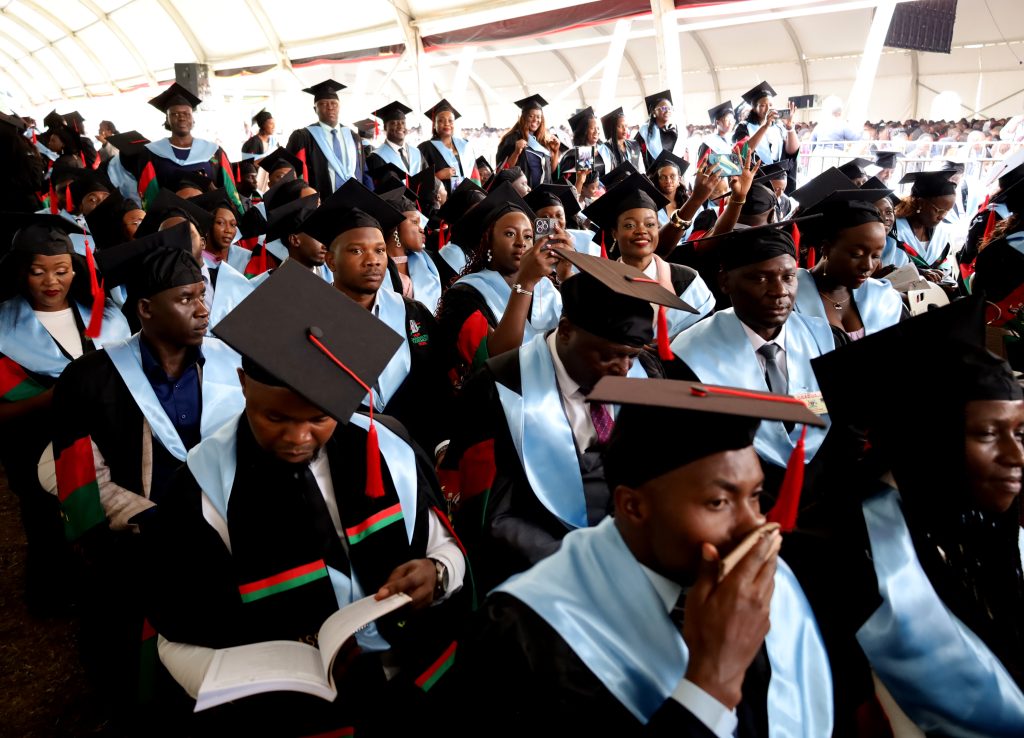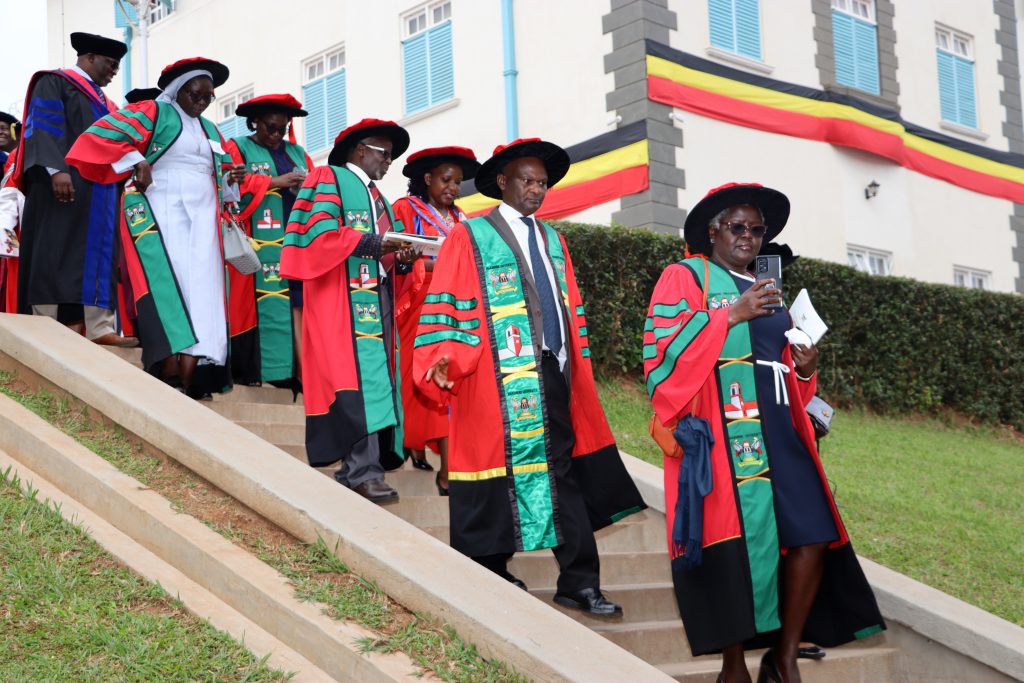
The 76th Graduation Ceremony of Makerere University concluded on Friday, 27 February 2026, with the Vice Chancellor presenting graduands from the College of Engineering, Design, Art and Technology (CEDAT), College of Humanities and Social Sciences (CHUSS), the Institute of Gender and Development Studies, and the Makerere Institute of Social Research.
CHUSS presented 38 PhD graduates, underscoring the institution’s expanding contribution to research and advanced scholarship. In addition, CHUSS presented 371 Master’s candidates, 629 Bachelor’s candidates, two Diploma graduates, and over 100 Postgraduate Diploma candidates.
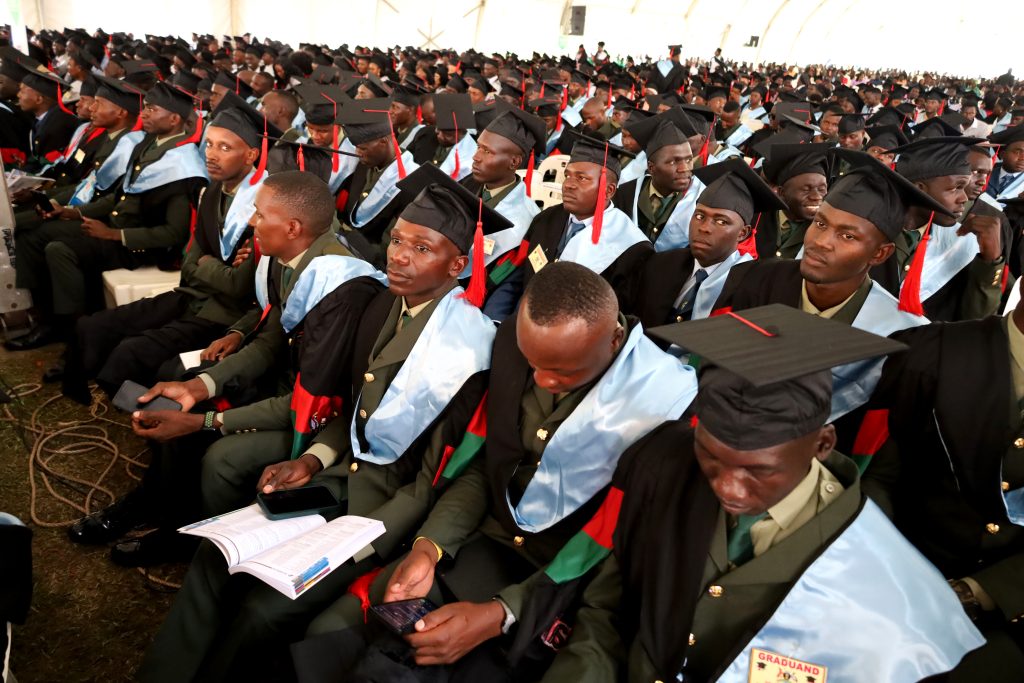
Among the graduates were officers from the Uganda People’s Defence Forces, the Uganda Police Force, the Uganda Prisons Service, and Rotary Peace Fellows who completed postgraduate studies in peacebuilding and conflict transformation. Six security officers graduated with a Master of Security Strategy, 18 with a Master of Defence and Security, and 106 with a Bachelor of Defence Studies.
The Institute of Gender and Development Studies presented 4 doctorates and 42 Masters.
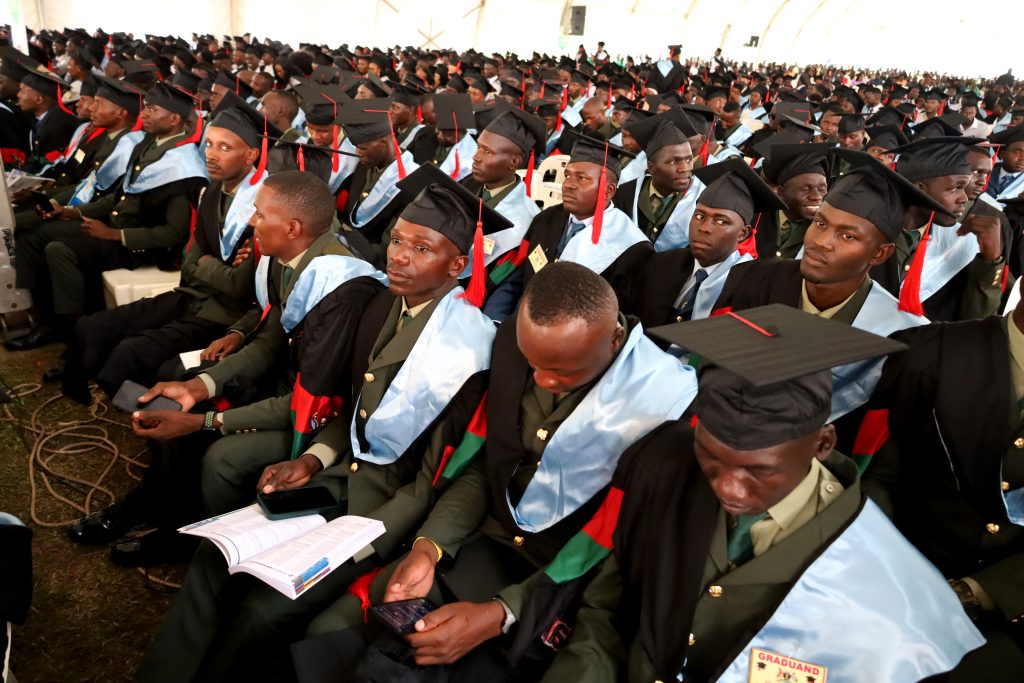
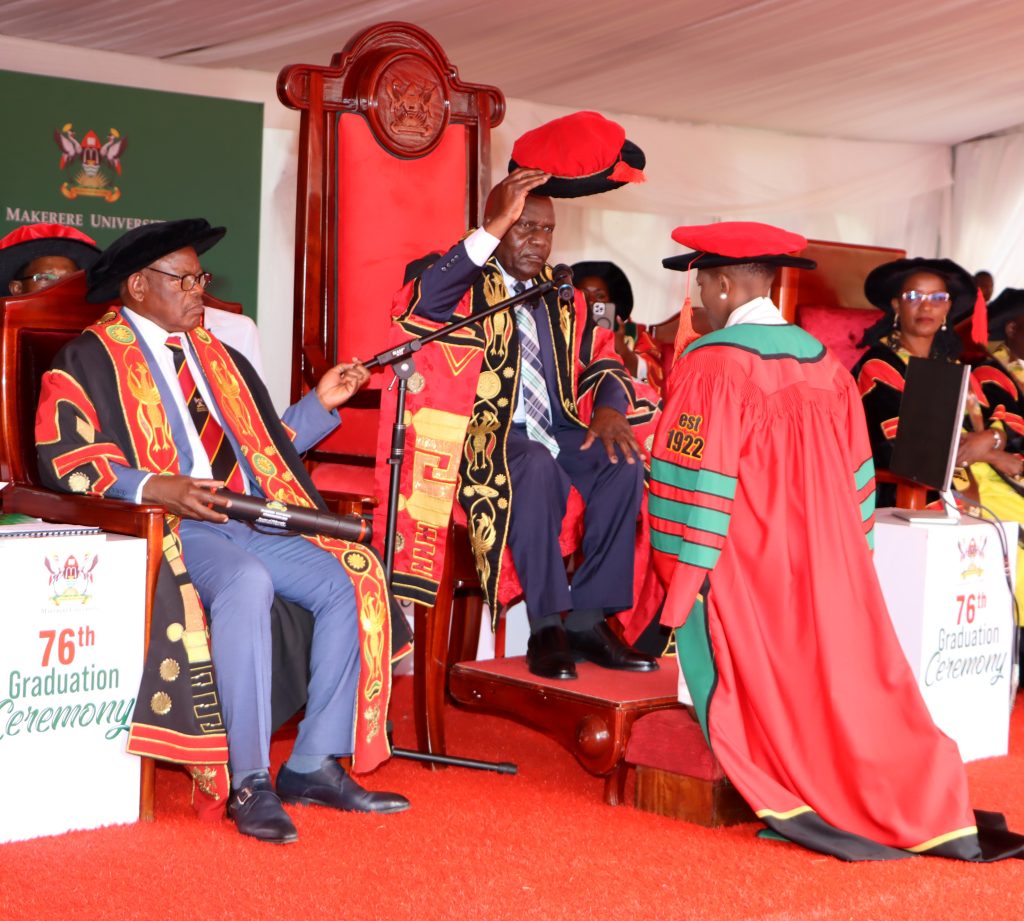
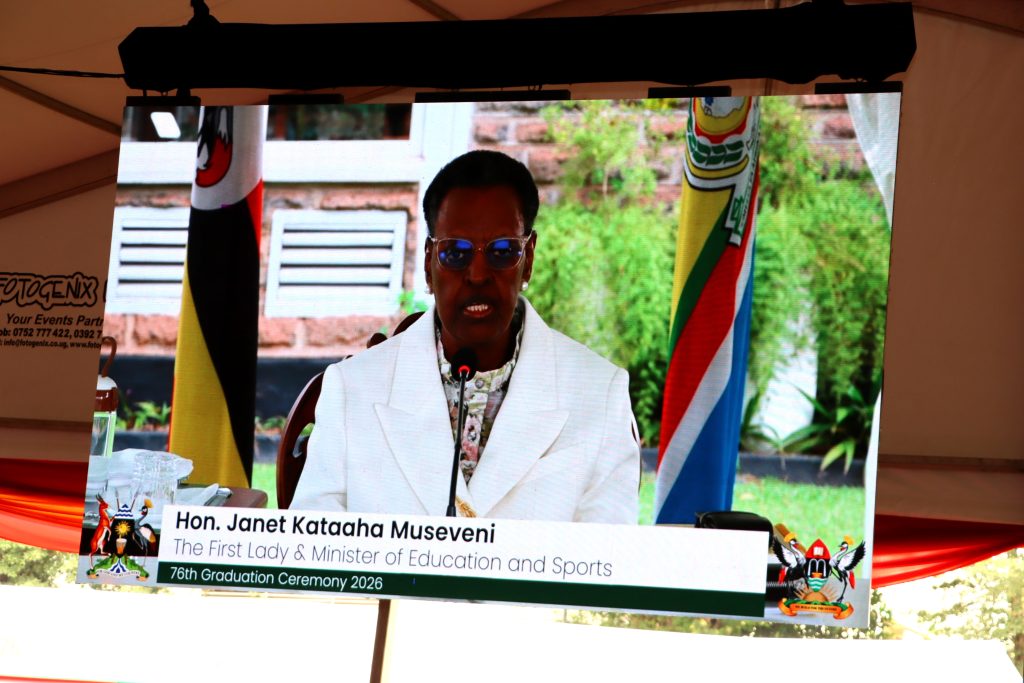
Held at Freedom Square, the ceremony was presided over by Chancellor Dr. Crispus Kiyonga. The First Lady and Minister of Education and Sports, Janet Kataaha Museveni, joined virtually. Former President and CEO of the MasterCard Foundation, Reeta Roy, delivered the commencement address and was awarded an Honorary Doctorate in recognition of her leadership in expanding access to higher education for disadvantaged youth in Africa.
Dignitaries in attendance included government officials, members of the judiciary, Members of Parliament, representatives of the Diplomatic Corps, religious leaders, university council members led by Chairperson Dr. Lorna Magara, vice chancellors and principals of sister institutions, deputy vice chancellors, college principals, deans, members of Senate and management, security commanders, the Guild President, staff, parents, guardians, sponsors, development partners, and members of the media.
The ceremony also marked the graduation of the first cohort under the Emerging Leaders Programme – an initiative championed by Mrs. Janet Museveni to nurture ethical, values-driven and service-oriented leadership among young people.
Nawangwe Hails Record PhD Graduates as University Honours Reeta Roy
The Vice Chancellor, Prof. Barnabas Nawangwe announced a record 9,295 graduates at the institution’s 76th graduation ceremony, including the highest number of PhD recipients in its history. Prof. Nawangwe said 215 candidates would graduate with doctorates, describing the milestone as evidence of the university’s steady progress toward becoming a research-led institution.
“CHUSS alone is contributing more than 30 PhDs. CHUSS is simply unstoppable,” he said.
Of the total graduates, 4,262 are female (46 per cent) and 5,033 male (54 per cent). A total of 2,503 students will receive master’s degrees, 6,343 bachelor’s degrees, 206 postgraduate diplomas and 30 diplomas. Thirty-four per cent of the cohort are graduating with postgraduate qualifications.
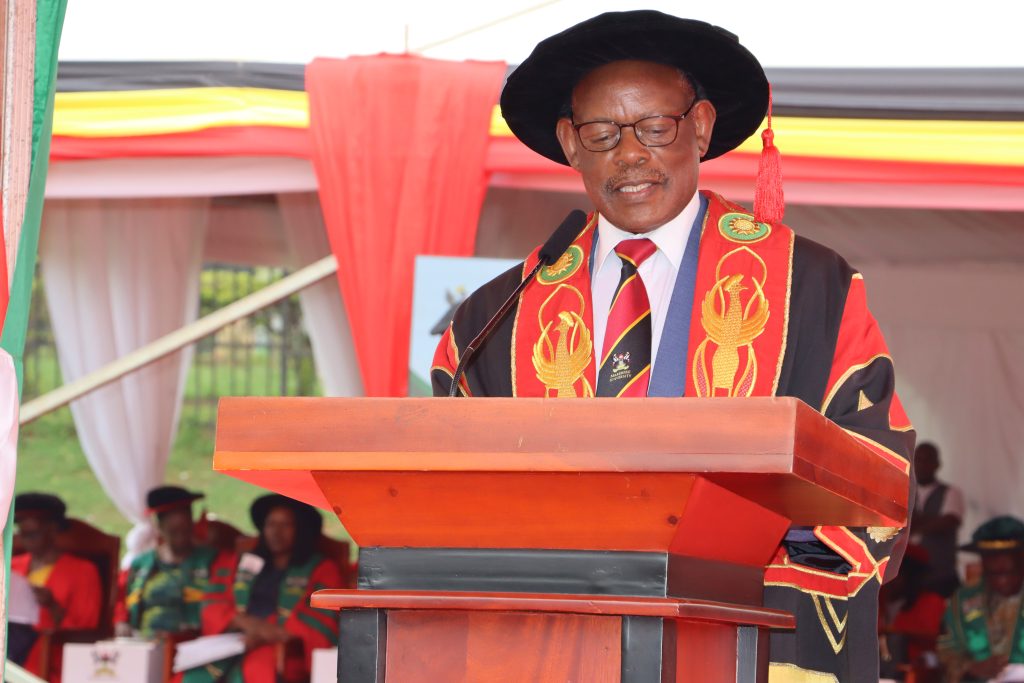
During the ceremony, the university conferred an Honorary Doctor of Laws degree on Reeta Roy, founding president and chief executive of the Mastercard Foundation, in recognition of her leadership in expanding access to higher education for disadvantaged youth in Africa.
Prof. Nawangwe said the university’s 13-year partnership with the foundation had supported scholarships, leadership and entrepreneurship development, digital learning and climate research initiatives.
“Through her visionary stewardship, the foundation has empowered thousands of talented yet disadvantaged youth, especially young women, refugees and persons with disabilities, to access quality higher education and build dignified livelihoods,” he said.
He also announced the appointment of Professor Sara Sali as Deputy Vice-Chancellor in charge of Academic Affairs, describing her as the second woman to hold the position in the university’s more than 100-year history.
Highlighting academic and research achievements, Prof. Nawangwe cited milestones across colleges adding that the university had secured support from the Government of Uganda and the Government of Korea to strengthen infrastructure and research capacity.
At the CHUSS, Nawangwe said, stakeholders have agreed to establish an Environmental and Social Sustainability Learning Centre, supported by the government and development partners. The college has also expanded global partnerships with Kobe University in Japan and the University of Sharjah in the United Arab Emirates.
The Institute of Gender and Development Studies, he added, became the first on the continent to participate in the United Nations Development Programme Gender Equality Seal Initiative and launched a daycare and breastfeeding centre to support student mothers and staff.
Prof. Nawangwe said the Government of Uganda had supported more than 1,400 high-impact projects through the university’s Research and Innovations Fund, strengthening its contribution to national development.
The ceremony also recognised top researchers and innovators for 2025, with the Ministry of Science, Technology and Innovation pledging support to commercialise winning innovations.Sr. Prof. Dipio Dominica School of Languages, Literature and Communication and Prof. Neema Stella from the School of Social Sciences and Dr. Amon Mwiine from the Institute of Gender and Development Studies were among the recognised.
Addressing the graduates, Prof. Nawangwe urged them to embrace entrepreneurship and take advantage of anticipated economic growth.
“As you leave the gates of Makerere, always be proud of your alma mater and be her good ambassadors wherever you go,” he said.
He announced a university careers fair scheduled for March 11–13, 2026, aimed at linking graduates with employers and entrepreneurship opportunities.
Education Minister Janet Museveni Calls for Institutionalization of Values-Based Leadership in the Curriculum
Speaking virtually, Uganda’s Minister of Education and Sports, Janet Museveni, called for the institutionalization of values-based leadership across the country’s higher education system, saying universities must produce graduates of character and integrity, not just degree holders.
Mrs. Museveni challenged university leaders, policymakers and national institutions to embed moral formation and servant leadership into academic programs.
“We must institutionalize values-based leadership across Uganda’s higher education system,” she said. “We need our universities to produce not just graduates with certificates, but servant leaders of character, men and women worthy of trust, capable of ethical decision-making and committed to the common good.”
Her remarks came as 20 students from the inaugural cohort of the Emerging Leaders Program graduated, marking what she described as “the highly visible fruit” of a deliberate effort to shape leaders grounded in integrity and service.
The Minister said the program was established on the conviction that higher education must form both the mind and character, particularly in the face of growing societal challenges such as violence, addiction and moral decline.
Among the graduates, she noted, are individuals already taking up leadership roles in public life, including city leaders-elect and a Member of Parliament-elect from Mukono South, drawn from different political platforms but united by a shared foundation in values-based leadership.
“To the graduates of the Emerging Leaders Program, see this moment not as a conclusion, but as a commission,” Museveni said. “Lead with courage, humility and responsibility.”
The ceremony also recognized Reeta Roy, outgoing President of the Mastercard Foundation, who was awarded an honorary degree for her contribution to expanding access to university education for young people from disadvantaged backgrounds across Africa.
Museveni praised Roy’s 13-year partnership with Makerere, which has supported thousands of Ugandan students through scholarship programs, e-learning initiatives and climate-focused collaborations.
“Investing in young people, especially those from vulnerable backgrounds, is not charity. It is the smartest investment any nation or institution can make,”Mrs. Museveni said, noting that Mastercard Foundation scholars across the continent have gone on to become doctors, engineers, teachers, entrepreneurs and community leaders.
She thanked Roy for choosing Uganda as a development partner and described education as “the great equalizer” capable of transforming communities.
Looking ahead, the Minister announced plans to expand the Emerging Leaders Program to other universities, describing the effort as the scaling of a movement aimed at rebuilding the country’s moral foundation.
“As we expand to other universities, we are not just scaling a program, we are scaling a movement, a movement to redream our values and raise leaders who will make us proud,” she said.
Addressing the broader graduating class, Museveni urged students to prioritize integrity and service above ambition.
“The world needs your character more than your degrees, your integrity more than your skills, and your service more than your ambition,” she said. “To whom much is given, much is expected.”
Reeta Roy Urges Makerere Graduates to Lead with Values and Courage to Begin Again
Reeta Roy urged graduates of Makerere University to anchor their lives in values, nurture enduring relationships, and embrace the courage to “begin again” as they step into an increasingly uncertain world.
Roy was delivering the commencement address on the fourth and final day of the university’s 76th graduation ceremon. She told the Class of 2026 that while political alliances are shifting, institutions are being tested, the climate is warming, and artificial intelligence is redefining work, the moment also holds extraordinary possibility.
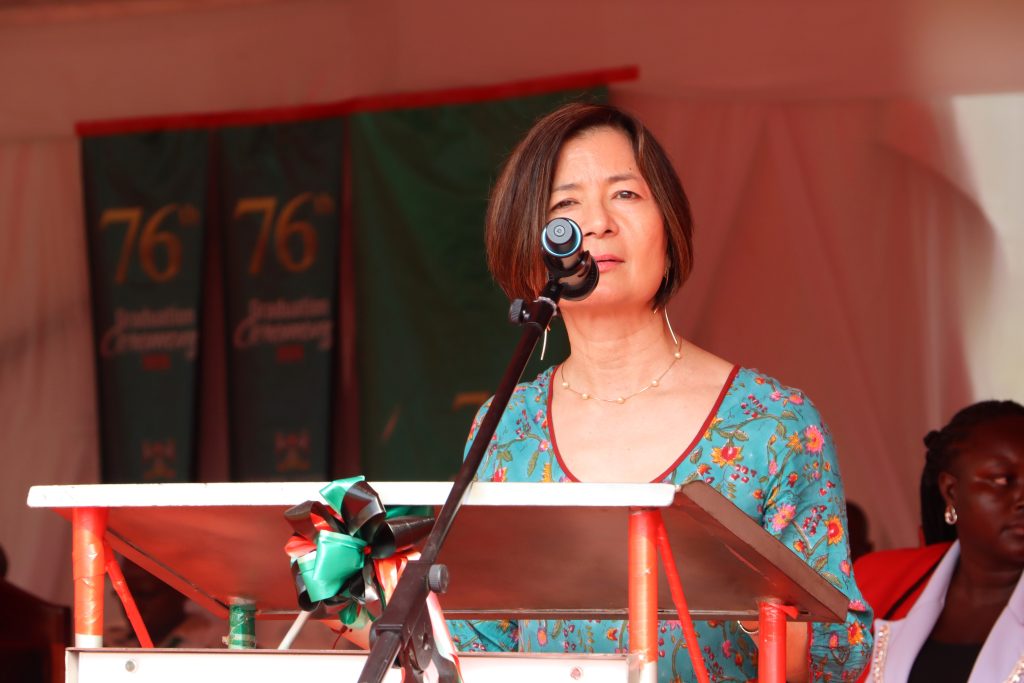
“You leave here with a degree that is more than just a line on your résumé,” Roy said. “You leave here with values, with relationships, and with the capacity to learn, to grow, to adapt, to change, and to begin again.”
Addressing university leaders, faculty, families and the graduating class, Roy described Makerere as an institution that has shaped more than a century of African excellence, producing presidents, poets, jurists, educators and innovators. She told graduates they now join that legacy and bear responsibility for shaping what they will one day hand over to the next generation.
Roy structured her address around three enduring questions: know who you intend to be, know who you want to be with, and know when to begin again.
She cautioned graduates against focusing solely on career titles and ambitions, urging them instead to reflect on character and values. “Titles will change, jobs will change, industries will change,” she said. “But your values, your responsibilities, your accountability, your character will endure.”
Drawing from her personal journey, Roy recounted growing up in Malaysia as the daughter of immigrant parents and losing her father at an early age. After building a successful corporate career, she said she reached a crossroads between pursuing privilege and choosing purpose. She opted to shift paths toward philanthropy and development work – a decision that ultimately led her to Africa and to nearly two decades at the Mastercard Foundation.
“It was demanding, sometimes difficult, even heartbreaking,” she said of her work, “but it was always meaningful.”
Roy emphasised the importance of community, reminding graduates that none had reached the milestone alone. She encouraged them to cultivate three kinds of relationships: mentors to learn from, peers to walk alongside, and those they themselves could teach.
In a world that often prizes individual achievement, she warned against transactional networking and instead called for relationships built on trust, mutual respect and listening. The most effective leaders, she said, are not those with the loudest voices but those with the deepest capacity to listen – especially to people whose experiences differ from their own.
“Listen not to judge, but to understand and to solve problems,” she said, adding that leadership rooted in human dignity is essential globally.
Roy also highlighted a major strategic shift during her tenure at the Mastercard Foundation. Breaking from conventional philanthropic models that channel funding primarily through international organisations, the foundation chose to work directly with African institutions and grassroots organisations. It established offices across the continent and prioritised African leadership, with Roy herself relocating to Rwanda.
The decision, she said, was driven by the belief that the most enduring solutions come from local leaders embedded in their communities. Today, she noted, the majority of the foundation’s partners are African organisations, contributing to expanded access to education, skills training and entrepreneurship for millions of young people.
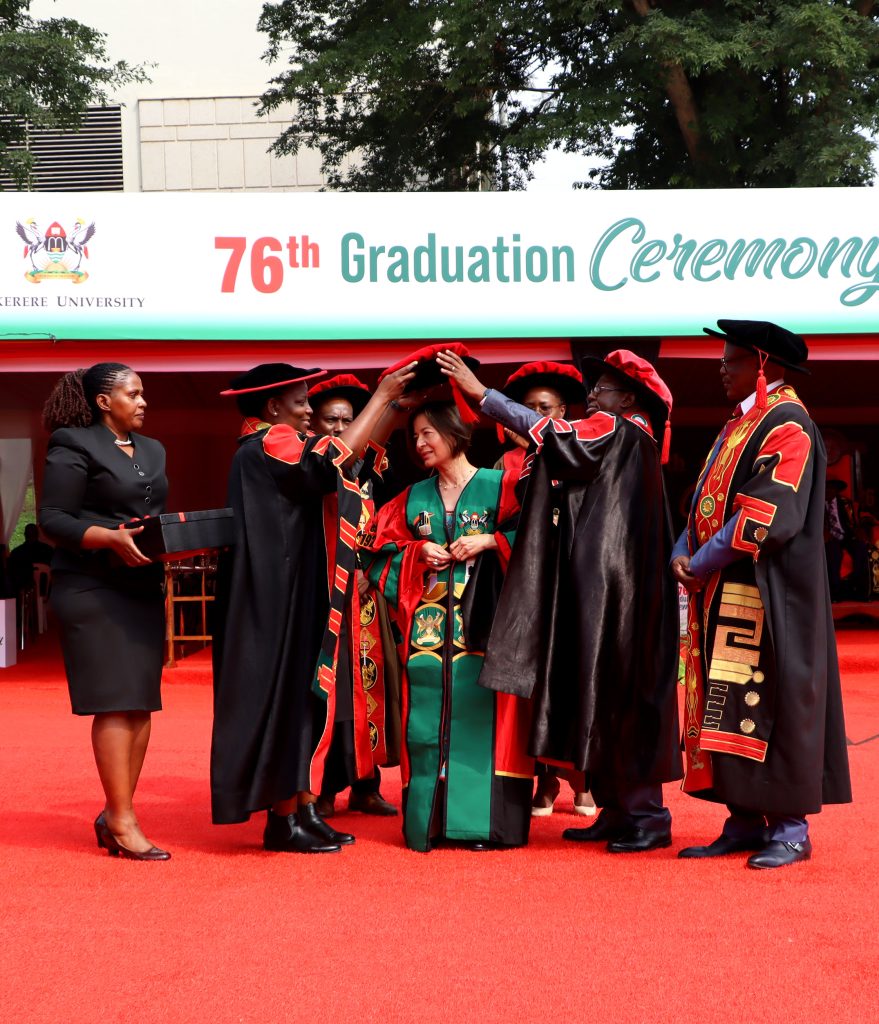
As she prepares to step down after 18 years at the helm of the foundation, Roy said she too is “beginning again,” describing leadership as a continuous process of recalibration and growth.
“You’re stepping into a world that needs you — your talent, your voice, your ethical leadership,” she told the graduates. “You leave here with character, with community, and with the capacity and courage to begin afresh when life demands it.”
She concluded by congratulating the Class of 2026 and urging them to make their families and alma mater proud.
Chancellor Kiyonga Urges Graduates to Seize Emerging Opportunities, Guard Against Social Risks
The University Chancellor Hon Dr. Crispus Kiyonga urged graduates of Makerere University to take advantage of emerging economic opportunities while guarding against social risks that could undermine their future and the country’s progress.
Kiyonga congratulated the graduating class, their families, and the university leadership, and expressed gratitude to government and development partners for supporting the institution.
He thanked Yoweri Kaguta Museveni and the NRM government for what he described as invaluable financial and other support to the university. He also acknowledged the First Lady and Minister of Education and Sports, Janet Museveni, for representing the university at the highest levels of government.
The Chancellor further recognized parents, guardians, sponsors, the commencement speaker, and other stakeholders for their role in enabling students to complete their studies.
Turning to the graduates, Kiyonga advised them to look beyond academic qualifications and use their time at university to broaden their understanding of the world, the country, and their communities.

“Have an eye for what opportunities exist in your country and communities that you can take advantage of to find viable activities in which you can engage for a living,” he said.
He pointed to signs of anticipated economic growth, including government efforts to expand the economy tenfold, the expected commencement of oil production, and the agro-industrialization agenda. He also cited expanding infrastructure — roads, railways, electricity and digitalization as indicators of future opportunity.
Kiyonga noted that the growing pool of highly trained human resources from Makerere and other universities would be critical to driving national development.
However, he warned that progress could be undermined by social challenges. He singled out alcoholism, noting that Uganda is ranked highest in Africa in alcohol consumption, and called for collective action to address the problem. He also cautioned graduates against drug abuse, HIV/AIDS infections, and corruption.
“The potential for us to grow the economy and prosperity can only be realized if the country remains stable and peaceful,” he said.
In that regard, the Chancellor commended the President, security forces and the population for maintaining stability over the past decades, and urged citizens to remain committed to sustaining peace and security.
He concluded by congratulating the graduates and thanking all who contributed to the success of the ceremony
Story Compiled by Jane Anyango, Principal Communication Officer CHUSS
Photography: Peninah Nalubega, Journalism and Communication Student (4th year)