
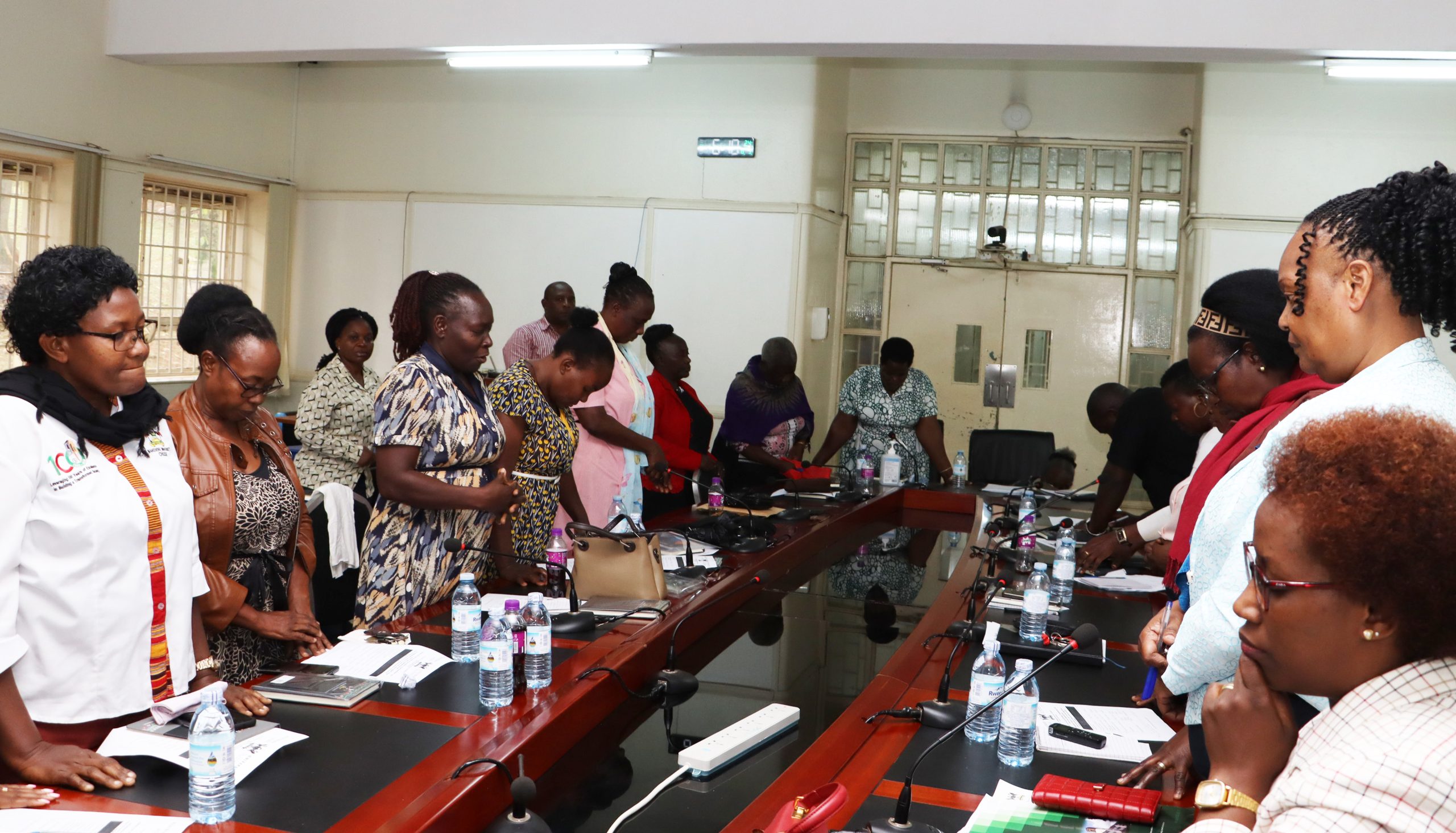
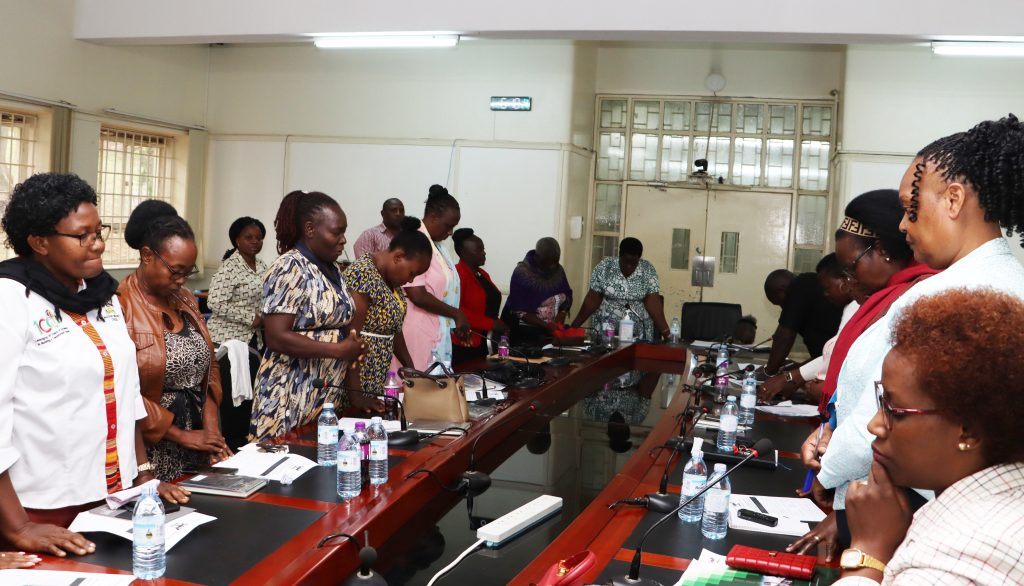
Secretaries, stenographers, copy typists and administrative staff at Makerere University’s College of Humanities and Social Sciences (CHUSS) have undergone training on professional behaviour and the responsible use of artificial intelligence (AI) as the college seeks to strengthen administrative efficiency and service delivery.
The retooling forms part of ongoing efforts to equip CHUSS administrative staff with the knowledge and skills required to meet the changing demands of the modern workplace and enhance service delivery across the college.
The training was officially opened by the Principal Assoc. Prof. Helen Nambalirwa Nkabala who appreciated the staff for the job well done, stressing that there was no complaint about their performance.
“It is important to relearn and be able to work in any space available. Remember WE are the Mine of excellent minds- so we have to show this to the whole university. In case of challenges, those will be noted and attended to” Nkabala said.
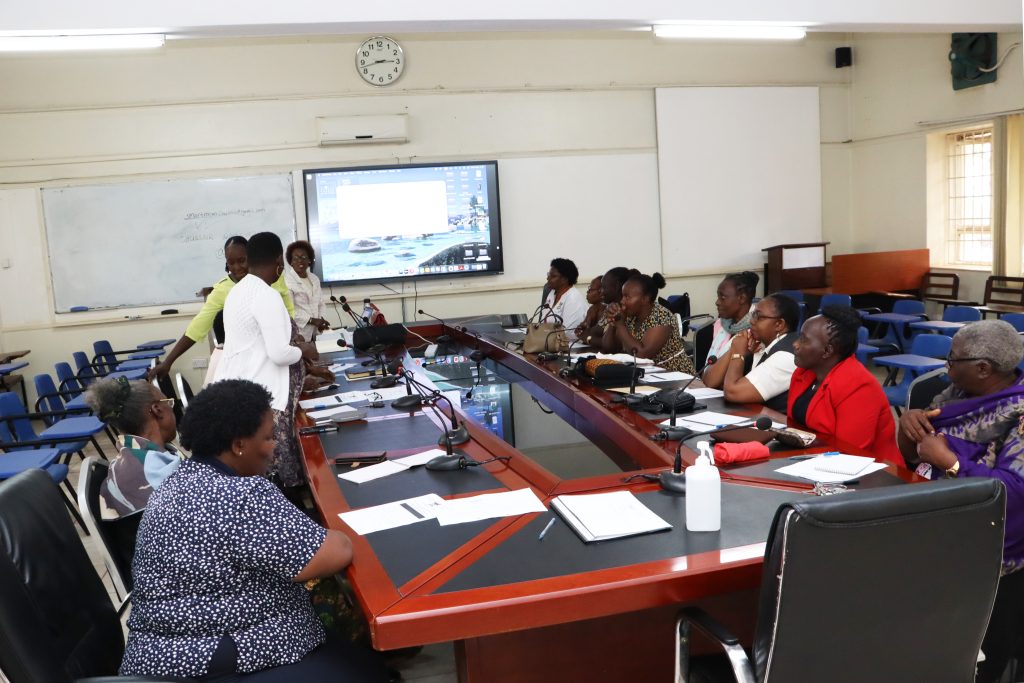
The retooling session, held on Tuesday, August 5 2026, in the CHUSS Smart Room under the theme “The Modern Administrator,” focused on the evolving role of administrators, professional conduct, executive presence and the ethical application of AI in the workplace.
The training was facilitated by Ms. Robinah Nabakooza, Administrative Secretary in the Office of the Vice Chancellor, and Ms. Zainab Kobuyonjo, Personal Assistant in the Office of the Deputy Vice Chancellor (Finance and Administration).
The facilitator also stressed the need to safeguard confidential information, warning that unauthorised disclosure of official information could undermine trust and damage the university’s reputation.
Participants were further encouraged to document their work outputs, maintain accurate records and develop databases that would improve efficiency, accountability and career progression.
The training also introduced participants to artificial intelligence tools that can support administrative work while highlighting the need for responsible and ethical use of the technology.
Administrators are the backbone of universities, staff told
Administrative assistants and secretaries were urged to recognize their strategic role in the success of higher education institutions, with a call to move beyond routine clerical duties and become proactive partners in institutional management.
Speaking during a presentation on “The Evolving Role of Administrators and Secretaries,” Ms. Zainab Kobuyonjo said administrators are the driving force behind university operations, warning that institutions cannot function effectively in their absence.
“We are the voice of every organisation,” Kobuyonjo said. “We may be invisible because people applaud the vice chancellor, the principal or the dean, but without administrators, those offices cannot function.”
She said administrative professionals should appreciate the critical role they play in coordinating meetings, managing official correspondence, receiving visitors and ensuring offices operate smoothly.

According to Kobuyonjo, administrators should anticipate challenges and resolve them before they escalate into crises.
“A great administrator does not wait for problems to happen. A great administrator prevents problems before anyone even realises there was a problem,” she said.
She encouraged staff to prepare meeting documents, schedules and official records in advance to ensure continuity even when unforeseen circumstances prevent them from reporting to work.
Kobuyonjo noted that administrators are no longer confined to typing letters or taking dictation but have become strategic partners who influence decision-making by ensuring leaders have accurate information and organised offices.
She emphasized that behind every successful university leader is an administrative professional managing schedules, confidential records, meetings and official communication.
“Behind every successful vice chancellor, principal or director is an administrative professional quietly making success possible,” she said.
Kobuyonjo also stressed the importance of confidentiality, warning staff against sharing sensitive institutional information without authorization.
She said administrators are entrusted with confidential records and must protect institutional integrity by exercising discretion.
“People are losing trust in secretaries because some cannot keep confidential information,” she said. “Ensure whatever you are entrusted with is kept safely until it is authorised for release.”
She urged participants to uphold Makerere University’s core values of excellence, accountability, professionalism, integrity, respect and inclusivity in every interaction with students, visitors, development partners and government officials.
Kobuyonjo said every letter, email, telephone call and meeting reflects the image of the university, adding that administrative staff are responsible for protecting the institution’s reputation built over more than a century.
“Every interaction matters,” she said. “Whatever you do carries the image of the university.”
The administrator also called for improved customer care, professionalism and time management, saying staff should report to work on time and begin their duties without waiting for supervisors to arrive.
She encouraged administrators to familiarize themselves with institutional documents, including the university’s strategic plan and human resource manual, to improve their effectiveness and career prospects.
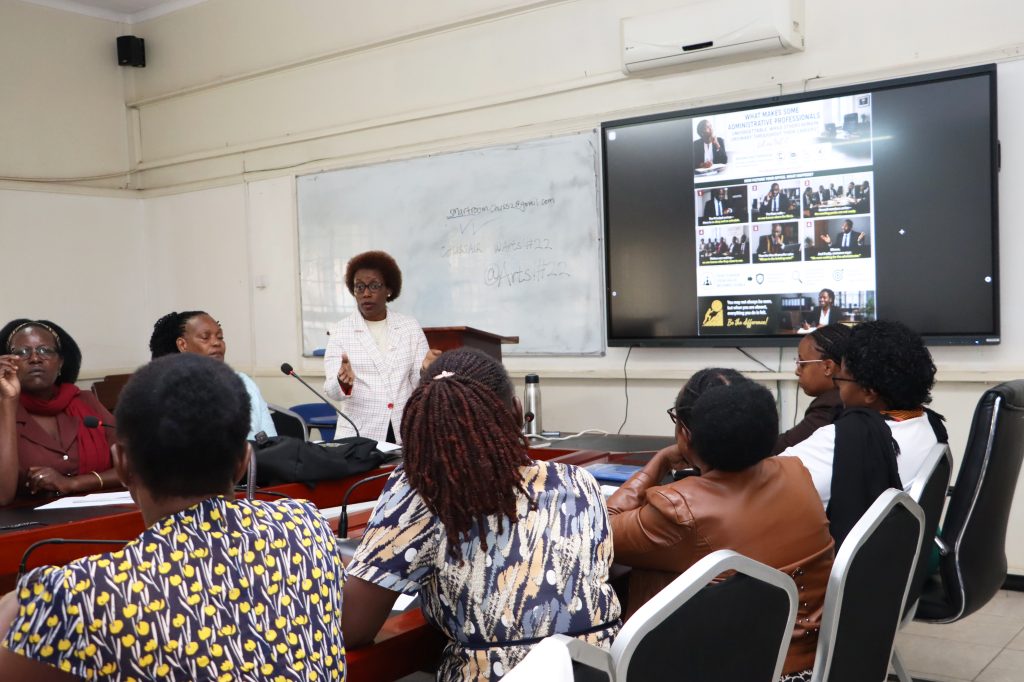
Kobuyonjo further urged staff to build and regularly update databases of contacts, institutional statistics and departmental information so they can provide accurate information whenever required.
She said teamwork and knowledge sharing were equally important, encouraging colleagues to share databases and other resources rather than keeping information for personal advantage.
To strengthen accountability, Kobuyonjo advised participants to keep records of their work outputs, including letters drafted, meetings organised, minutes prepared and documents filed.
She said such records would provide evidence of performance during appraisals and promotion interviews.
“Record everything you do,” she said. “When your supervisors ask for your output, they need figures, not general statements.”
Kobuyonjo concluded by encouraging administrators to demonstrate initiative and competence so that university leaders increasingly involve them in institutional activities and decision-making processes.
Staff urged to uphold professionalism, continuous learning
Administrative assistants and secretaries were urged to embrace professionalism, accountability and continuous learning to improve service delivery and safeguard the reputation of Makerere University.
Speaking during a training session on professional behaviour, Ms. Robinah Nabakooza challenged administrative staff to uphold high standards of performance by accounting for their daily work, acquiring new skills and demonstrating excellence in every task they undertake.
She said staff should regularly assess their performance and ensure that every letter, record, report and archive they produce reflects the university’s commitment to excellence.
“Account for the eight hours you spend at work,” Nabakooza said. “Every day ask yourself what new skill you have learnt and whether your work reflects excellence.”

She encouraged participants to embrace emerging technologies, including artificial intelligence, digital calendars and other online office management tools, saying the modern workplace requires administrative professionals to continuously upgrade their skills.
Nabakooza warned that complacency and a loss of enthusiasm after securing employment could hinder career progression.
“The same zeal you had when applying for the job should remain throughout your career,” she said. “If you become an ‘I don’t care’ person, someone else will eventually take your place.”
She identified chronic lateness, absenteeism, gossip, breaches of confidentiality, resistance to change, unprofessional communication and misuse of social media as behaviours that place employees’ jobs at risk.
Nabakooza urged staff to communicate with supervisors whenever they are unable to report to work or expect to arrive late.
Drawing from her experience at Makerere University Library, she recounted how punctuality and familiarity with institutional records enabled her to respond to an urgent request for a report needed by President Yoweri Museveni during a parliamentary session on land.
She said the report was located, photocopied and bound within minutes because she knew the library’s collections and was already at her workstation.
“You must know where information is located in your institution,” she said. “If you are absent or do not know your workplace well, you risk damaging the reputation of the university.”
Nabakooza also cautioned against excessive movement between offices and workplace gossip, saying employees should remain at their workstations unless official duties require otherwise.
She noted that employers are more likely to recognize staff who demonstrate commitment, initiative and consistency in their work.
Addressing challenges facing administrative offices, Nabakooza acknowledged shortages of computers, furniture and other office equipment but encouraged staff to remain resourceful while continuing to advocate for improved resources through their supervisors.
She advised participants to take advantage of available opportunities to acquire equipment, including requesting refurbished computers from university departments disposing of older machines.
On career advancement, Nabakooza encouraged staff to actively apply for internal promotion opportunities instead of waiting to be considered automatically.
She disclosed that only two secretaries applied during a recent promotion exercise despite the availability of vacancies.
To address heavy workloads, Nabakooza urged staff to plan their work carefully by maintaining to-do lists, prioritizing assignments according to urgency and the institutional chain of command, and managing time effectively.

She also stressed the importance of teamwork and knowledge sharing, encouraging colleagues to train one another rather than withholding skills.
“Teach yourself every day,” she said. “If your colleague knows Excel, PowerPoint or another skill better than you, learn it. Improve your weaknesses continuously.”
Nabakooza said cross-training would enable offices to continue operating efficiently even when key personnel are absent, adding that administrative professionals should become versatile enough to perform multiple functions.
She concluded the session by promising to share additional training materials on conflict resolution and workplace professionalism, encouraging participants to continue building their competencies beyond the workshop.
Nabakooza urges responsible use of AI in university administration
Secretaries and Administrative staff were further urged to embrace artificial intelligence responsibly, with a strong emphasis on protecting confidential information and maintaining both digital and manual records.
, Ms. Robinah Nabakooza said AI should be used to improve efficiency without replacing conventional records management systems that remain critical for institutional accountability.
She noted that while AI and digital filing systems enable faster retrieval of information, institutions should continue maintaining hard-copy records for official documentation and archival purposes.
“AI helps us work faster, but it doesn’t mean we abandon manual records,” Nabakooza said. “You have to be careful about the type of records you are handling because some still require both physical and digital copies.”

Nabakooza explained that electronic indexing systems can simplify document retrieval by allowing staff to search for keywords before locating the corresponding physical files.
She also encouraged administrative staff to prepare for internet outages by learning how to work offline and using alternative internet sources, including mobile tethering, to ensure uninterrupted service delivery.
“Internet may fail temporarily, but work should not stop. We have to think outside the box,” she said.
Nabakooza urged staff to adopt technology as a tool to improve productivity while exercising professional judgment in determining which records require physical preservation.
Kobuyonjo warns against uploading confidential documents to AI platforms
Secretaries and administrative staff were also cautioned against exposing confidential university information through artificial intelligence platforms, with a reminder that ethical responsibility remains paramount in the digital era.
Ms. Zainab Kobuyonjo told participants that while AI offers significant opportunities to improve workplace efficiency, its use must be guided by confidentiality, integrity and respect for institutional policies.
She warned staff against uploading sensitive documents such as university policies, Senate papers and confidential records relating to students, employees and suppliers onto AI applications.
“Protect confidential information,” Kobuyonjo said. “Don’t upload policies, Senate papers or confidential records onto AI because you will be in trouble.”
She also urged participants to verify information generated by AI before incorporating it into official documents, saying technology should support—not replace—professional judgment.
Kobuyonjo further encouraged staff to respect intellectual property by acknowledging whenever AI tools have been used in preparing reports, correspondence or other official documents.
“If you know you have used AI, be willing to tell someone that you actually used AI to come up with that work,” she said.
She described AI as a valuable resource for modern administrators but stressed that ethical conduct and accountability must remain central to its application.
Kobuyonjo also called on administrative staff to cultivate a culture of collaboration by sharing knowledge and skills with colleagues to strengthen institutional capacity.
The workshop concluded with participants being encouraged to continue learning digital skills while balancing technological innovation with professional ethics and confidentiality.
Report by Jane Anyango Principal Communication Officer CHUSS
Photo credits: Peninah Nalubega 4th Year Journalism and Communication Student