Kampala, Uganda – April 18, 2026
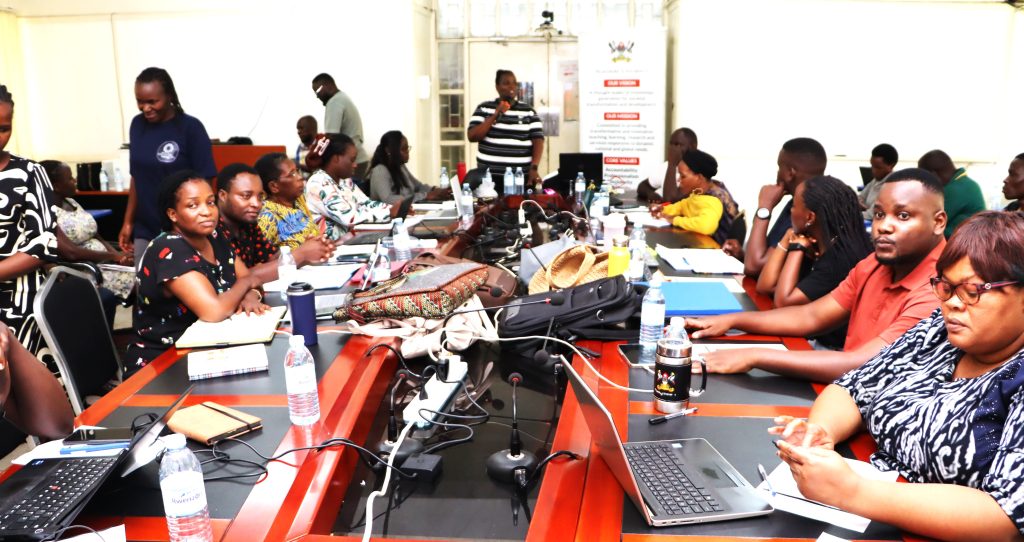
The Graduate Training Unit at the College of Humanities and Social Sciences (CHUSS) has trained over 42 PhD and Master’s students in scholarly writing, targeting improved research proposal development and timely completion of graduate studies.
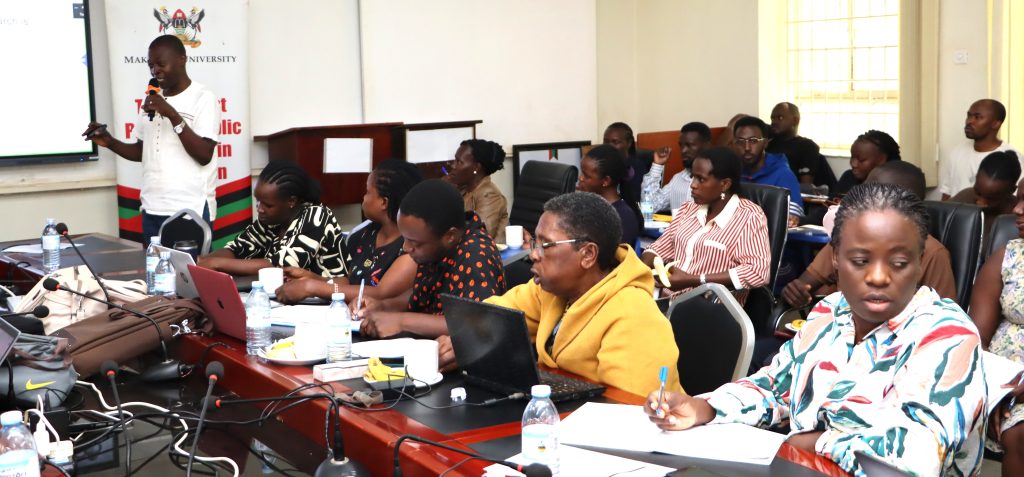
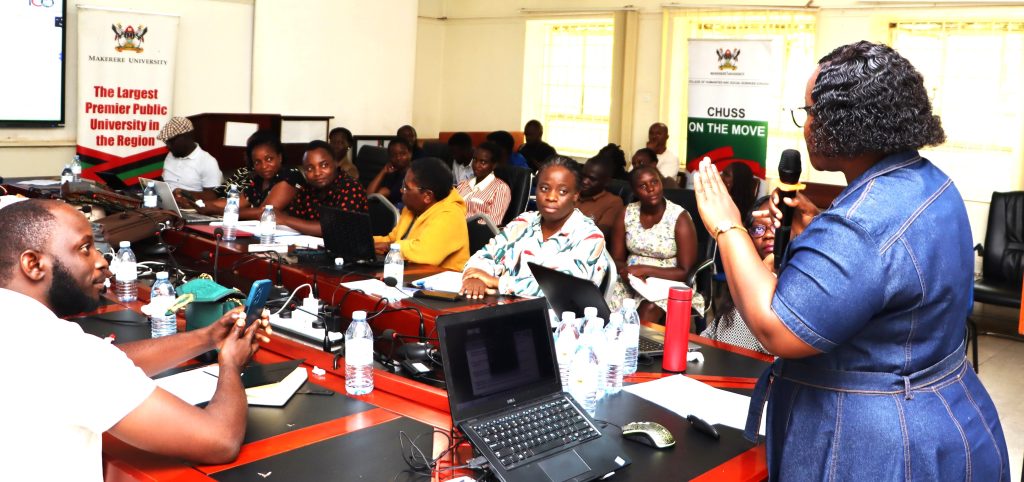
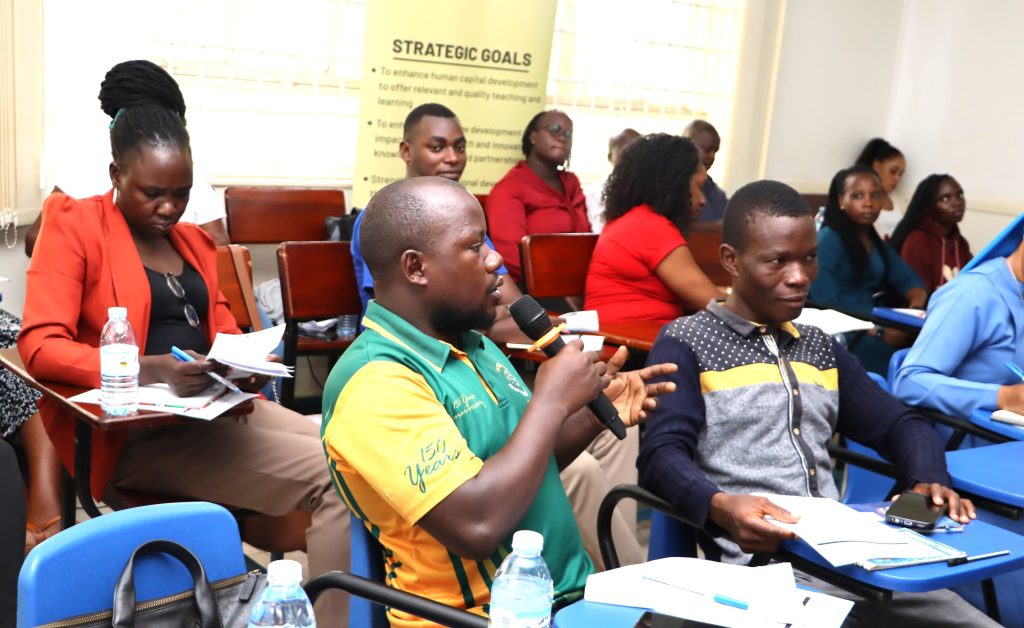
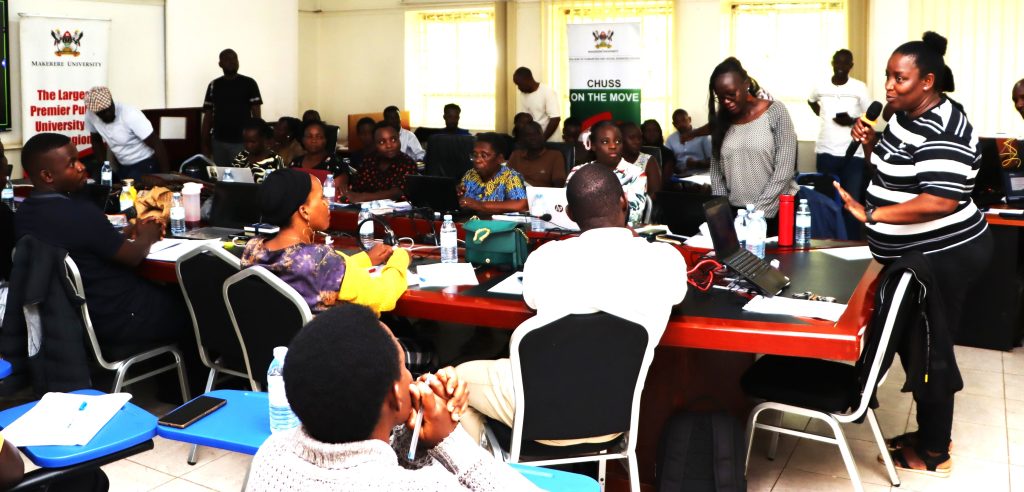
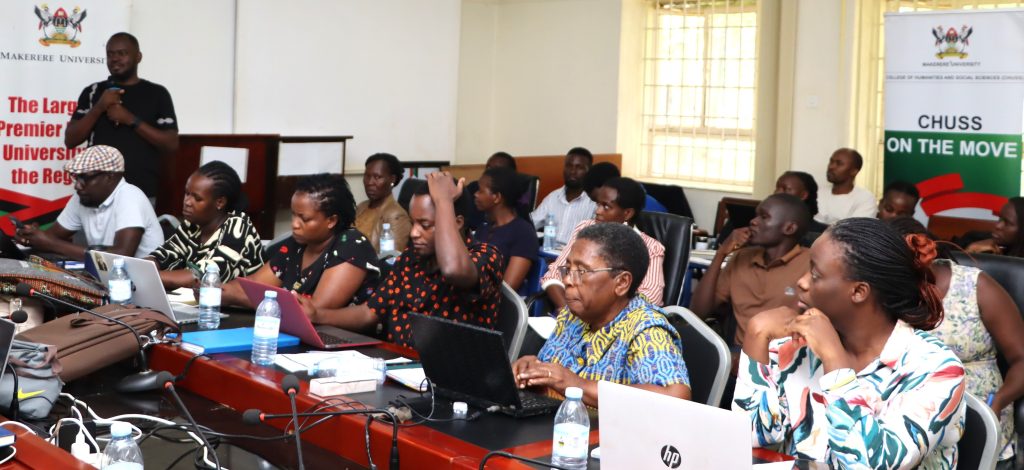
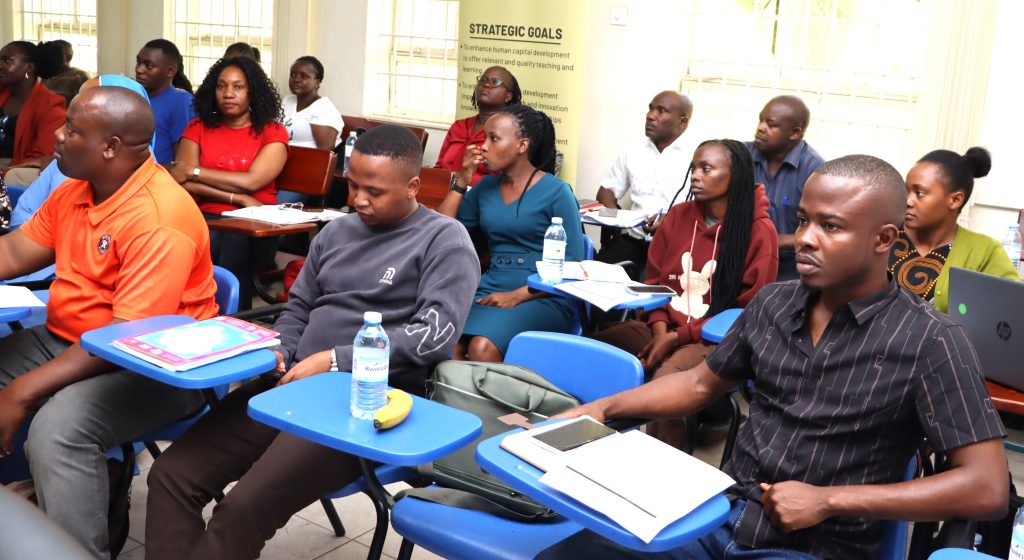
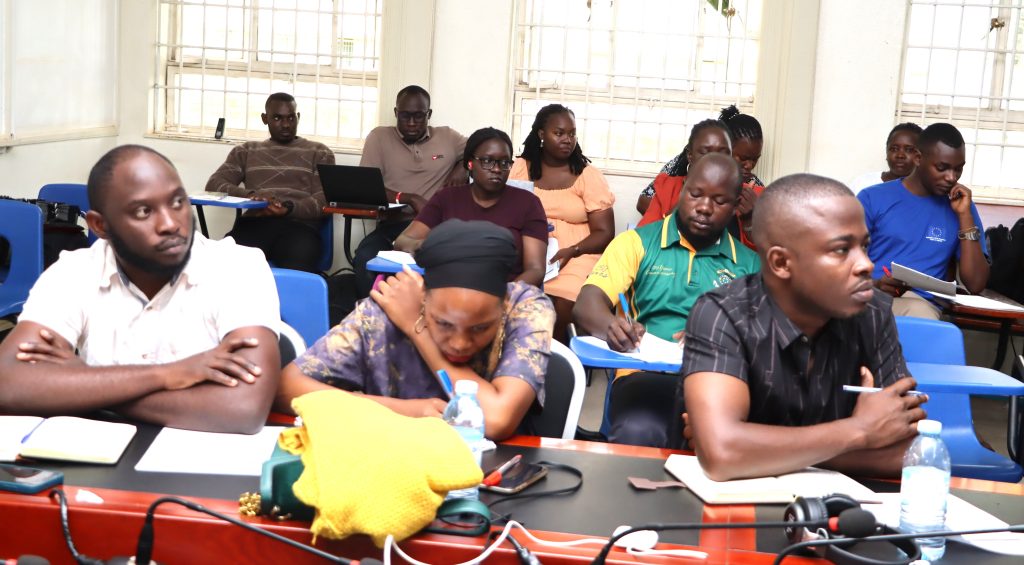
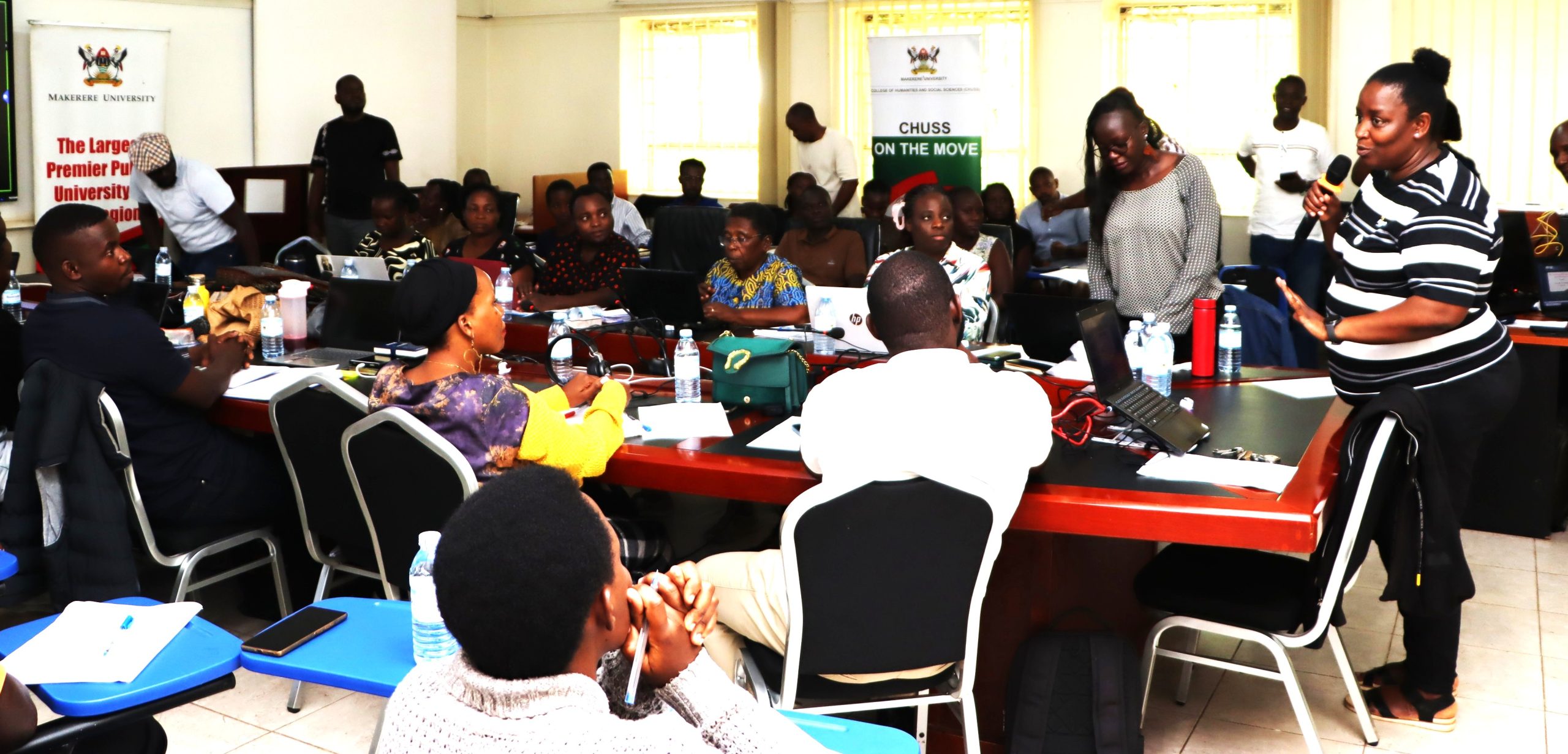
The training, held in the CHUSS Smart Room, focused on critical components of academic research, including proposal structure, literature review, methodology, crafting research tools, and executing research.
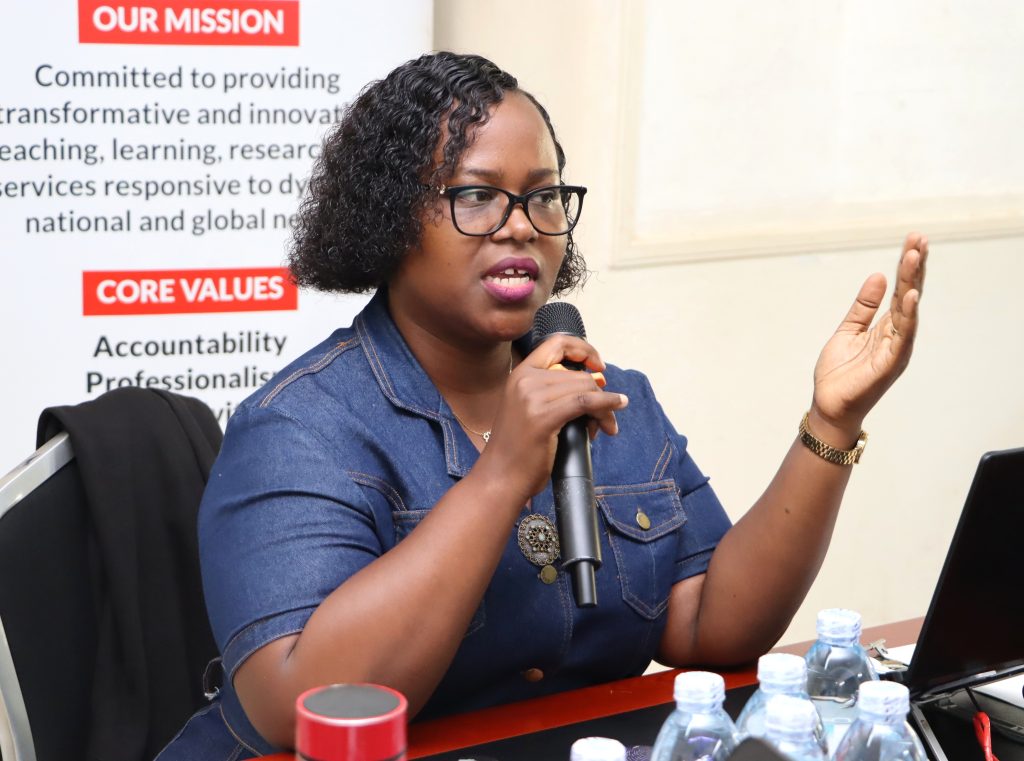
Opening the workshop, CHUSS Principal Helen Nambalirwa Nkabala underscored the importance of deliberate institutional support in graduate training, noting that such initiatives are informed by real academic experiences.
“It is not easy to decide how best we can support our graduate students, but we are confident that if we create such spaces, you will be able to move forward together,” she said.
She commended the Grants, Research and Graduate Training Unit for organizing the workshop, describing their efforts as essential in strengthening the college’s research environment.
Breaking the Myth of Isolation in Graduate Studies
Nkabala challenged the notion that graduate education must be a solitary journey, emphasizing CHUSS’ people-centered approach.
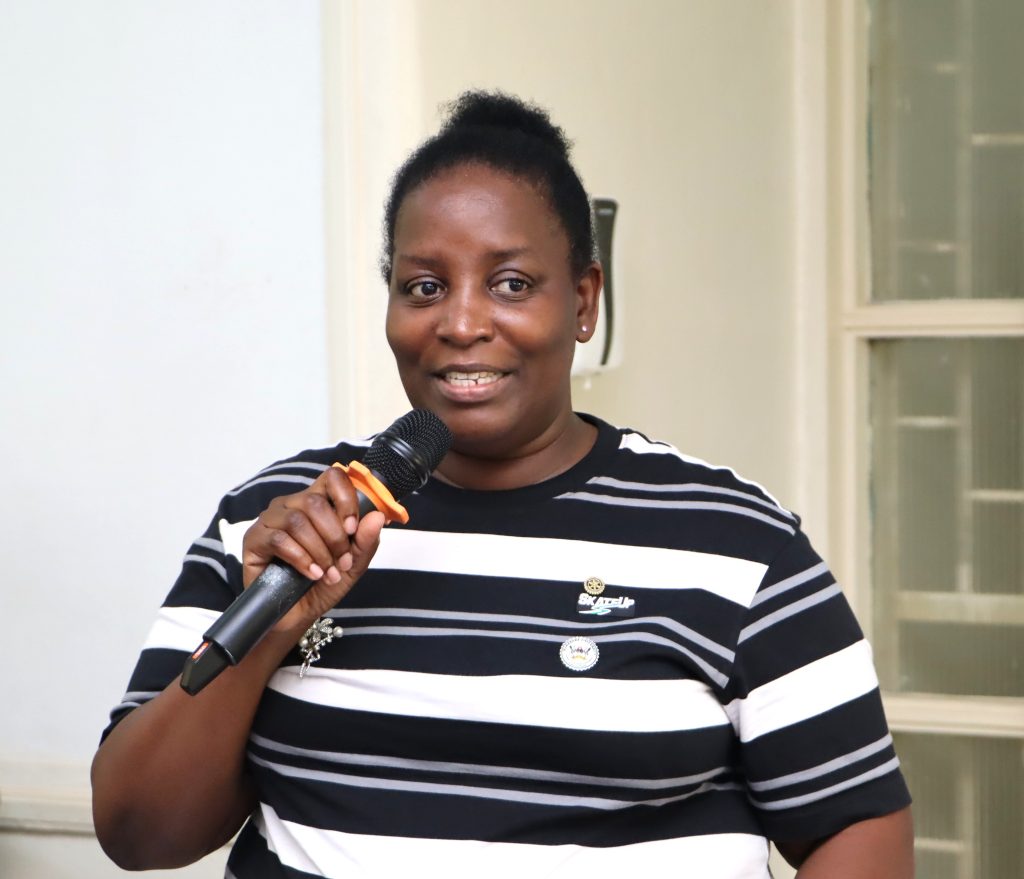
“Graduate training is often described as a lonely journey, but as a college, we believe in supporting each other and holding each other’s hands so that you can finish on time,” she said.
She added that collective support would enable students to focus on key challenges such as financing their studies rather than struggling with academic processes alone.
The Principal revealed that the college is strengthening accountability through a Research Information Management System (RIMS), which will track engagement between students and supervisors.
“You will be required to record your sessions with supervisors whether online, through email, or physical meetings so that progress in your research is clearly documented,” she explained.
Nkabala emphasized that mentorship is not limited to students but extends to faculty and administrators, creating a culture of continuous learning.
“We are not looking at you as the only pieces in the puzzle. We are also being mentored on RIMS,” she said, urging students to remain open and avoid preconceived fears about supervision.
“Everyone has their own story, and we should give each story the opportunity to work,” she added.
Improved Facilities to Support Graduate Research
To enhance the research environment, the college is expanding graduate workspaces, including a new graduate room in CTF2, in addition to existing spaces in Archaeology and Geography.
“We are looking into possibilities of equipping these rooms, including putting in a coffee machine so that you have a conducive space to work from,” Nkabala said.
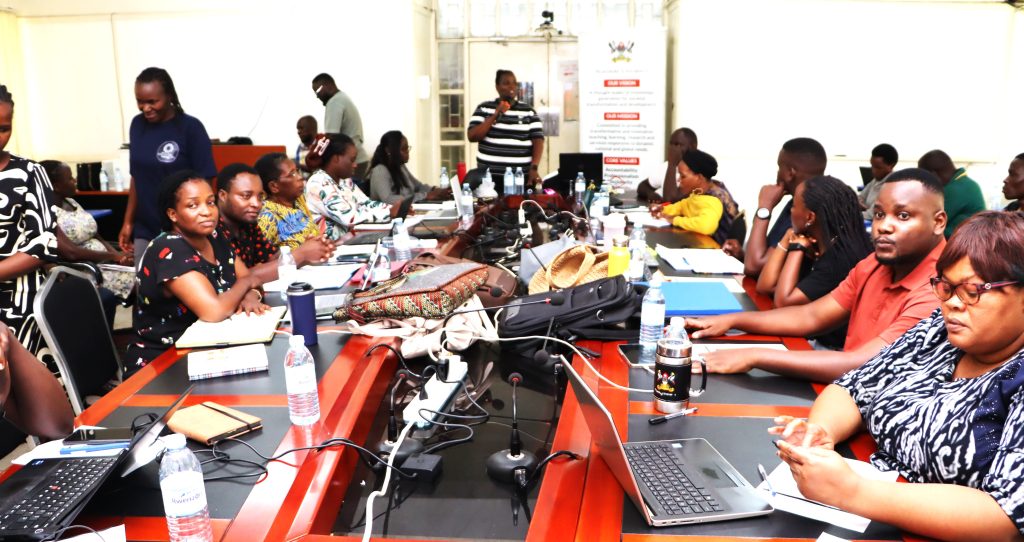
She urged students to use the facilities responsibly to ensure sustainability for future cohorts.
The Principal encouraged students to directly engage college leadership with their challenges rather than resorting to public criticism.
“For us, we have people who listen. Come and tell us your challenges so that we can address them,” she said.
Reaffirming the college’s identity, she concluded: “We are the mine of excellent minds. We are the College of Humanities and Social Sciences.”
Workshop Supports Graduate Research Journey
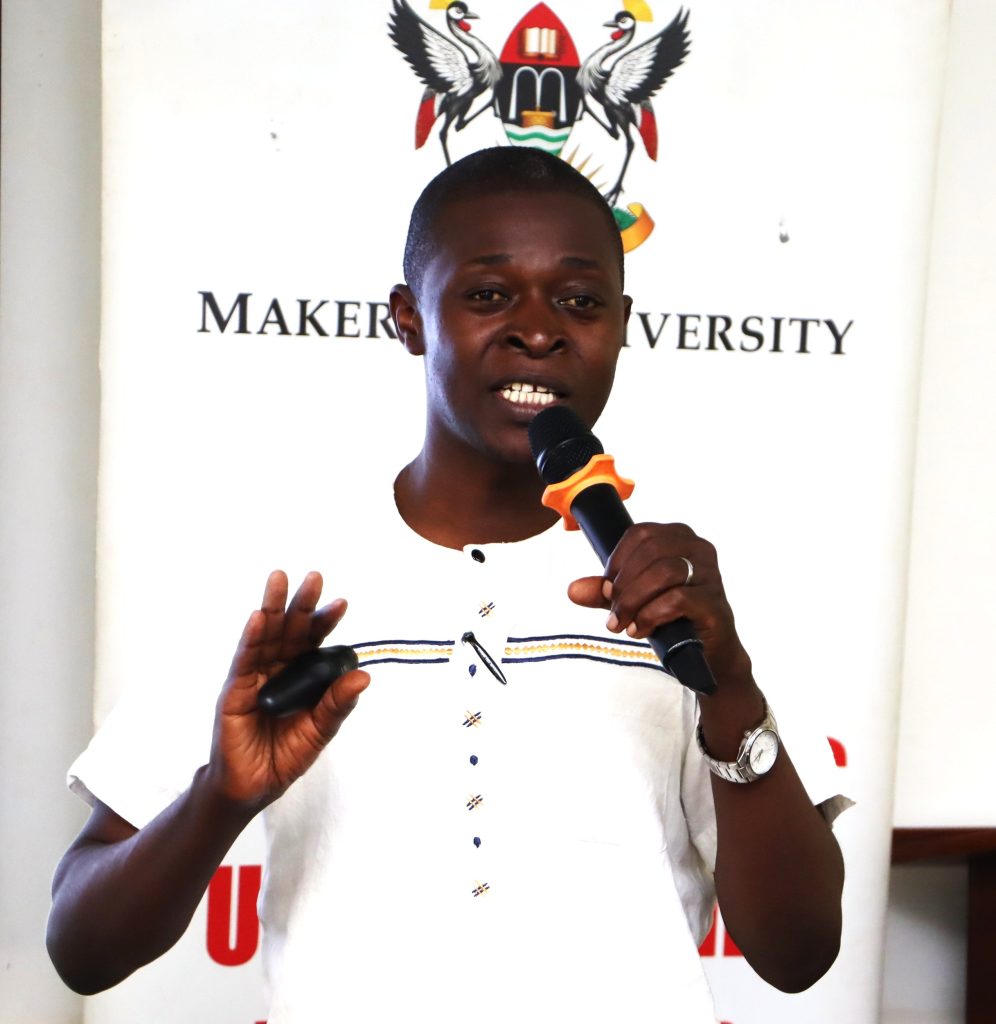
Setting the tone for the training, Dr. Isaac Tibasiima encouraged students to approach the workshop as a support space while navigating the complexities of graduate studies.
“We are here to give you support, but you must also pick what works for your discipline,” he said, noting the interdisciplinary nature of the training. “Not everything you hear here is gospel truth, what matters is what works in your field.”
He emphasized the importance of understanding disciplinary differences, particularly in writing and referencing styles, urging students to align their work with expectations within their specific fields.
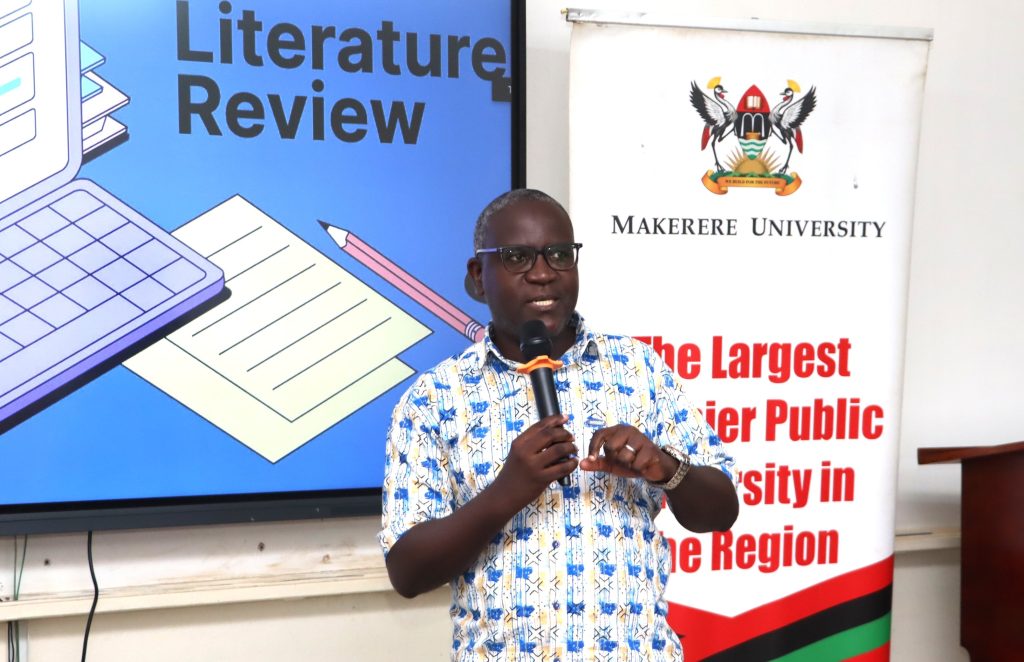
Tibasiima reassured students that struggles in research and writing are a normal part of the academic journey.
“We’ve all had moments when nothing makes sense, when you write and delete everything, or spend a whole day in the library without producing anything. That is very normal,” he said. “We did not die, you will not die.”
He encouraged students to remain resilient and proactive, especially in working with supervisors, advising them to read their supervisors’ published work to better understand expectations.
Tibasiima highlighted the importance of compliance with institutional systems, urging students to register on the university’s digital platforms to track their academic progress.
“If you are not on the system, the university does not know you,” he warned, adding that all supervision engagements and feedback will be documented digitally.
He also reminded PhD students of the requirement to defend their proposals within the first year and encouraged timely submission of progress reports.
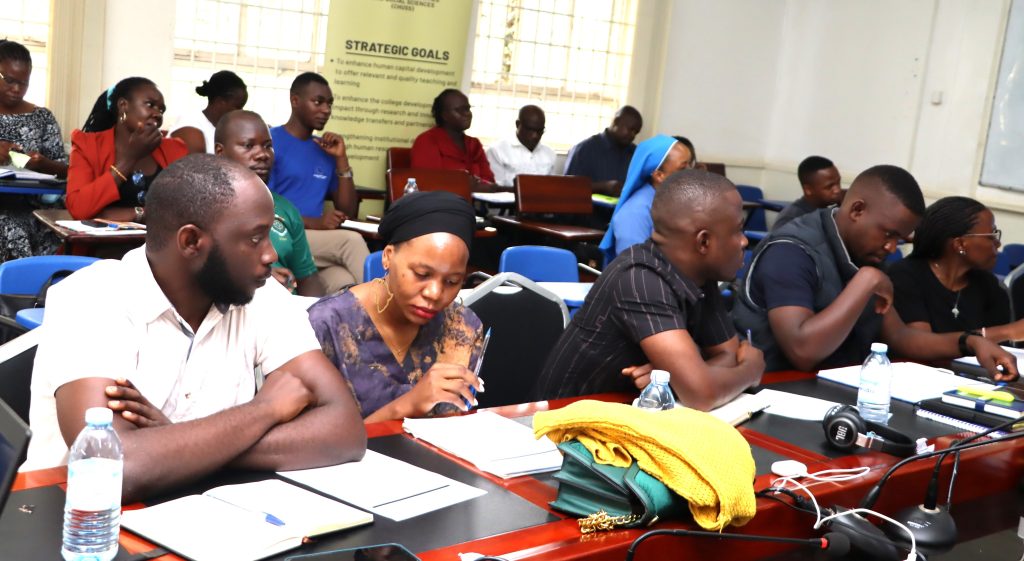
He also urged doctoral students to prioritize publishing their research, noting that academic visibility is critical to scholarly growth.
“If you are a doctoral student, you must ensure that you publish from your work,” he said, adding that the college plans to organize a dedicated publication workshop in the coming months.
Interactive Learning Through Presentations and Breakout Sessions
The workshop featured presentations from faculty across disciplines. Dr. Richard Balikoowa and Dr. Ritah Nakanjako unpacked research methodology, while Zaid Sekito discussed the role and application of theory in research.
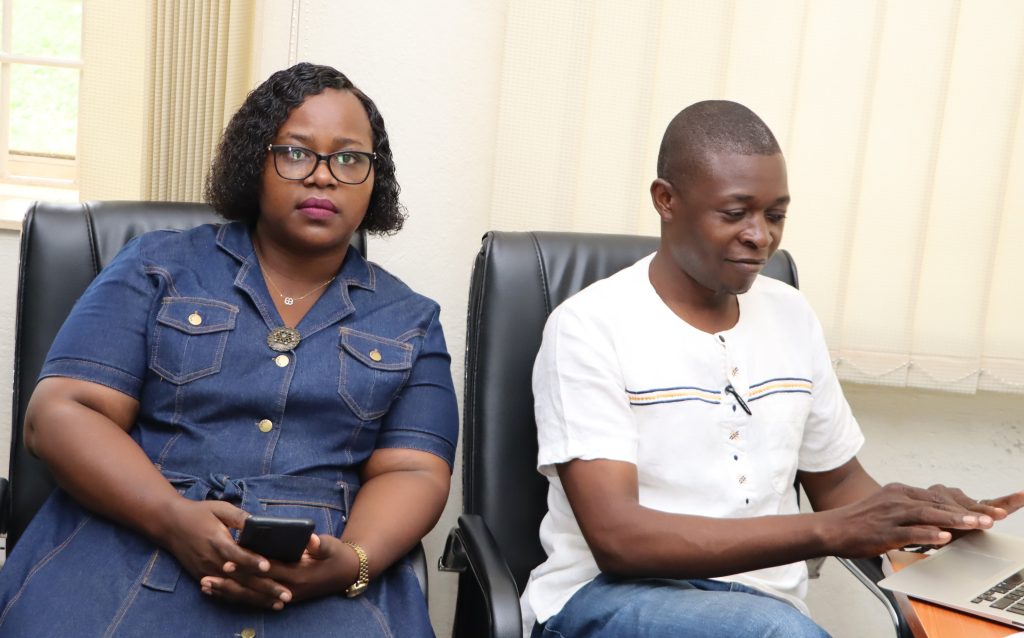
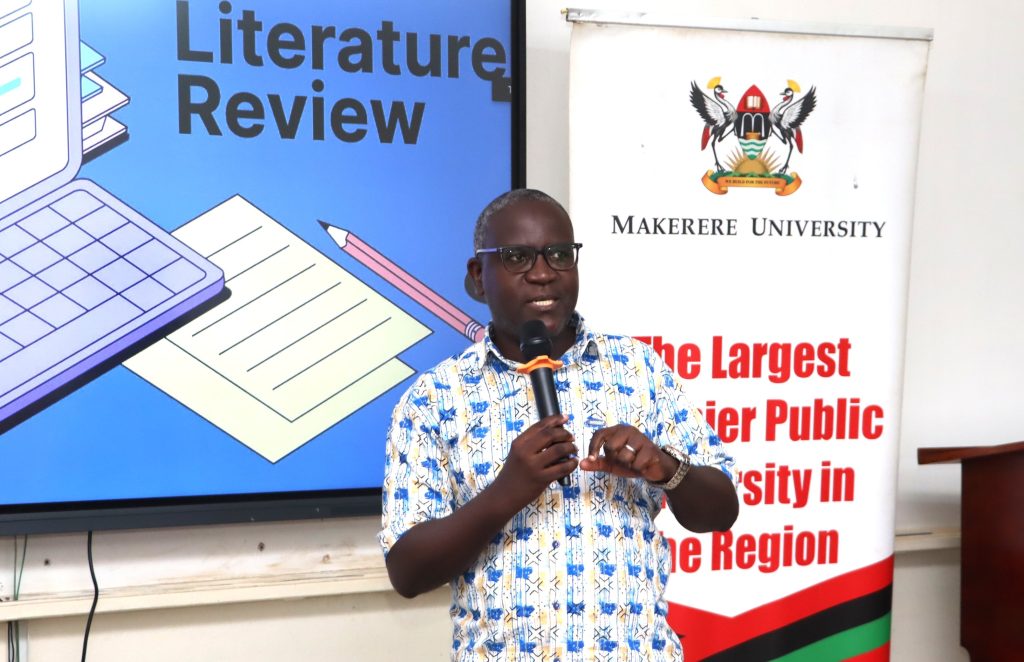
Dr. David Okimait facilitated sessions on general academic writing skills, and Tibasiima led discussions on literature review, focusing on sourcing, critical reading, analysis, and argumentation.
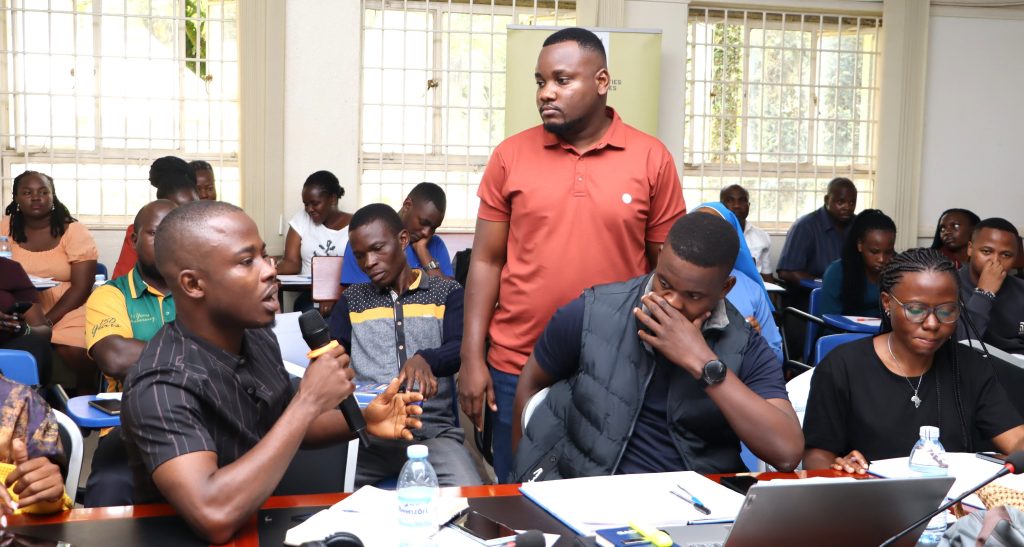
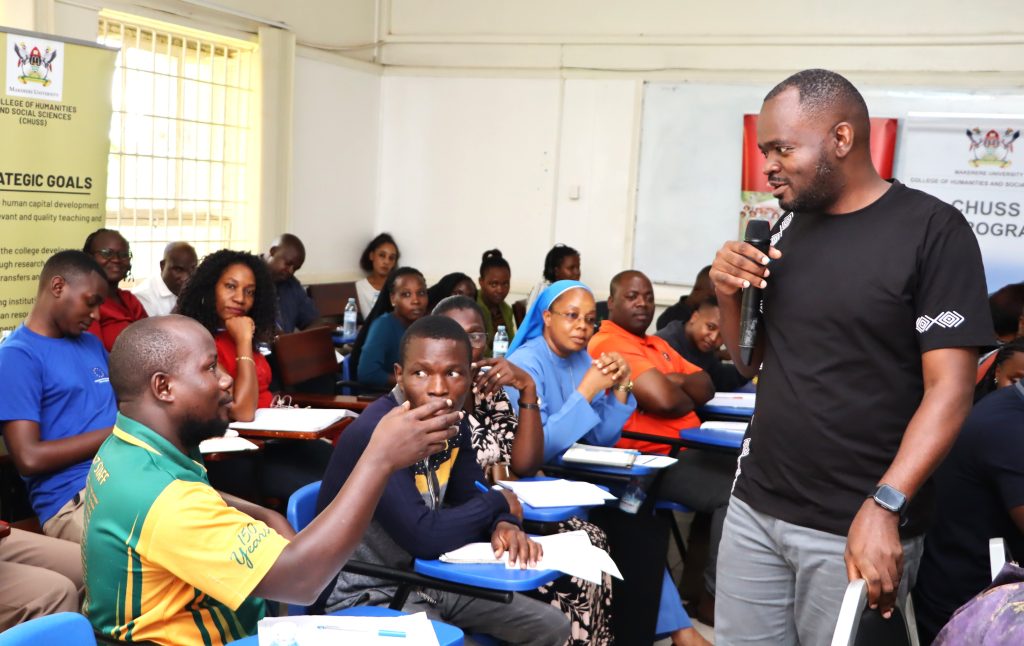
Students actively engaged in question-and-answer sessions after each presentation and later participated in breakout sessions, where they pitched their research ideas and received tailored feedback from facilitators.
The workshop concluded with remarks from Deputy Principal Eric Awich Ocen, who reaffirmed the college’s commitment to supporting graduate students through mentorship and structured training.
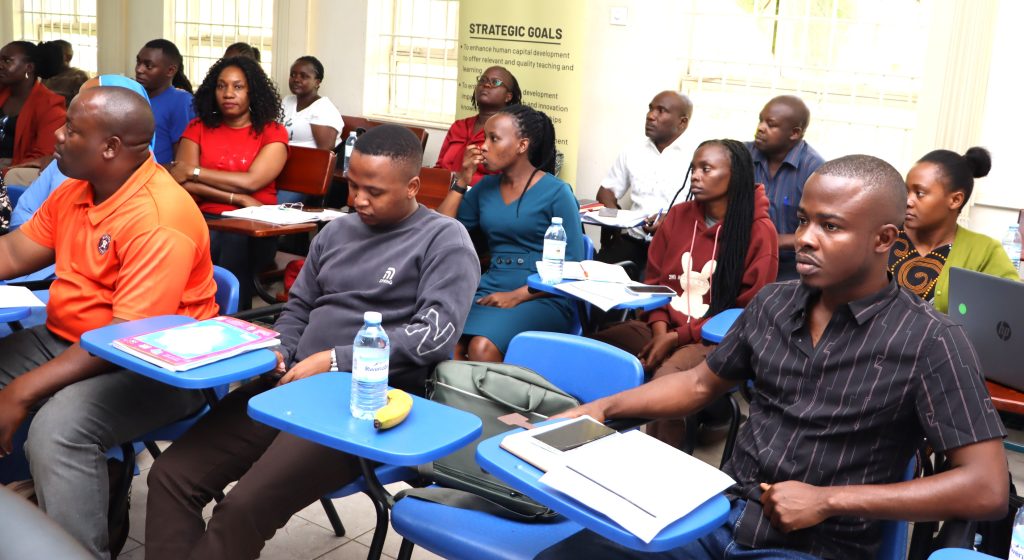
The initiative reflects CHUSS’ broader strategy to strengthen research capacity and foster academic excellence among graduate students.