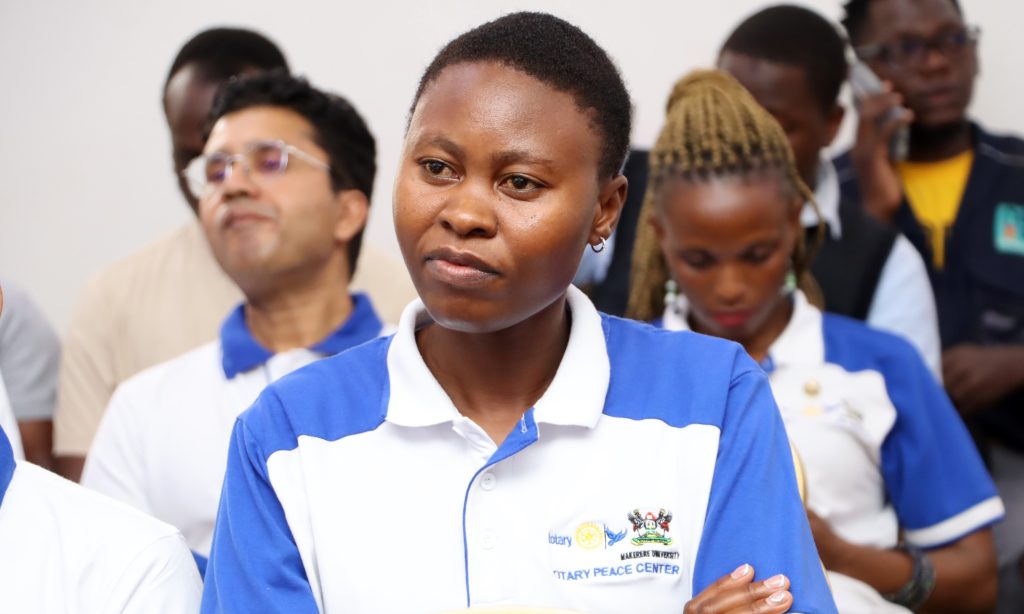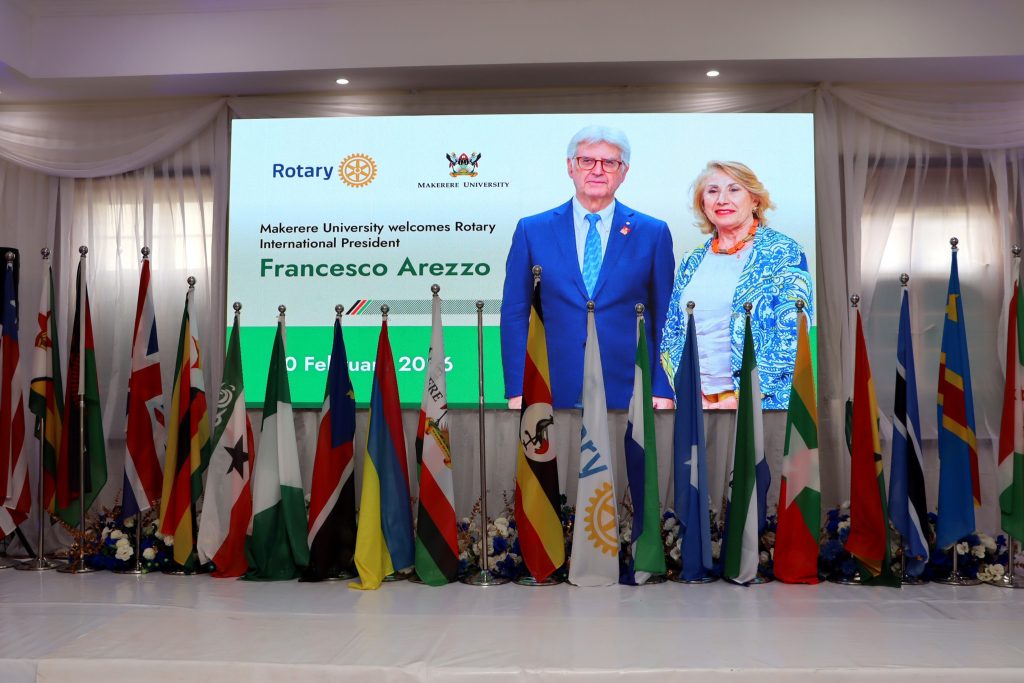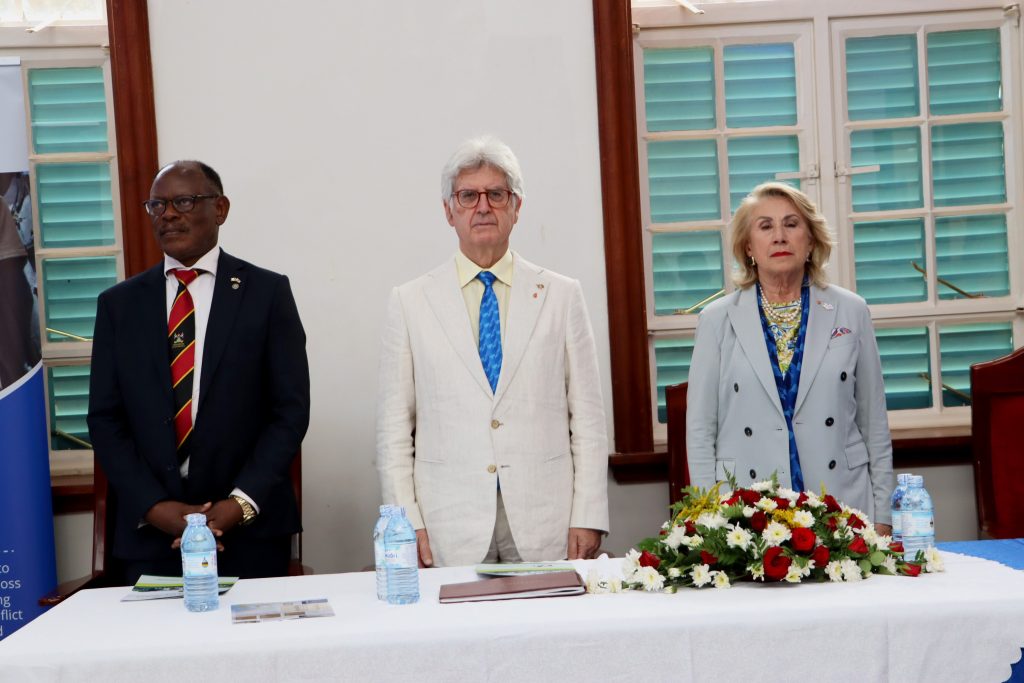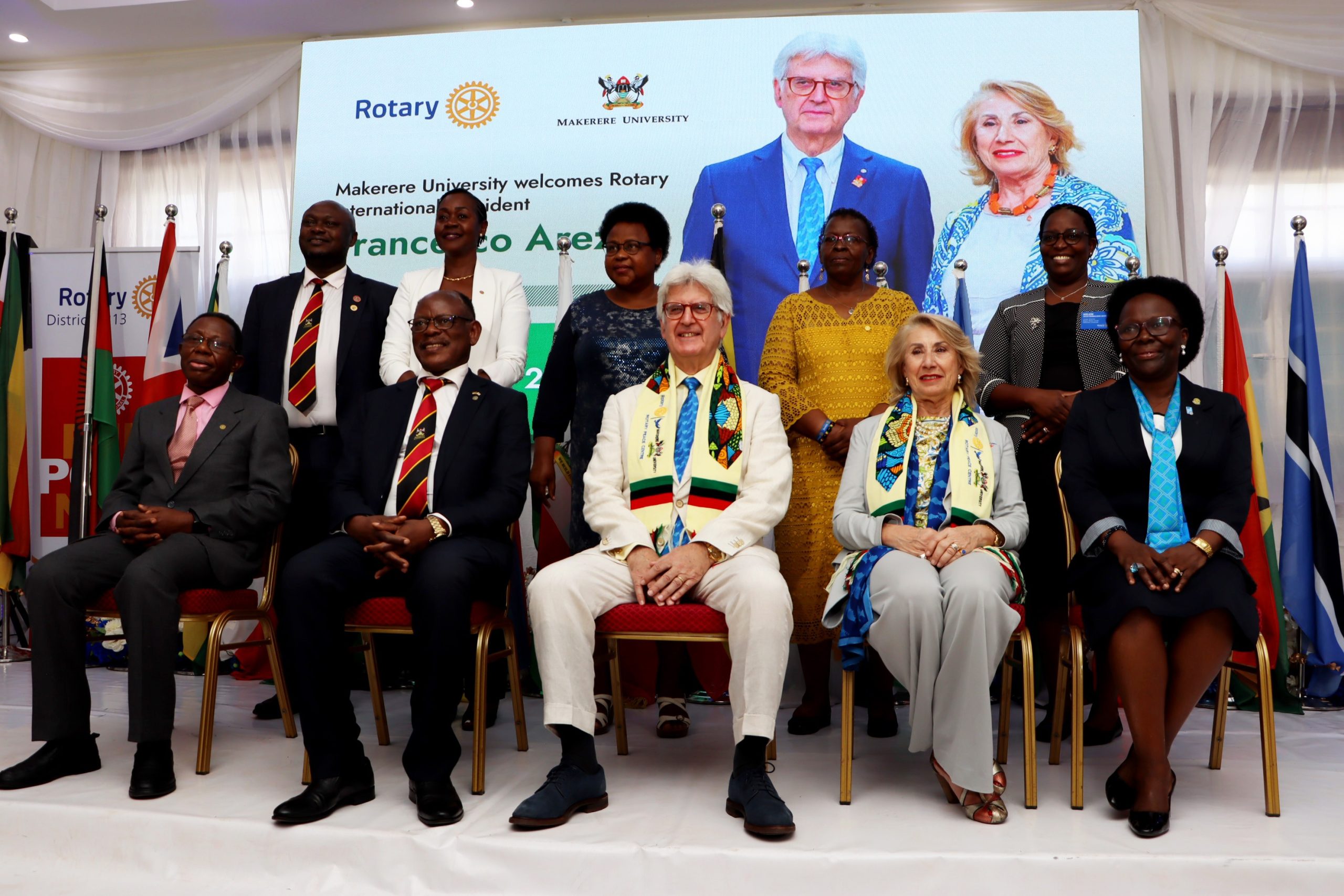
KAMPALA, Uganda February 20, 2026 The Rotary Peace Centre at Makerere University hosted the 9th Capstone Conference from February 19–20, 2026, drawing peacebuilders, scholars, Rotarians and global leaders to reflect on collaborative pathways to sustainable peace.
Held under the theme “Collaborative Peace Building for Societal Transformation,” the conference showcased Social Change Initiative reports from the 9th Cohort of Rotary Peace Fellows. The event also welcomed incoming scholars from Cohort 11, who were introduced to the Centre’s tradition of academic excellence, cross-cultural collaboration and a shared commitment to advancing peace as a continuous global process.
The Capstone Conference, now in its ninth edition, has become a defining academic and policy platform for the Makerere University Rotary Peace Center. Fellows presented research and field experiences addressing conflict resolution, refugee resettlement, youth empowerment and community-based reconciliation initiatives across diverse global contexts. Discussions emphasized how partnerships among governments, academia, civil society and grassroots communities can create durable societal transformation.
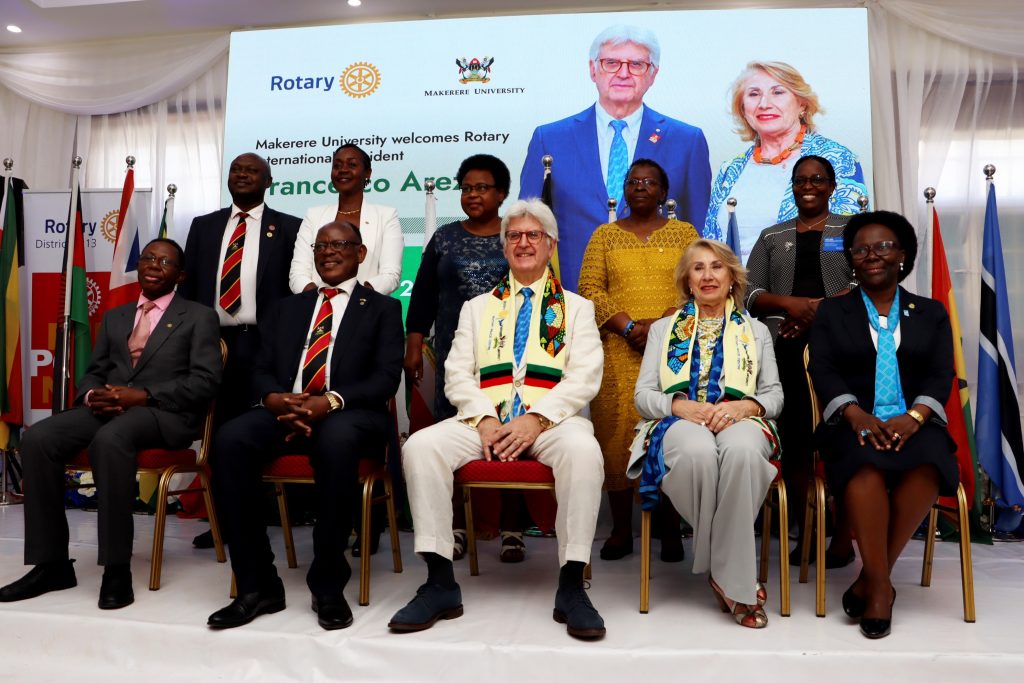
Participants included Rotary International leadership, District Governors from Districts 9213 and 9214, District Rotaract Representatives, past governors, members of the Rotary Peace Centre Advisory Committee, university management, faculty, Rotarians, Rotaractors and families of the peace fellows. The gathering underscored the Centre’s growing reputation as Africa’s leading hub for advanced peace studies and practice.
Peace Is Our Only Goal”: President Francesco Arezzo Inspires Fellows at Makerere
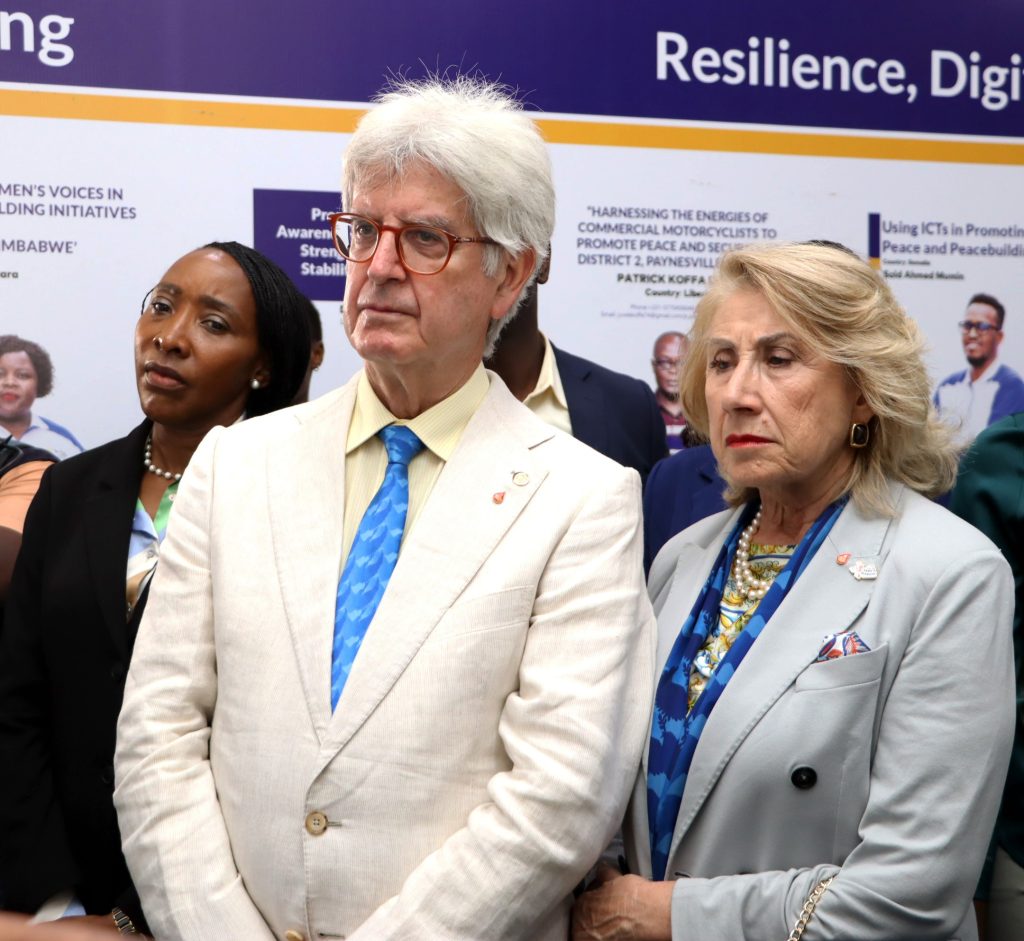
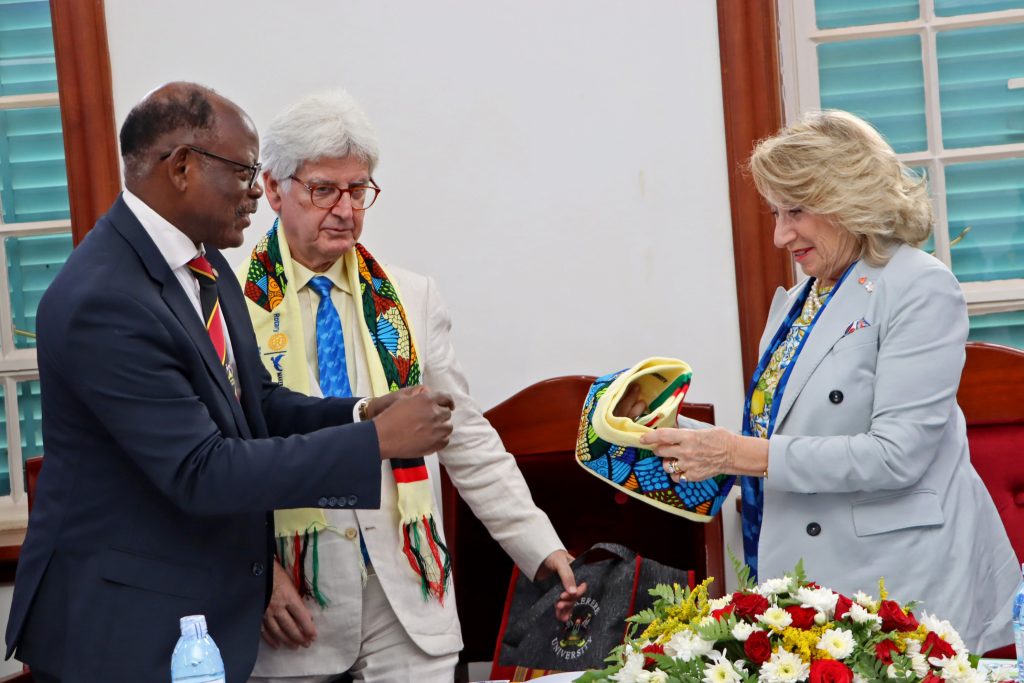
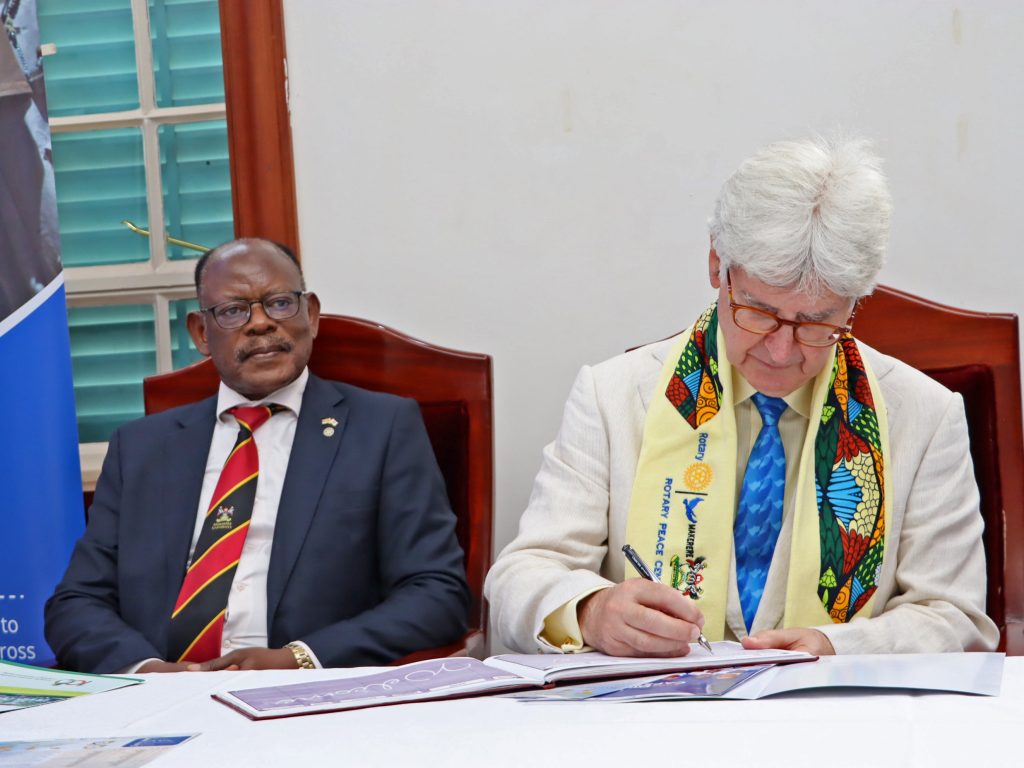
The highlight of the conference was the official visit on February 20, 2026, by Francesco Arezzo, President of Rotary International.
Addressing fellows and guests, Arezzo described Rotary as “a peace machine,” emphasizing that the Peace Centres represent the highest expression of Rotary’s peacebuilding mission. He noted that Rotary currently operates eight Peace Centres globally, with the most recent inaugurated in Pune, India, and commended Makerere University as one of the continent’s finest institutions entrusted with hosting the African centre.
“The Peace Centre is our most important realization in this field,” Arezzo said. “Every year we prepare young ambassadors of peace who go into the world to serve governments, NGOs and communities. You carry the Rotary name with the responsibility to practice peace in ways suited to each country’s unique context.”
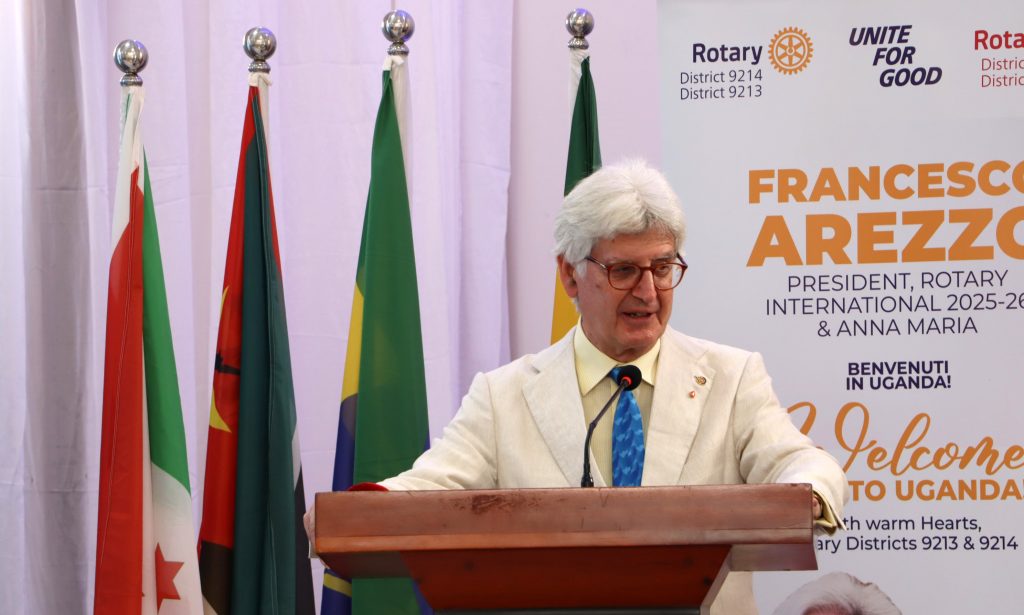
He praised the diversity of projects presented by Cohort 9, highlighting innovative approaches — including the integration of arts and music in peacebuilding — as evidence that sustainable peace requires creativity and adaptability. He further stressed that peace is not limited to academic instruction but is cultivated through intercultural exchange, youth engagement and economic empowerment initiatives.
Citing Rotary’s youth exchange programs, clean water projects and educational support for girls, the President reiterated that every Rotary intervention ultimately advances peace. “Peace is our only goal. All the rest is just a way to achieve peace,” he told the audience, urging fellows to remain engaged with Rotary beyond graduation.
Vice-Chancellor Applauds Rotary Partnership
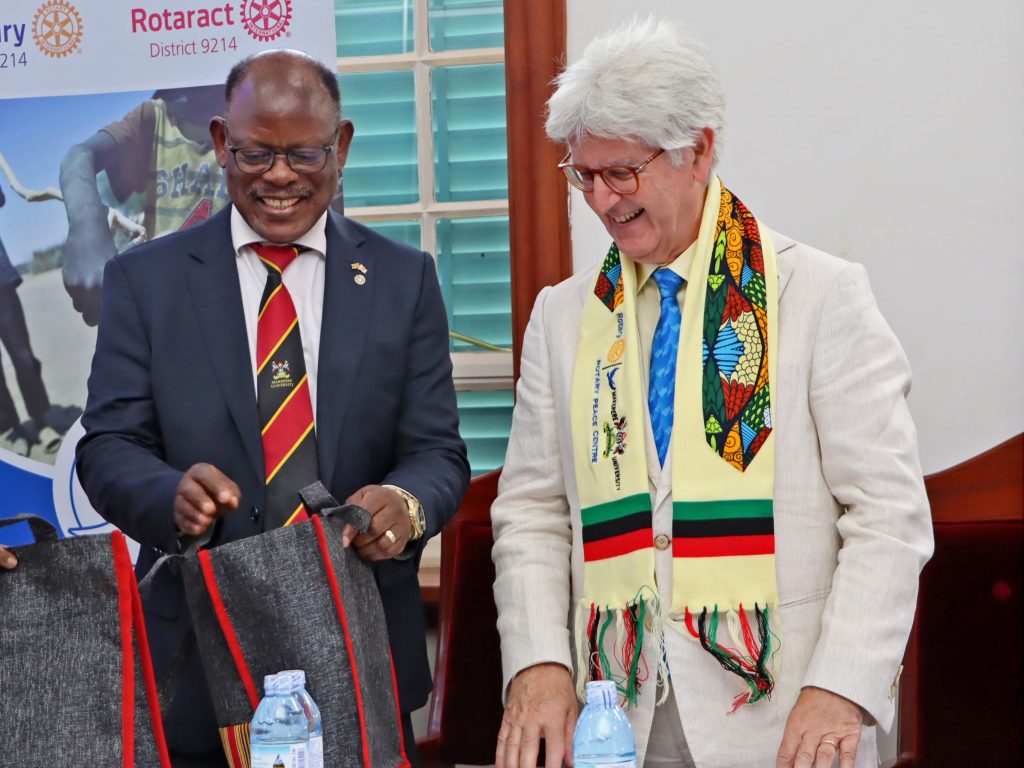
In his welcome remarks, the Vice-Chancellor of Makerere University Prof. Barnabas Nawangwe expressed gratitude to Rotary International for establishing and sustaining the Peace Centre — the only Rotary Peace Centre on the African continent.
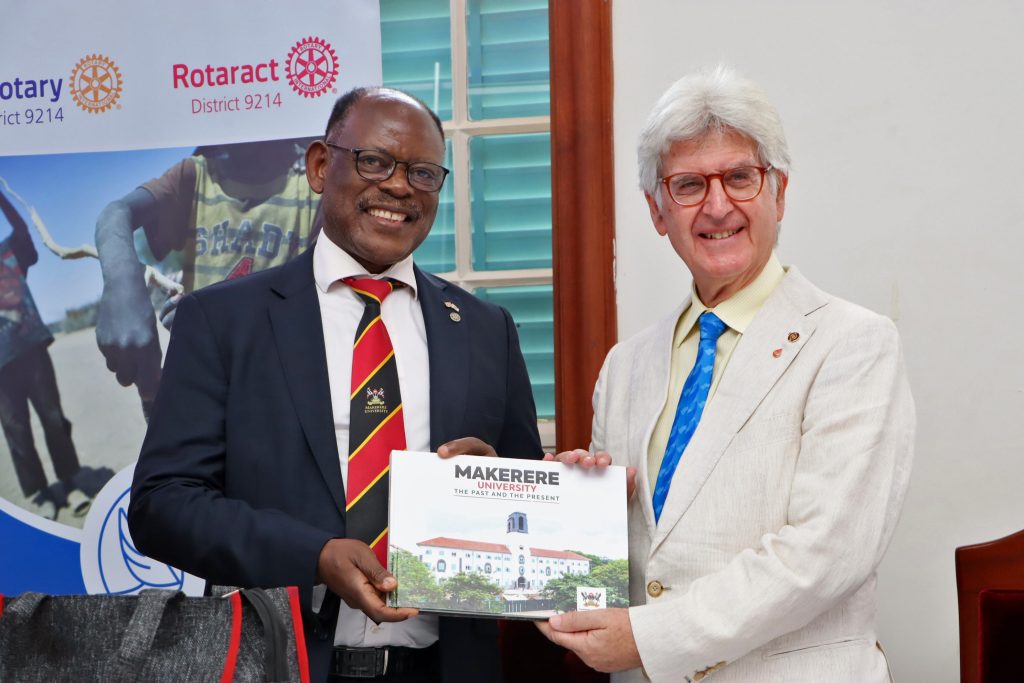
He reported that the Centre has so far trained 206 Peace Fellows who are actively contributing to conflict transformation and community development across the globe. He commended the Rotary fraternity in Uganda for supporting the Centre’s growth and ensuring its vibrancy.
University leadership reaffirmed its commitment to strengthening collaboration with Rotary International to expand research, training and outreach in peace and conflict studies.
Profile of the Rotary International President
Introducing the President, Past District Governor Emmanuel Katongole described Arezzo as a distinguished Italian orthodontist trained at the University of Padua, with decades of professional leadership in European and American orthodontic associations. Beyond his medical career, Arezzo is engaged in agriculture and hospitality enterprises in Italy.
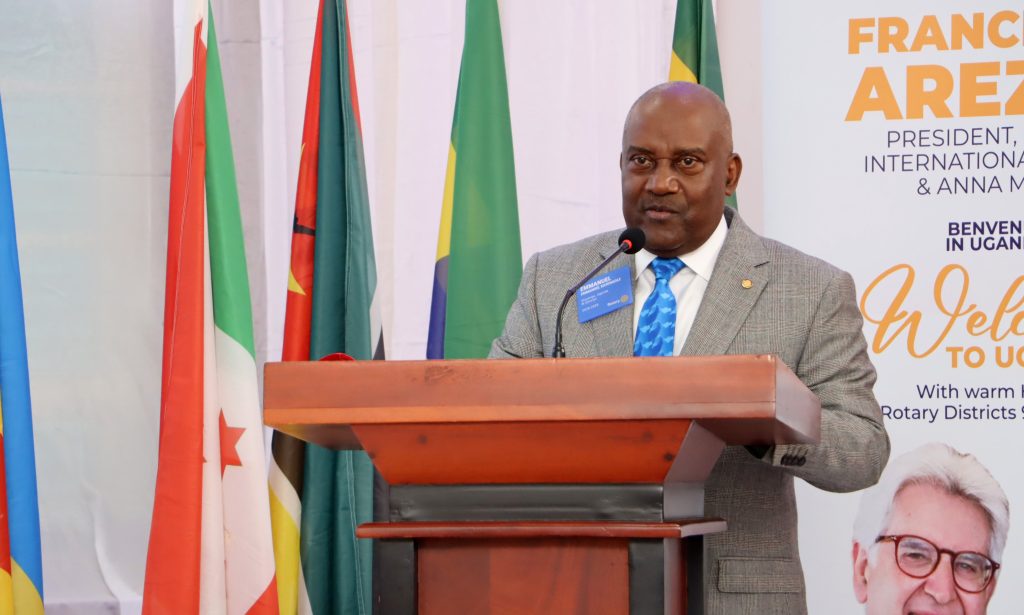
A Rotarian for 36 years, he has served in numerous global leadership roles within Rotary, including vice chair of the Strategic Planning Committee for both Rotary International and the Rotary Foundation, and chaired the 2023 Rotary International Convention in Melbourne.
He was accompanied by his spouse, Ana Maria, and together they are major donors and longstanding supporters of the Rotary Foundation.
As the conference concluded, participants reaffirmed their collective responsibility to sustain collaboration beyond the classroom. With Cohort 10 already admitted for 2026 and Cohort 11 formally welcomed into the programme, the Makerere Rotary Peace Centre continues to consolidate its standing as a continental leader in peace education.
The 9th Capstone Conference not only celebrated the achievements of Cohort 9 but also reinforced a central message echoed throughout the two-day gathering: peace is not a destination, but an ongoing, collaborative process requiring global solidarity and local action.
9th Cohort Draws Peace Fellows from 16 Countries
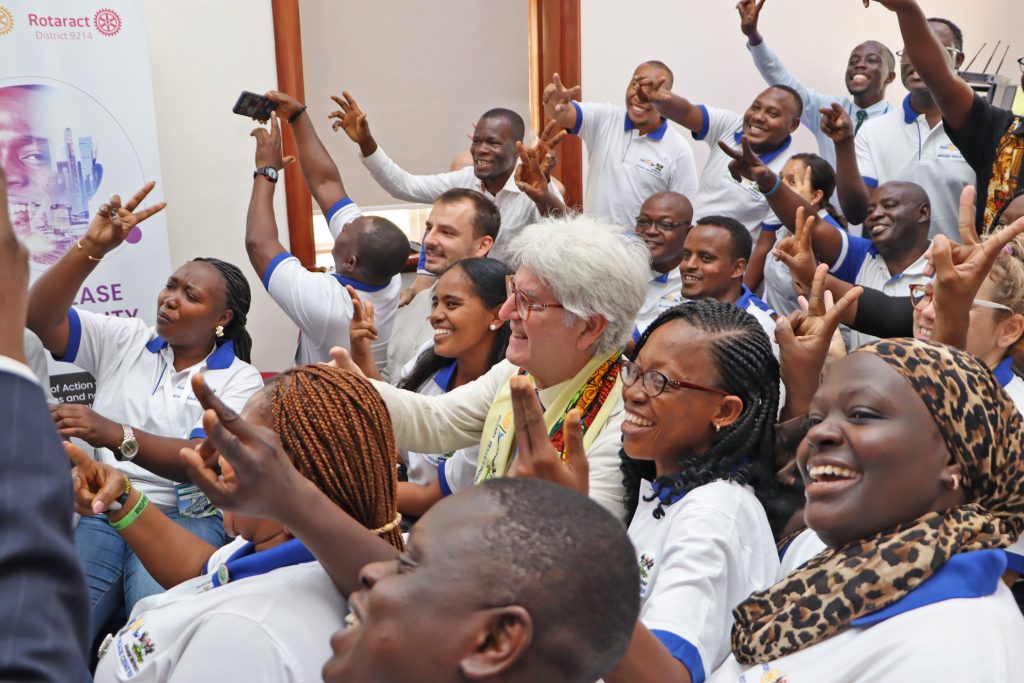
Speaking at the conference, the Centre Director, Associate Professor Helen Nambalirwa Nkabala, described the 9th Cohort as one of the most globally diverse groups since the Centre’s inception. She noted that the cohort comprises 18 students drawn from Papua New Guinea, Rwanda, Kenya, Cameroon, Tanzania, the Philippines, Colombia, South Sudan, Liberia, Zimbabwe, Nigeria, Somalia, Lesotho, Uganda and South Africa.
Prof. Nkabala emphasized that the transnational composition of the cohort reflects the Centre’s commitment to fostering cross-cultural dialogue and shared learning in peacebuilding. “The diversity represented here enriches discussions and strengthens the quality of collaborative solutions proposed by our fellows,” she said.
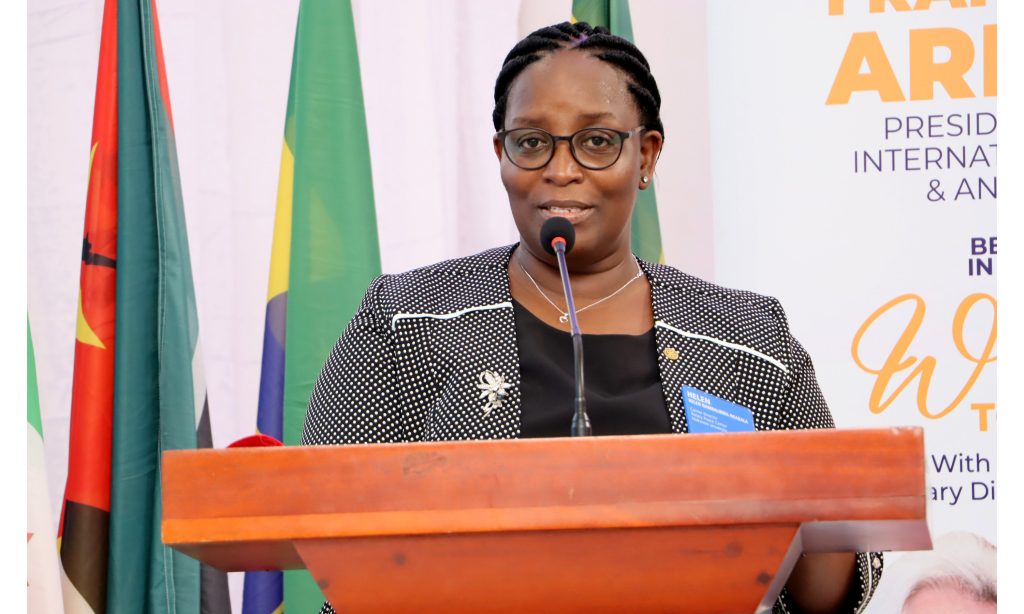
She explained that the Capstone Conference marks a critical milestone in the fellows’ academic journey, providing a platform to present their Social Change Initiatives developed during their fellowship. The initiatives are designed to address real-world peace and conflict challenges in their respective regions.
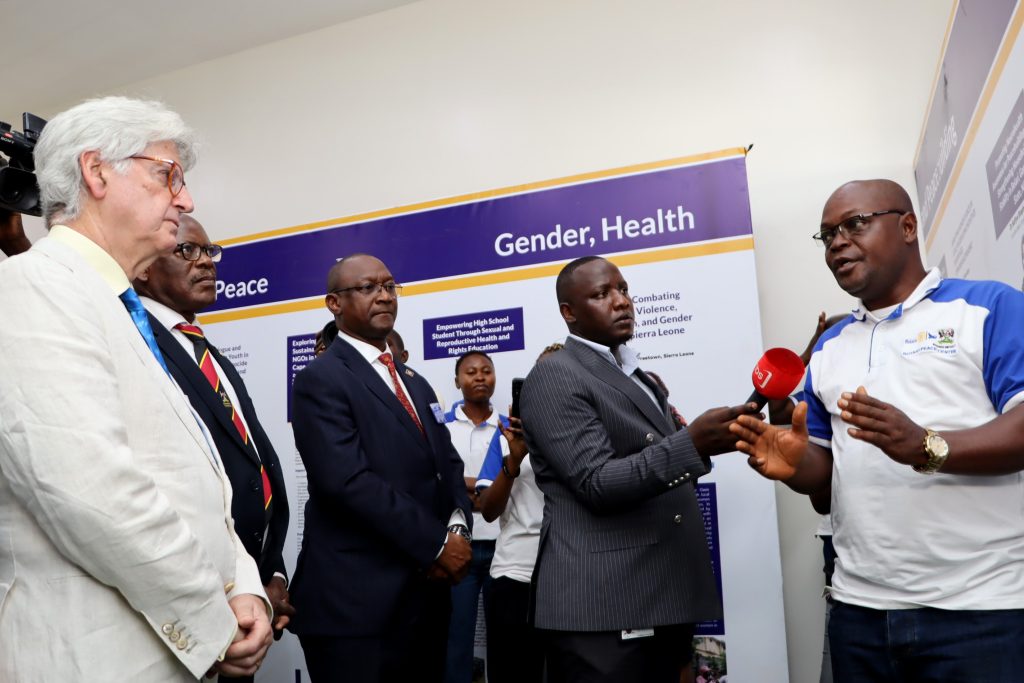
Organised under the theme Collaborative Peace Building for Societal Transformation, the conference explored a wide range of thematic areas central to contemporary peacebuilding. Among the key focus areas was promoting sustainable peace, with fellows presenting community-driven models aimed at strengthening resilience and social cohesion in post-conflict settings.
Presentations on gender, health and peacebuilding highlighted the intersection between public health systems, gender equity and conflict prevention. Presenters underscored the need to integrate women and vulnerable populations into peace processes while addressing structural inequalities that often fuel instability.
The conference also examined digital spaces and human rights, with fellows analyzing the growing impact of online platforms on civic engagement, misinformation and conflict dynamics. Peace fellows called for stronger digital governance frameworks that protect rights while preventing the misuse of technology to incite violence.
Other thematic areas included agriculture as a tool for peacebuilding and economic stability, as well as peace music and coexistence. Fellows showcased how creative arts and sustainable livelihoods can serve as powerful instruments for reconciliation, community healing and long-term societal transformation.
Prof. Nkabala commended the fellows for their dedication and innovative thinking, noting that their projects demonstrate the practical application of academic research to real community challenges. She reiterated the Centre’s commitment to nurturing leaders equipped to drive sustainable peace efforts across the globe.