
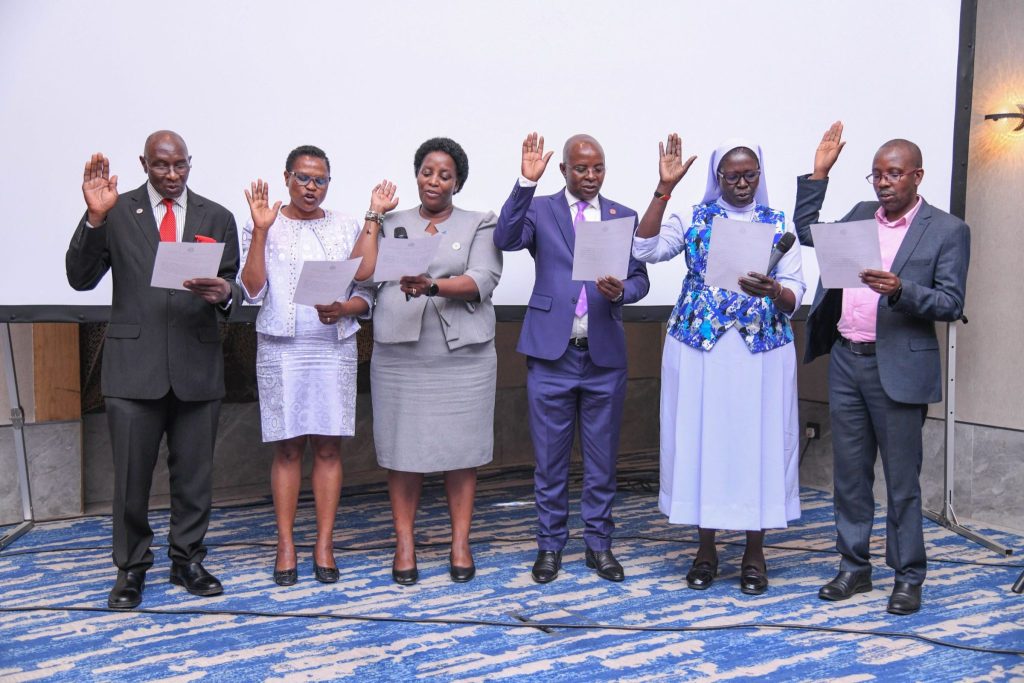
Makerere University scholars Assoc. Prof. Helen Nambalirwa Nkabala and Prof. Rev. Sr. Dominica Dipio were inducted into the Uganda National Academy of Sciences (UNAS), joining an elite cohort of researchers recognized for their contributions to science, policy, and academic leadership. The induction took place at the Annual Scientific Conference held at the Four Points by Sheraton in Kampala on October 31.
Nkabala and Dipio were among the 27 new Fellows received into the Academy—nine women and eighteen men—drawn from four disciplines: Medical Sciences, Social Sciences, Agricultural Sciences, and Physical Sciences. Other Makerere University inductees included Prof. Edward Bbaale, Assoc. Prof. Egeru Anthony, Prof. Nazarius Mbona Tumwesigye, Assoc. Prof. Arthur Tugume, Assoc. Prof. Jackie Bonabana, and Assoc. Prof. Frank Mugagga.
Speaking during UNAS Annual Scientific Conference and Induction Ceremony,UNAS President Prof. Grace Bantebya Kyomuhendo congratulated the inductees, emphasizing that fellowship is both an honor and a call to public service. She urged the scholars to remain active contributors to national development through science and evidence-based leadership.
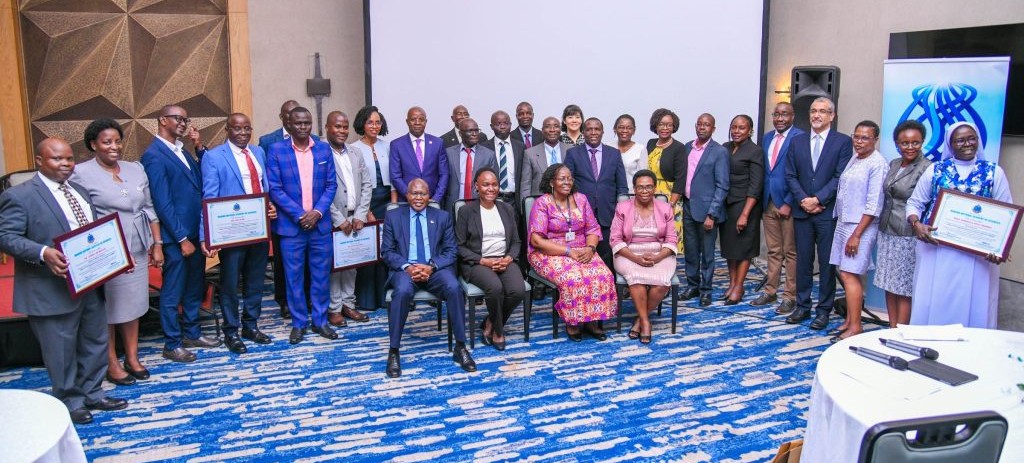
“Having accepted and signed our book of records, I officially congratulate and welcome you as new Fellows of the Uganda National Academy of Sciences. May you always remember this occasion and strive to live up to the aims and ideals of this Academy in all your professional and personal endeavors,” Prof. Bantebya said.
She reminded the inductees that the privilege of fellowship carries a responsibility to use their expertise to uplift communities. “As UNAS, we want to use science to serve our country and our communities. We must give back to society,” she added.
Reflecting on the UNAS Annual Scientific Conference theme, “Renewal from Our Roots: Uganda’s Path to Self-Reliance and Self-Sufficiency,” Prof. Bantebya urged participants to draw strength from Uganda’s cultural and intellectual heritage, emphasizing that the nation already holds within itself the foundations for sustainable growth through its culture, heritage, and shared history. She highlighted trust as a vital cornerstone for development at individual, family, community, and national levels, stressing that building and strengthening trust is essential for harnessing the country’s internal potential and the resources available to drive self-reliance and self-sufficiency.
UNAS Vice President Dr. Mary Goretti Nakabugo outlined the rigorous selection process, noting that nominations are submitted by existing Fellows and vetted according to criteria set by the UNAS Constitution. Each nomination must be supported by detailed documentation demonstrating scholarly contribution, leadership, and impact.
“When we advertise, members of UNAS nominate those who are eligible to become inductees. We have a nomination form that outlines all the criteria and requirements for one to be considered. This form is filled by the nominee, with the assistance of the nominator, and it is usually supported by a seconder. Once the documentation is complete, it is submitted to us,” Dr. Nakabugo explained.
Nakabugo commended the organizing team for delivering a successful Annual Scientific Conference and induction ceremony, highlighting the quality of discussions and collaboration that shaped the event.
Prof. Helen Nambalirwa Nkabala
Associate Professor Helen Nambalirwa Nkabala is a distinguished academic and administrator at Makerere University, serving as the Principal of the College of Humanities and Social Sciences (CHUSS). She holds a Ph.D. from a collaborative program between the University of Stavanger and Makerere University, an M.Phil. in Theology from the University of Bergen, a Master of Arts in Peace and Reconciliation Studies from Coventry University, a Postgraduate Diploma in Educational Technologies from the University of Cape Town, and a Bachelor of Arts from Makerere University. Her extensive academic background underscores her commitment to interdisciplinary scholarship in theology, peace studies, and education.
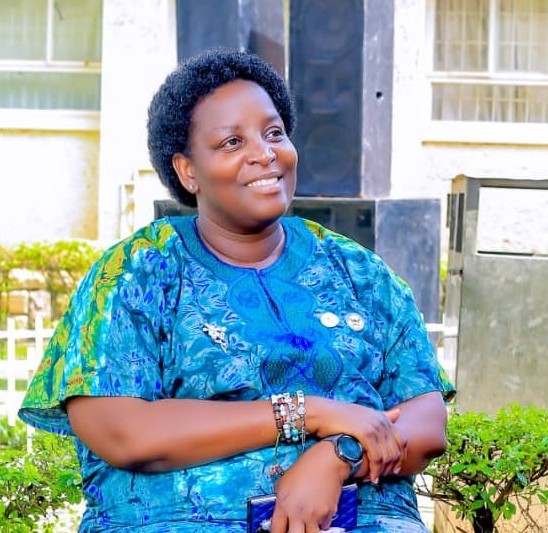
In addition to her roles at Makerere University, Professor Nkabala is the inaugural Director of the first Rotary Peace Center in Africa, hosted at the same institution. She has provided training in conflict transformation and social cohesion to personnel at the Auschwitz Institute for the Prevention of Genocide and the United Nations Mission in South Sudan, as well as peacebuilding and conflict transformation training to the Uganda Police. Her research interests include the intersection of religion and conflict, with notable publications such as “Kony as Moses,” which examines the use of violent biblical texts by the Lord’s Resistance Army in Northern Uganda.
Prof. Dominica Dipio
Professor Dominica Dipio is a distinguished scholar in the Department of Literature at Makerere University, with extensive academic training that spans African cinema, social communications, and African literature. She holds a PhD in African Cinema from the Pontifical Gregorian University in Rome, where she also completed a Licentiate in Social Communications with distinction. Her academic journey includes an MA in African Literature and a BA in Education, forming a strong foundation for her contributions to literature, film studies, and communication.

Over the years, Professor Dipio has earned numerous awards, fellowships, and international recognitions for her scholarly excellence, leadership, and creative work. She has served as a consultant to various Pontifical Councils, received prestigious fellowships such as Fulbright and CAPREx, and earned multiple accolades for her research, publications, and filmmaking. Her professional experience includes teaching a broad range of undergraduate and graduate courses, supervising research, and leading collaborative projects that have advanced scholarship and capacity-building within the humanities.