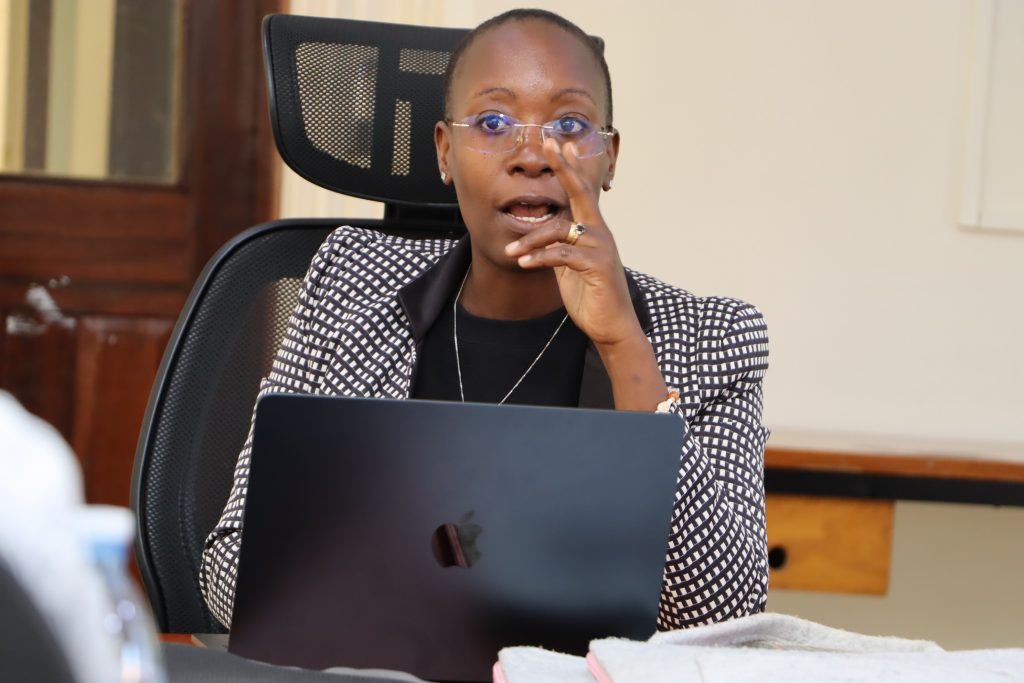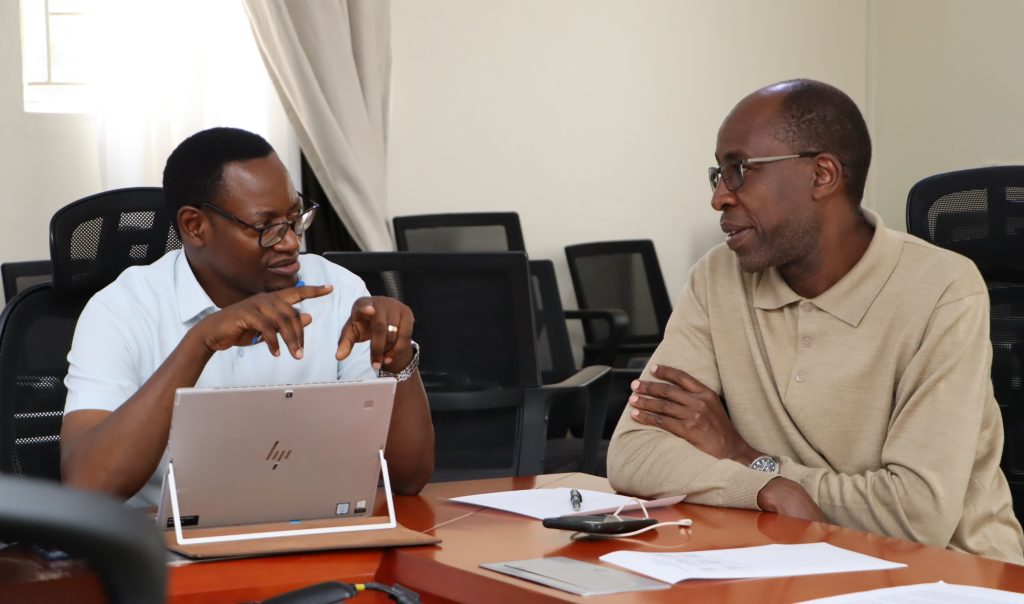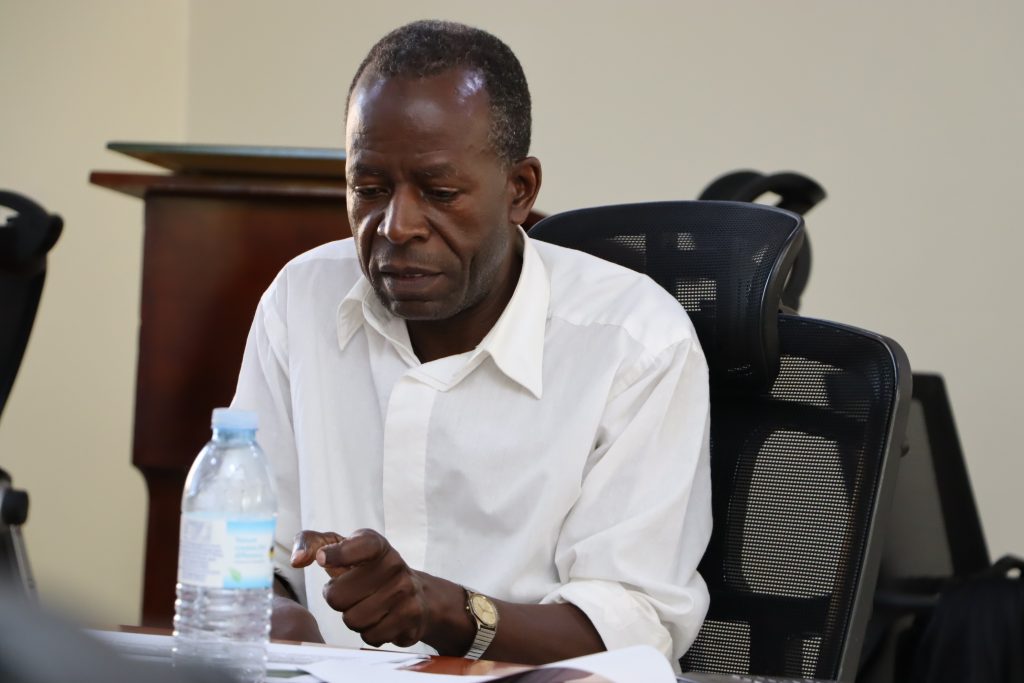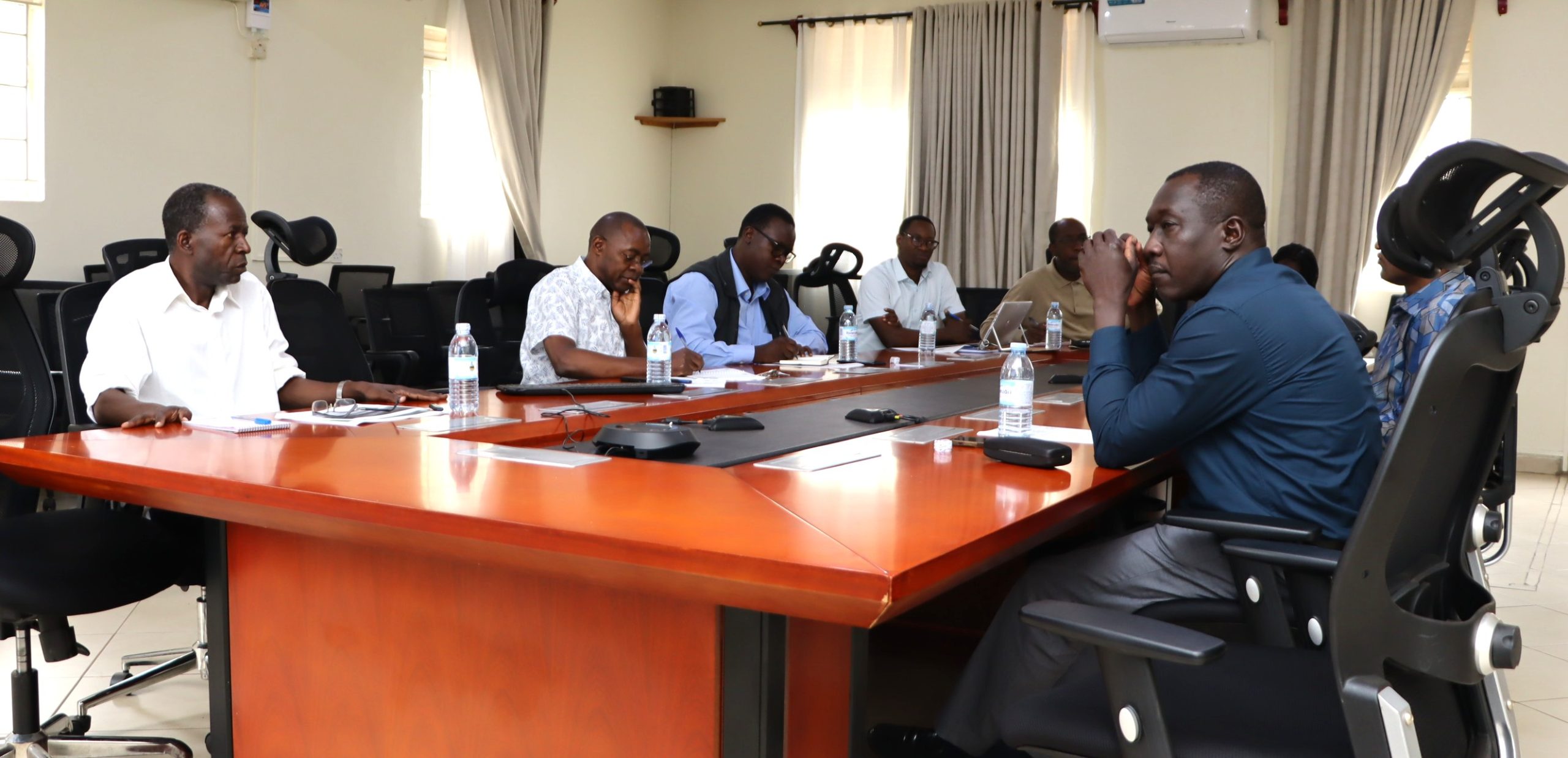
Two research fellows at the Great Lakes Centre for the Study of the United States in the Great Lakes Region at Makerere University have presented significant progress on their respective chapters, marking a key milestone toward the publication of a major book project scheduled for August 2026.
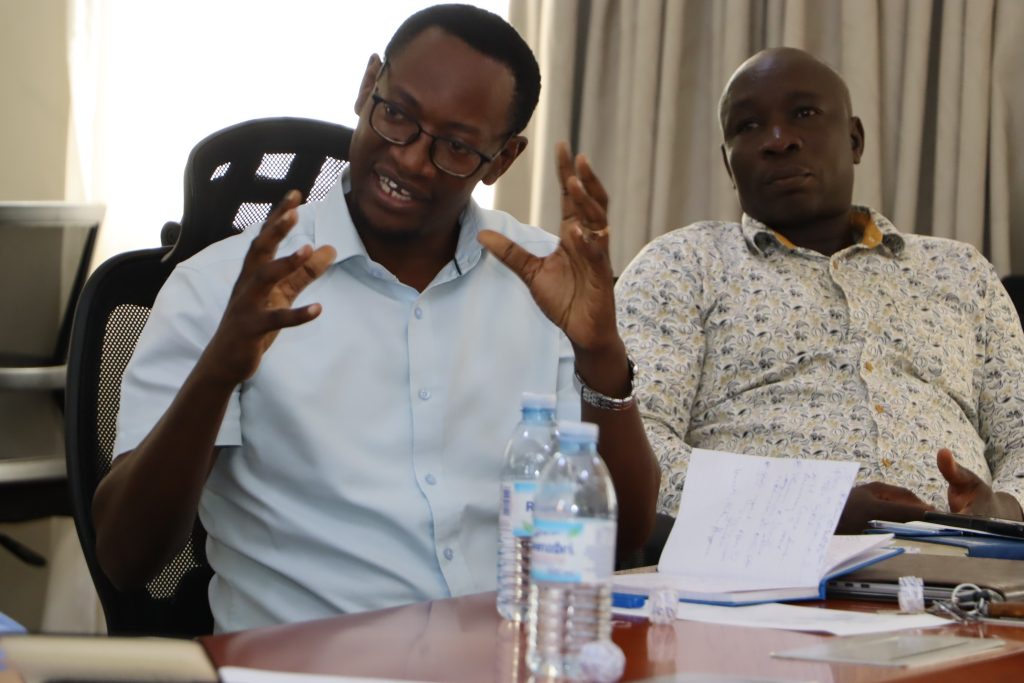
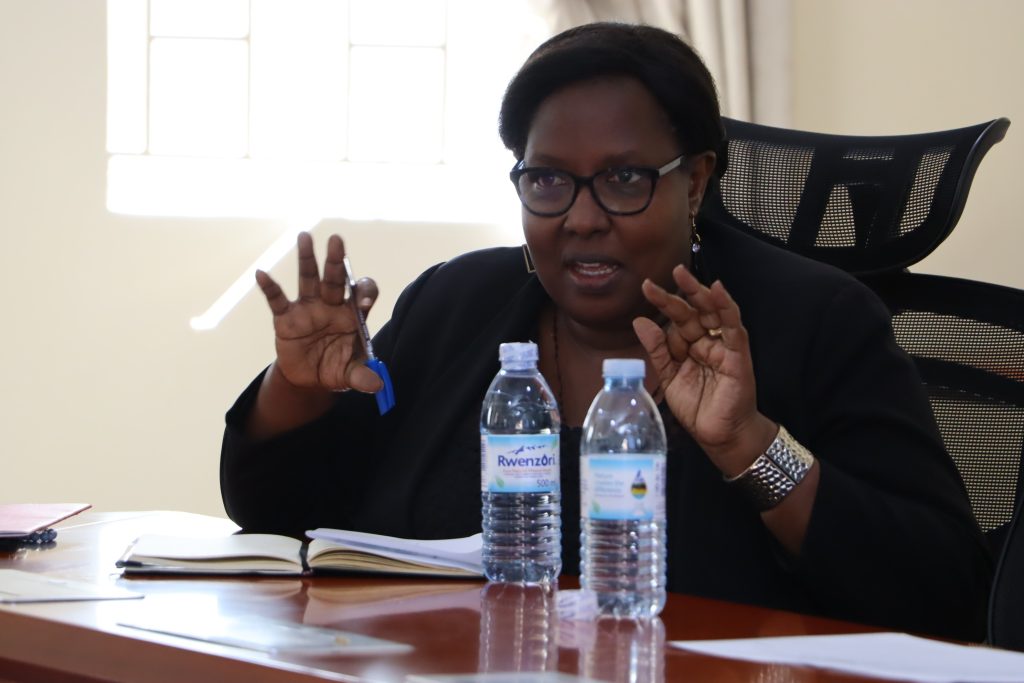
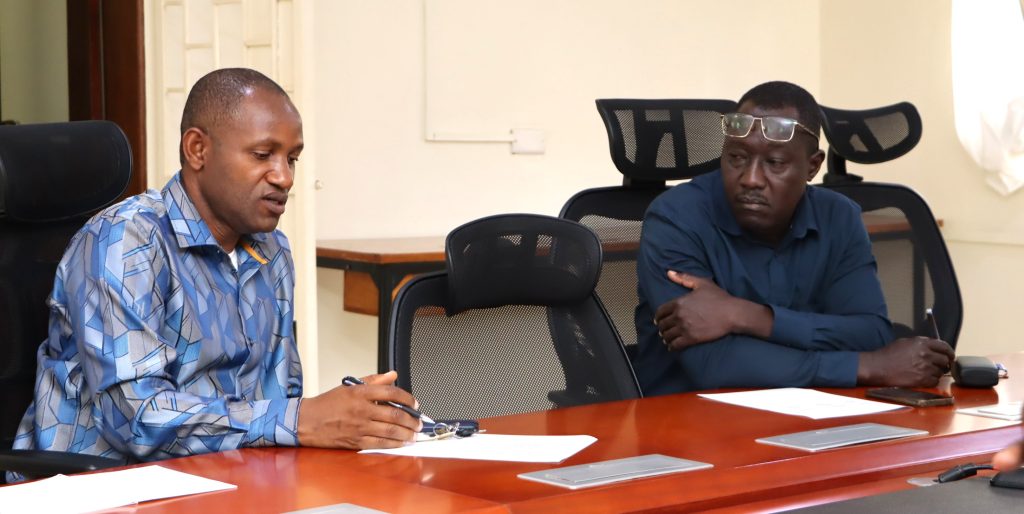
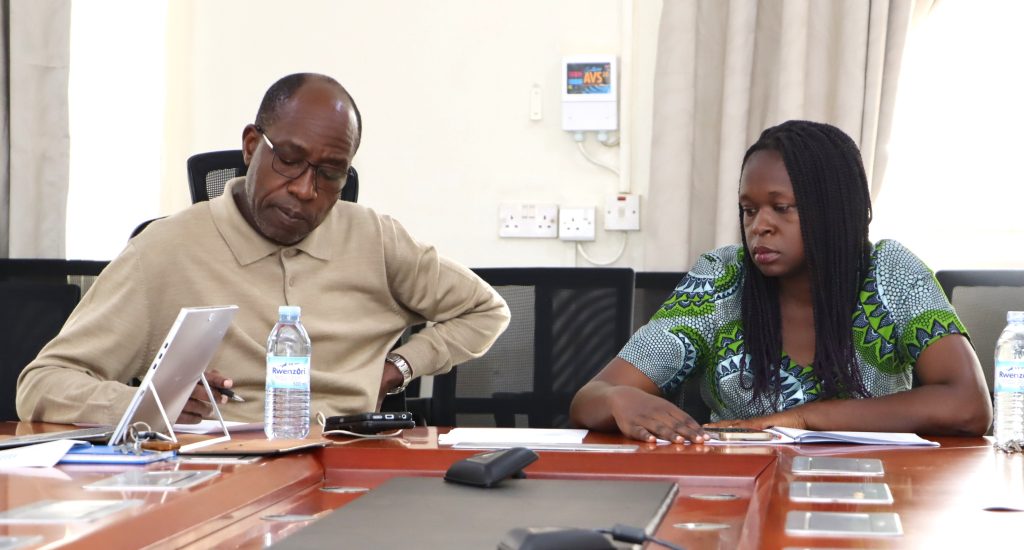
On 19 February 2026, Dr. Bernard Luwerekera and Mr. Lumumba Bwire shared their draft chapters during a research workshop held in the Social Sciences Conference Room. The session brought together fellow researchers and Centre leadership to assess progress, provide critical feedback, and strengthen scholarly coherence across the book project. Their presentations were commended for notable improvement and maturity in argument and structure.
The Centre, launched at Makerere University in partnership with the U.S. Mission in Uganda, is the first of its kind in the Great Lakes region. Housed in the Department of Political Science under the School of Social Sciences, it serves as a regional hub for interdisciplinary research on U.S.–Uganda relations. Its focus areas include U.S. foreign policy, governance, security cooperation, democracy promotion, culture, constitutionalism, and people-to-people diplomacy.
Using the innovative framework of “Civilizational Relationality,” six researchers are examining Uganda–U.S. relations from 1945 to the present. Current research themes include counter-terrorism cooperation, the Peace Corps and cultural exchange, Fulbright scholarships, constitutionalism, democracy promotion, and the influence of American jazz on Ugandan music. The forthcoming book will position Makerere University as a pioneer centre for U.S.–Africa studies in the region.
Exploring Peace Corps Legacy and Democracy Promotion
Dr. Bernard Luwerekera’s chapter examines U.S.–Uganda relations through the lens of the Peace Corps, focusing on volunteers’ lived experiences, the programme’s long-term impact, and its legacy in shaping cross-cultural ties between the two nations. His research documents personal narratives and institutional transformations that reflect decades of engagement.
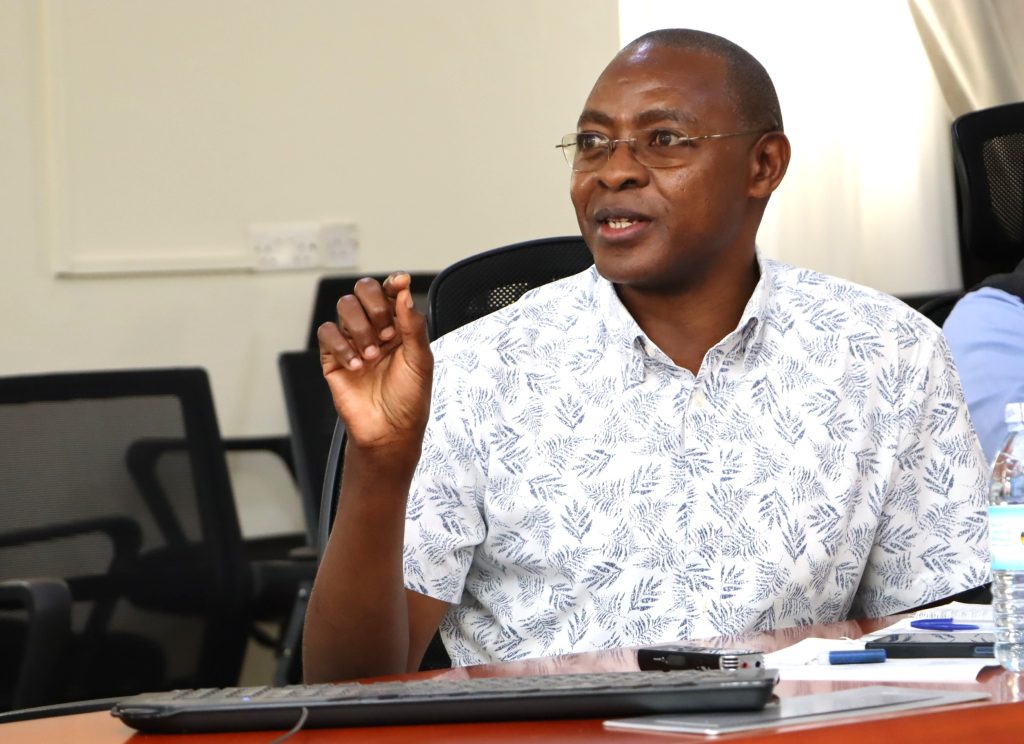
Mr. Lumumba Bwire’s research interrogates democracy promotion within the broader arca of Uganda–U.S. relations. His work assesses the structures, strategies, and outcomes of American engagement in governance and democratic reform processes, situating the discussion within evolving diplomatic realities.
The workshop created space for peer learning and constructive critique as the researchers refined their chapters in preparation for publication.
Centre Leadership Applauds Progress
Centre Director Prof. Paul Omach expressed satisfaction with the visible advancement of the manuscripts.
“I’m very happy that at least now we can talk about drafts that we are able to read. It means you are moving very well,” he remarked, encouraging the researchers to persist in writing and refining their work.
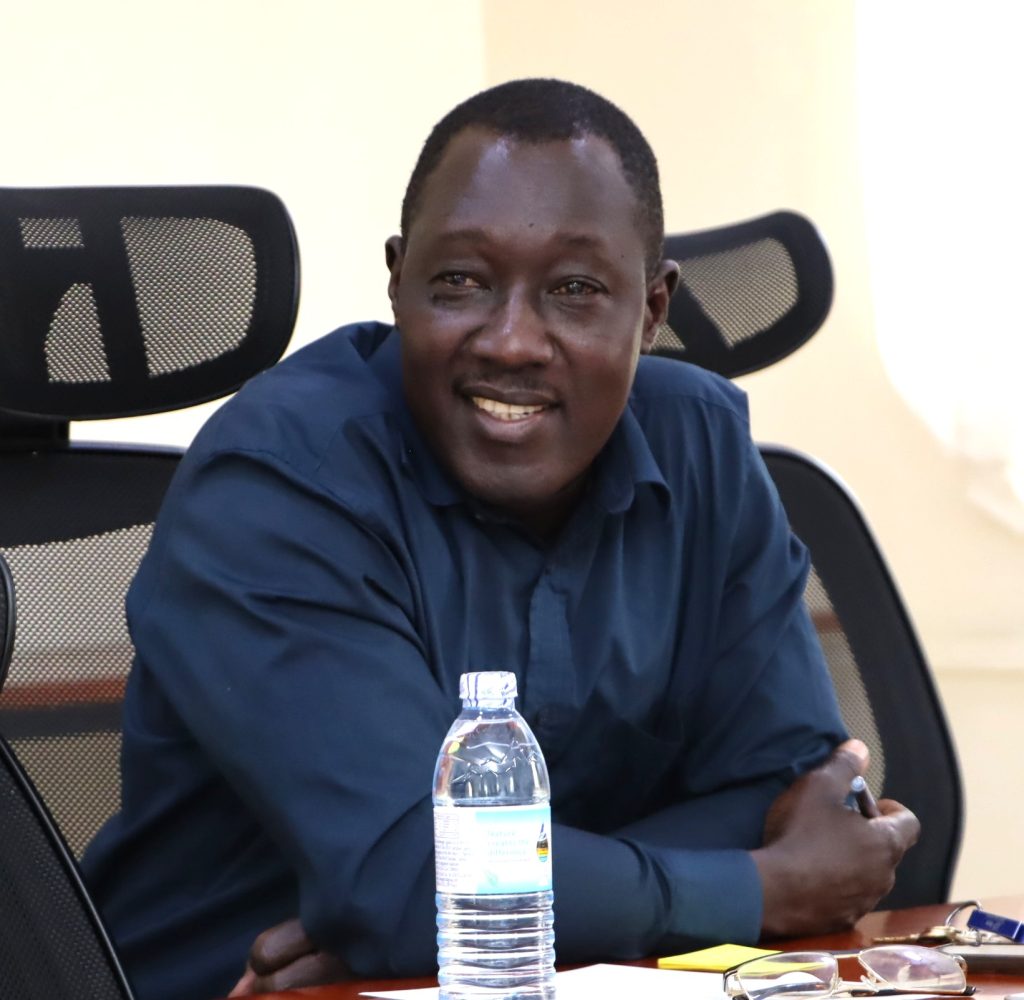
He emphasised that seminars would continue in the coming months to deepen scholarly discussion and enhance the quality of the chapters. “Even those of us who are not the principal researchers are learning a great deal from you,” he said, underscoring the collaborative spirit of the Centre.
Prof. Omach reassured the fellows that resources allocated for the research remain available and urged them to stay focused through to completion.
Building Synergies and Editorial Momentum
Research Coordinator and Principal Investigator Dr. Sylvester Kaweesi described the presentations as evidence of intellectual maturity within the project.
“We have matured in this research,” he observed, noting that researchers are now able to compare notes and identify thematic threads running across the chapters. He pointed out instances where data referenced in one chapter directly complemented findings in another—an indication of emerging synergy.
Dr. Kaweesi acknowledged delays in transmitting editorial comments to contributors but assured them that he would personally take charge of certain editorial processes to ensure momentum toward publication.
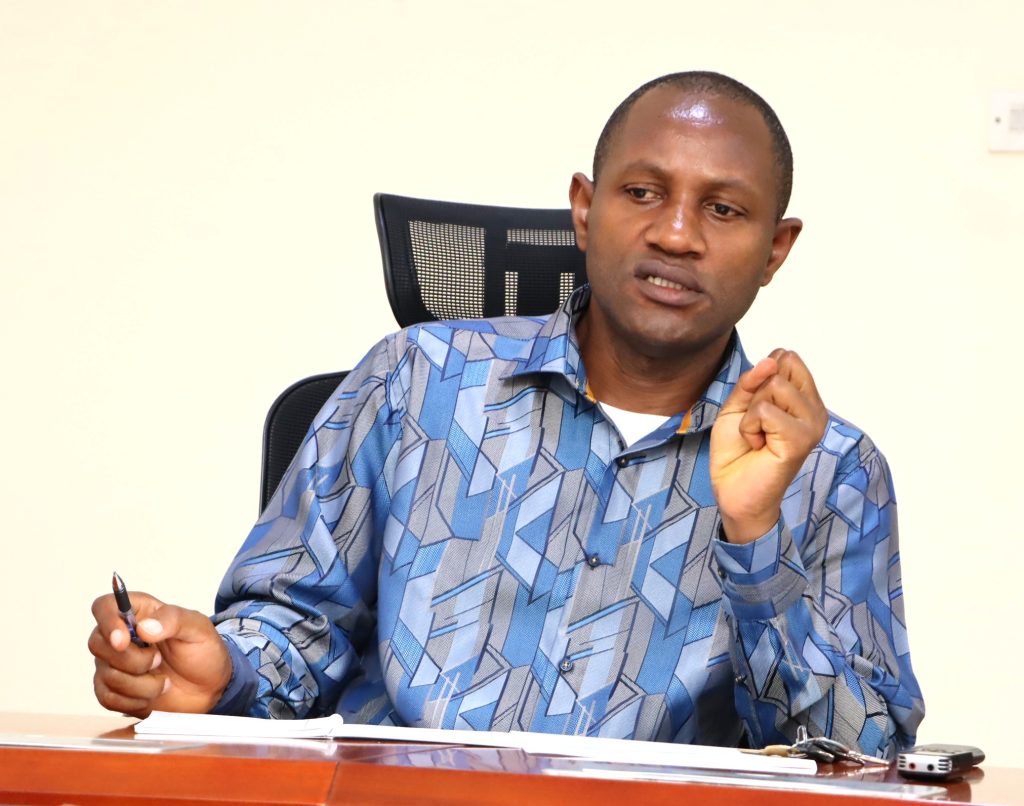
“One cannot talk of publishing a book without the chapters,” he said candidly. “We committed ourselves to having a book before the end of the year. We do not have time.”
He clarified that the conceptual framing of “Civilizational Relationality” would be elaborated in the introductory chapter, urging contributors to focus on rich empirical data rather than theoretical exposition. Emphasis, he stressed, should be placed on primary data and strong evidence, with secondary sources carefully integrated.
Preparations for U.S. Independence 250th Anniversary
Beyond the book project, Dr. Kaweesi announced plans for a major celebration to mark 250 years of American independence. The high-level event, expected in March or April 2026 in collaboration with the U.S. Embassy, will feature a keynote lecture by a leading scholar of American constitutionalism, alongside cultural showcases and panel discussions.
In a deliberate move to strengthen institutional ownership, the organising committee will be drawn entirely from the Centre’s researchers. The chairperson, publicist, and communications leads will all come from within the research team.
“This will be your event,” Dr. Kaweesi told the fellows, explaining that the arrangement would demonstrate that the Centre’s success rests not on one individual but on collective scholarly capacity.
The Centre has also secured four dedicated Fulbright scholar slots, further expanding opportunities for academic exchange and collaboration.
As the workshop concluded, there was a shared sense of urgency and optimism. With draft chapters now in circulation and structured editorial processes underway, the Centre appears firmly on track to deliver a landmark publication in August 2026.
The progress demonstrated by Dr. Luwerekera and Mr. Bwire signals not only individual scholarly advancement but also the consolidation of Makerere University’s role as a leading regional hub for serious, interdisciplinary engagement with U.S.–Africa relations.
Dr. Bernard Luwerekera Draft Chapter on U.S.–Uganda Relations Through the Peace Corps Lens
In a reflective and historically grounded presentation, Dr. Bernard Luwerekera shared the draft of his forthcoming book chapter examining U.S.–Uganda relations through the lens of the Peace Corps. Titled “U.S.–Uganda Relations Through the Peace Corps Lens,” the chapter explores volunteers’ lived experiences, the programme’s impact, and its enduring legacy across six decades.
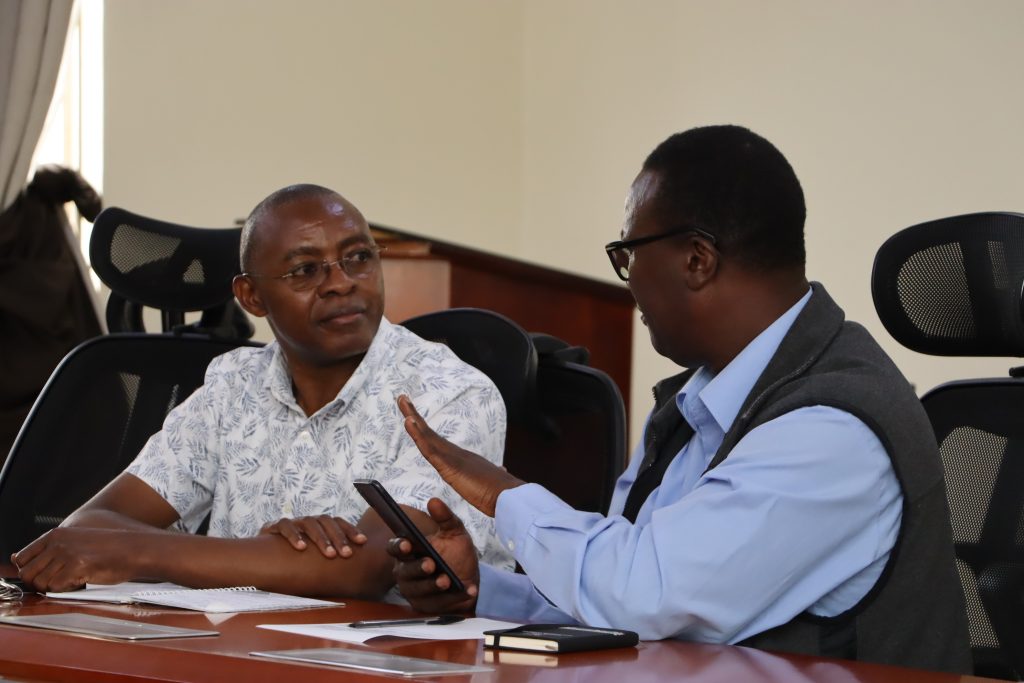
Addressing colleagues, Dr. Luwerekera described the draft as “work in progress,” refined through previous scholarly feedback and still open to further insights. At the heart of his inquiry is the concept of nationality and how one of the earliest encounters between Uganda and the United States helped shape a relationship that has evolved over generations.
A Programme Born in a World of Change
Dr. Luwerekera situated the Peace Corps within the dramatic global shifts of the 1960s—an era marked by Cold War rivalries, decolonisation, and what historians often call the “winds of change.” As African nations gained independence in rapid succession following Ghana’s liberation in 1957, global powers competed for ideological influence.
Although many associate the Peace Corps with President John F. Kennedy, Dr. Luwerekera highlighted that the original idea was championed by Senator Hubert Humphrey, who coined the term “Peace Corps” and introduced related legislation as early as 1960. After winning the presidency, Kennedy formalised the programme in 1961 through an executive order, appointing Sargent Shriver as its founding director.
Shriver’s diplomatic groundwork quickly expanded the programme to newly independent nations. Uganda formally invited the Peace Corps in 1963—just one year after independence—and received its first cohort of volunteers on 16 November 1964.
Uganda: A Young Nation, A New Partnership
For Dr. Luwerekera, the timing was significant. “A very young country was already receiving the Peace Corps,” he noted, underscoring how the programme became one of the earliest structured engagements between Uganda and the United States.
The early years were defined by urgency. Uganda faced acute shortages of trained professionals, particularly in education. Volunteers—many freshly graduated and retrained briefly in pedagogy—were deployed across schools. Regardless of their academic background in engineering, agriculture, or other fields, most were assigned to teach.
“These were foundational years,” Dr. Luwerekera observed. “You discover that these volunteers helped lay the groundwork for the education system we know today.” Testimonies suggest that in some schools, Peace Corps volunteers created classrooms from scratch—often without textbooks or precedents—yet instilled enduring life skills in their students.
However, the programme’s trajectory was not uninterrupted. Political tensions during the regime of Idi Amin led to the suspension of the Peace Corps in 1973. The programme was reinstated in 1991 and has continued since, aside from brief security-related interruptions.
In 2024, Uganda marked 60 years since the arrival of the first cohort—a milestone that prompted joint reflections from programme leadership past and present.
Lived Experiences and Mutual Transformation
Central to Dr. Luwerekera’s chapter is the idea of mutuality. The Peace Corps, he argues, was not merely a tool of American foreign policy but a space of cross-cultural exchange. Volunteers and Ugandans alike recount transformative experiences what he described as “cross-fertilisation of cultures.”
Memoirs such as Nancy Brown’s First Came Love, Then Came Malaria and other personal accounts reveal how Uganda left an indelible mark on many volunteers. Some still recall local greetings decades later. Others speak nostalgically of the rain, the landscapes, and the friendships that reshaped their worldviews.
Equally compelling are Ugandan testimonies. Distinguished citizens—including members of the judiciary—have credited early Peace Corps teachers with influencing their intellectual and moral formation. These stories, Dr. Luwerekera suggested, may warrant further oral history interviews to capture their depth and nuance.
Methodology: History Through Human Narratives
Adopting a qualitative, descriptive approach, Dr. Luwerekera acknowledged that the research has drawn him deeply into historical inquiry. Archival materials, online testimonies, memoirs, and interviews form the backbone of his methodology. He also engaged with conceptual discussions about “smart power,” noting how the Peace Corps represented a softer, human-centred strategy in American diplomacy.
“The programme presented a human face of American dealings with other nations,” he explained. Rather than military or coercive influence, it extended American values through service, education, and interpersonal relationships.
As he refines the chapter, Dr. Luwerekera plans further engagement with the Peace Corps office in Uganda, including potential interviews with pioneer administrators and volunteers. He is particularly intrigued by the first decade of the programme, which he described as rich with formative stories that illuminate Uganda’s early post-independence years.
Ultimately, his work positions the Peace Corps not only as a development initiative but as a prism through which to understand U.S.–Uganda relations—past, present, and future. Through lived experiences, interrupted histories, and enduring partnerships, the chapter promises to offer both scholarly insight and human depth to a relationship that began just one year after Uganda’s independence and continues six decades later.
About the Great Lakes Center for the Study of the United States at Makerere University
The Great Lakes Center for the Study of the United States was launched on March 25, 2025, in a ceremony officiated by U.S. Ambassador to Uganda H.E. William Popp, marking a major step in strengthening U.S.–Uganda academic cooperation.
Established within the Department of Political Science with support from a startup grant from the U.S. Mission in Kampala, the center becomes the third of its kind in the region and is led by Professor Paul Omach, assisted by Professor Kasaija Apuli, Dr. Sylvester Kaweesi, and junior researchers Mr. Charles Tweheyo.and Mr. Okumu Denis.
Building on a history of collaboration dating back to the 1940s, the center aims to deepen academic and professional partnerships between the United States and the Great Lakes region, focusing on political science, social sciences, natural sciences, and technology. It seeks to enhance understanding of U.S. scientific and technological innovations and explore how these can support Africa’s development, ultimately fostering research, knowledge exchange, and mutually beneficial regional and international partnerships.