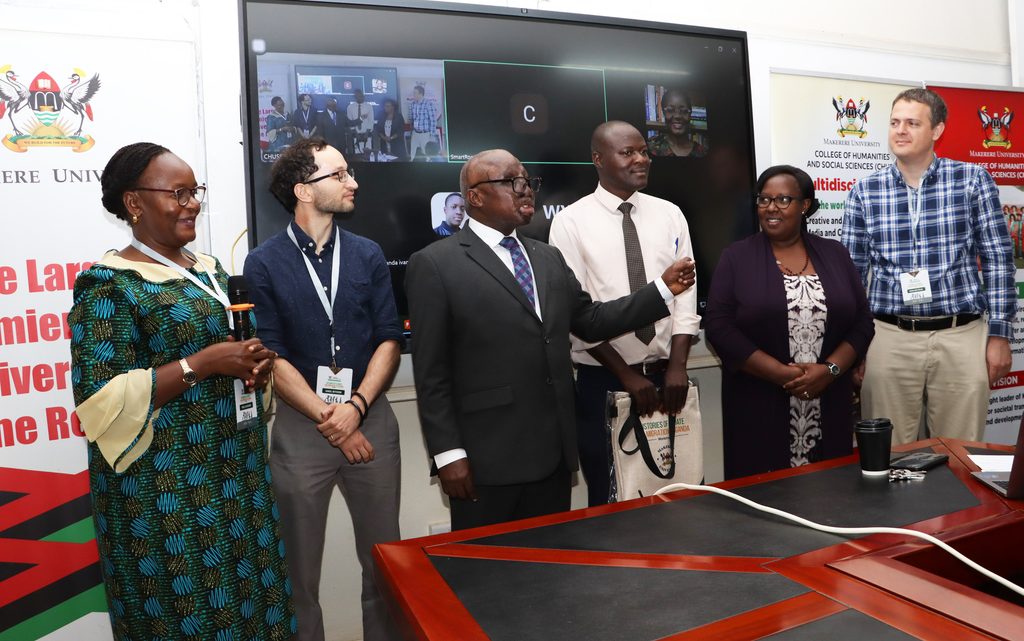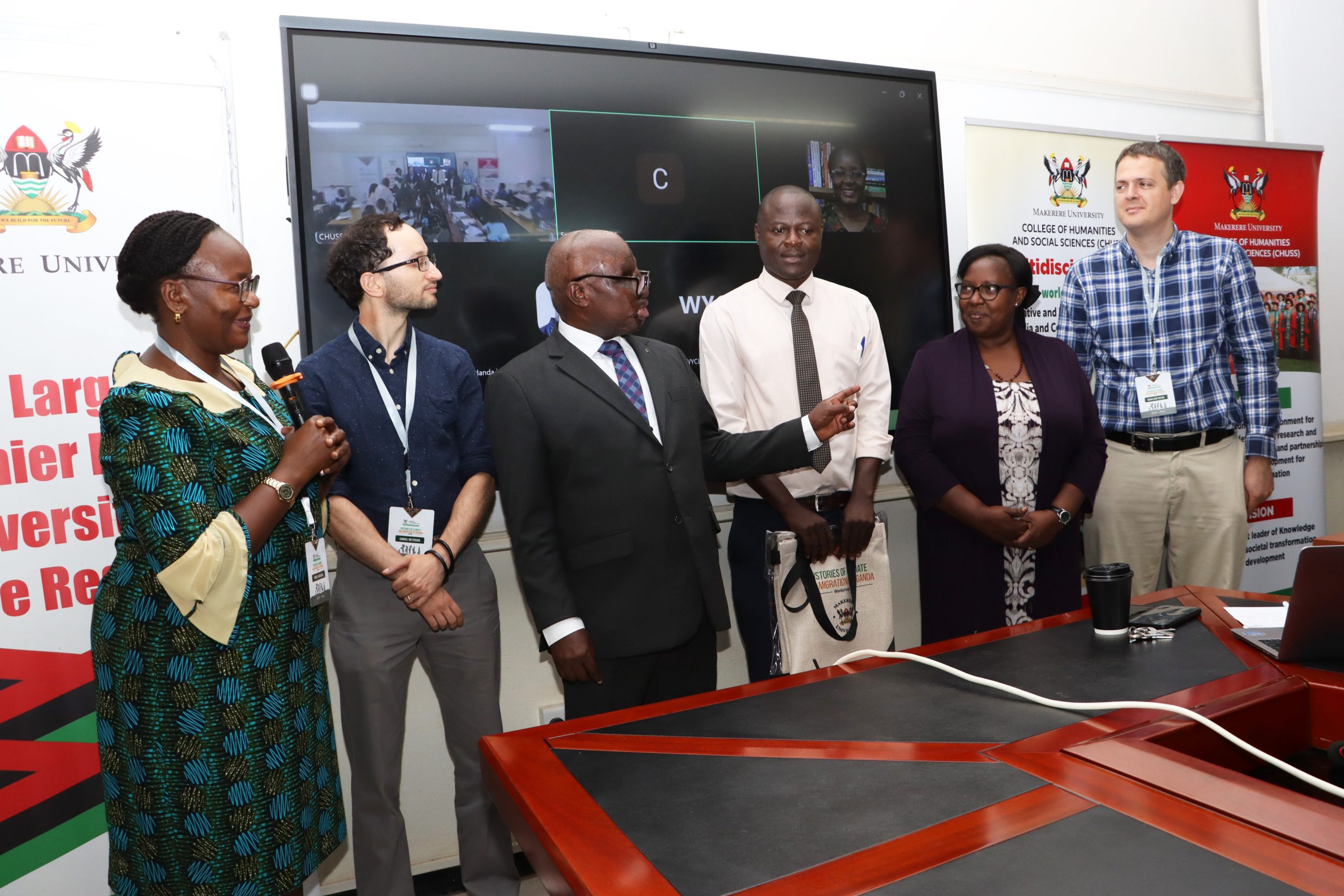
OPM Commissioner Davis Mwenyi calls for evidence-based resettlement and stronger disaster preparedness as Makerere researchers document the experiences of communities displaced by landslides and other climate-related disasters.
Uganda must move away from waiting for disasters to occur and strengthen preparedness, mitigation and anticipatory action to address the growing impact of climate change and climate-induced migration, the Commissioner for Relief, Disaster Preparedness and Management in the Office of the Prime Minister (OPM), Davis Mwenyi, has said.
Mwenyi said the increasing frequency and impact of climate-related disasters, combined with population growth and pressure on land, require government to rethink how it prepares communities, responds to disasters and resettles people displaced from high-risk areas.
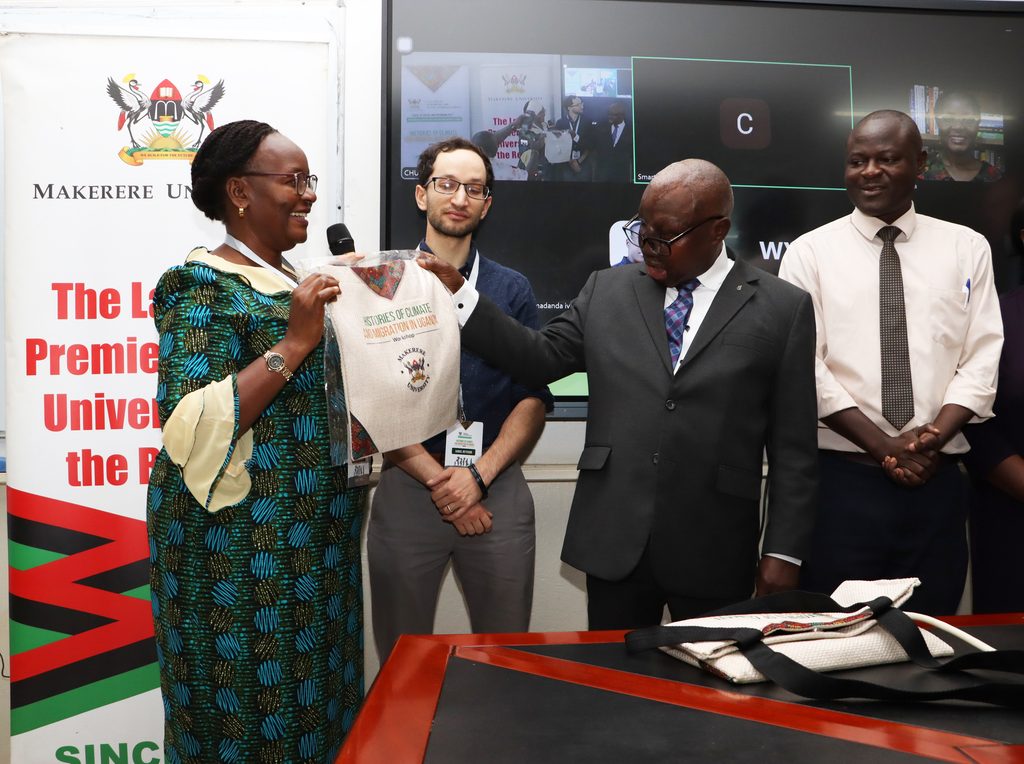
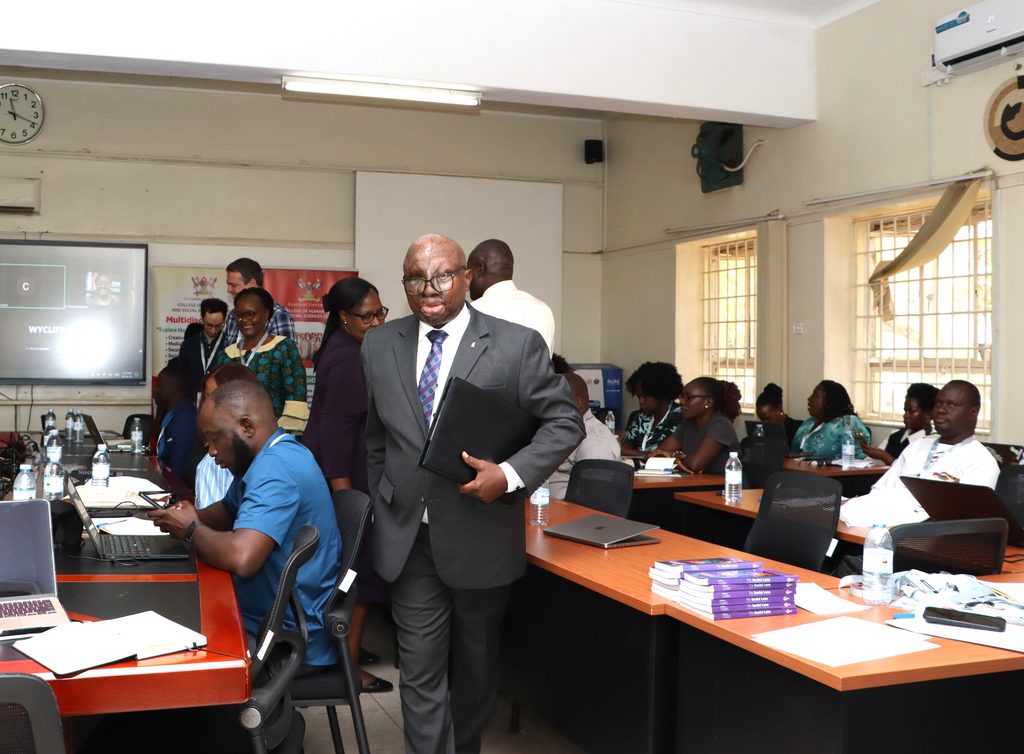
He made the remarks on September 9, 2026, while delivering a keynote address titled “Reflections on Climate Migration, Disaster Management, Resilience and Adaptation in Uganda” during the second day of a workshop on the histories of climate and migration in Uganda organised by Makerere University’s Department of History, Archaeology and Heritage Studies.

The workshop, held in the CHUSS Smart Room, brought together academics, government officials, development partners, refugees and hosting communities, and other stakeholders to examine the historical and contemporary relationship between climate change, migration, displacement, and community resilience.
Mwenyi said Uganda could no longer treat climate-related disasters as occasional emergencies requiring temporary relief, arguing that the country must prepare communities in advance and develop sustainable solutions for people forced to move from high-risk areas.
“For many years disaster management meant responding, giving people food, and giving them tarpaulins,” Mwenyi said. “But that is not lasting.”
He said government must instead equip communities with credible information so that they can anticipate risks and take action before disasters occur.
“My strategy now … let’s give people information,” he said.
Mwenyi said Uganda’s climate vulnerability was no longer a distant threat but a reality already affecting communities across the country.
He pointed to population growth and increasing pressure on land as additional factors complicating government efforts to resettle communities displaced by disasters.
“Land is fixed, as it is fixed, you are producing more people, so you keep reducing by distributing,” he said, stressing the growing difficulty of finding large tracts of land for resettlement.
The Commissioner said government was already struggling to find suitable land for people living in disaster-prone areas, particularly in densely populated parts of the Mount Elgon region.
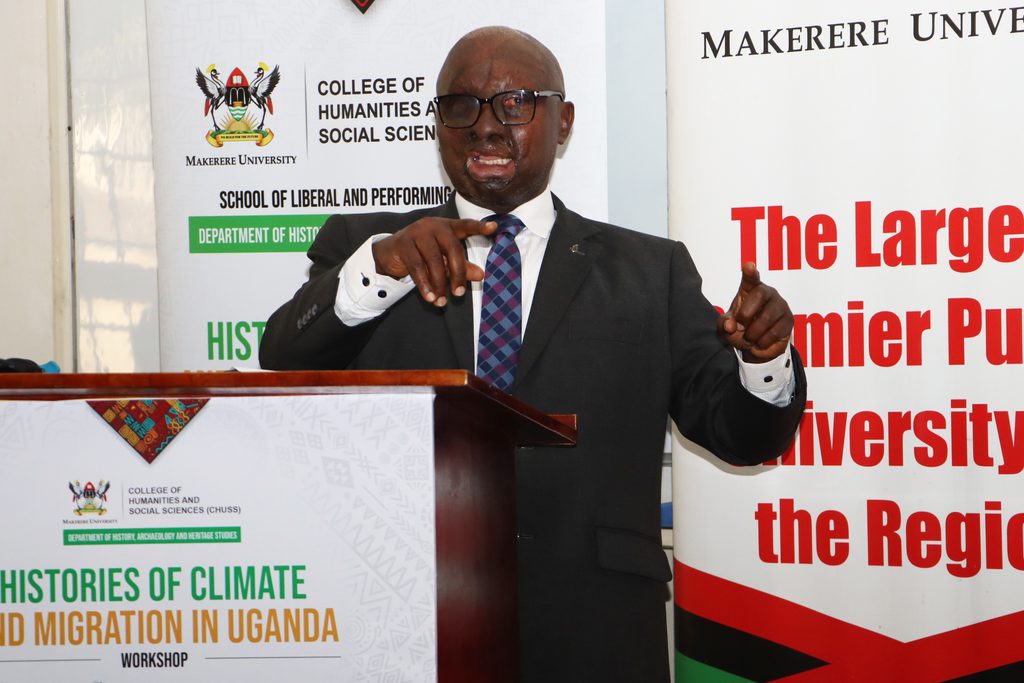
He revealed that Cabinet had allocated Shs56 billion for land acquisition for resettlement, but only Shs14 billion had been spent because of difficulties in finding suitable land.
“I have 56 billion shillings that Cabinet gave me to buy land to resettle people,” Mwenyi said. “I have only expended 14 billion. The rest is still in the bank. I cannot spend it because there is no land to buy.”
According to Mwenyi, government advertised for land and received about 17 bids, but most failed to meet the required conditions.
The challenge, he said, has prompted government to consider an alternative model under which displaced people could receive financial support to identify and purchase land themselves.
He said such a model could give affected communities greater control over where they settle while reducing resistance to relocation.
Mwenyi argued that people are more likely to rebuild their lives successfully when they are allowed to choose areas where they feel comfortable and where they can continue their livelihoods.
“When people go where they love, they will stay peacefully and they will be more productive than people … taking them to places that they don’t want,” he said.
He suggested that government could provide financial assistance to affected households to purchase land and settle themselves rather than relying entirely on government-led land acquisition.
The Commissioner said the proposal also deserved further academic study to determine the most appropriate model for Uganda.
Mwenyi warns against policies developed without adequate research
Mwenyi said some government interventions fail because policies are sometimes implemented before sufficient research and consultation have been undertaken.
“When an idea comes, you just go in the car and pick out something and what you pick is what you start to implement,” he said. “And usually such policies fail.”
He called for stronger collaboration between government and universities to ensure that policies addressing climate migration and disaster risk are grounded in evidence.
Mwenyi asked researchers participating in the Makerere workshop to compile their findings into a dossier that could be shared with government and used to inform policy.
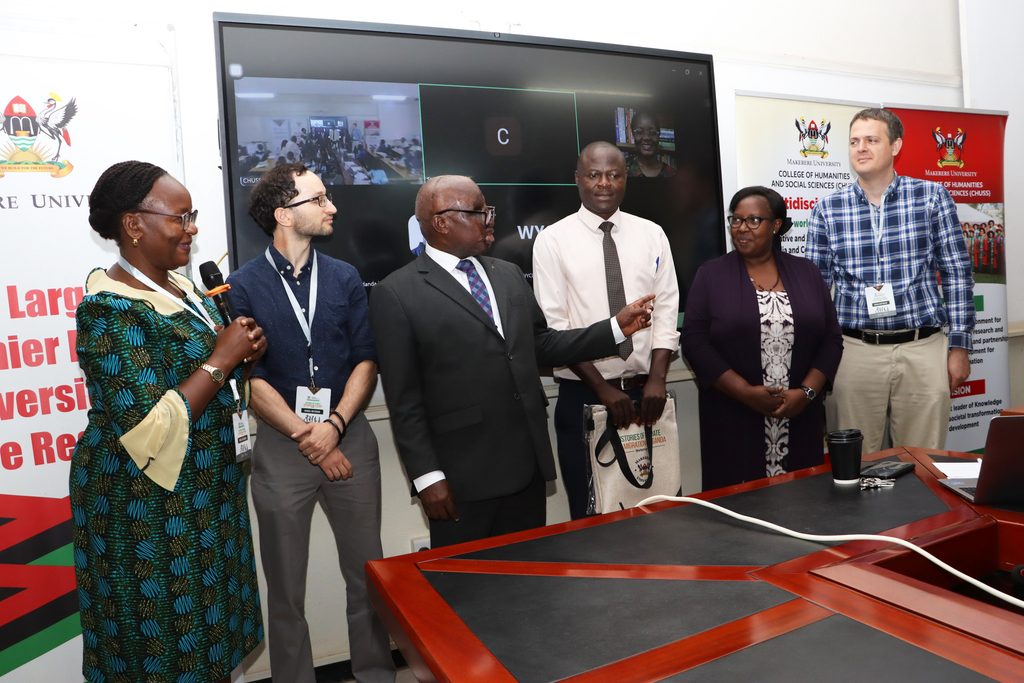
“When you give us this kind of information, definitely we shall see how we can inform leaders to be more relevant to our people,” he said.
He said his own work focuses on policy fidelity and the effectiveness of Uganda’s disaster-risk policy frameworks, making research generated by scholars particularly valuable to his office.
The Commissioner also pledged continued collaboration with Makerere University, where he studied economics.
“Makerere is always home,” he said, describing the university as an important source of knowledge and expertise for national development.
Prepared communities can better manage climate risks
Beyond relocation, Mwenyi said Uganda needs to strengthen public awareness and preparedness so that communities can respond to risks before they become disasters.
He argued that local communities possess valuable knowledge about their environments that government and researchers should incorporate into disaster planning.
“There are certain things that people know, that we don’t know,” he said.
Mwenyi urged social scientists to spend time with communities to understand their experiences and knowledge of environmental changes.
He said research findings should be transformed into accessible information that ordinary people can use.
“You must give information which is credible,” he said.
The Commissioner cited Uganda’s Anticipatory Action Plan and the Kampala Ministerial Declaration as examples of initiatives aimed at moving disaster management towards preparedness.
He said the Kampala declaration emphasises the need for cities to deliberately allocate resources for disaster preparedness, particularly as urban areas increasingly face flooding and other climate-related risks.
He cited flooding in Kampala’s Central Business District as an example of the difficulties government faces when responding to disasters after they have occurred.
Mwenyi also raised concerns about inaccurate information on people affected by disasters, saying conflicting lists can make it difficult for government to identify genuine beneficiaries of relief and recovery assistance.
The experience, he said, demonstrated the importance of reliable data and accountability in disaster response.
Makerere’s research on Bududa experience exposes gaps in Uganda’s displacement response
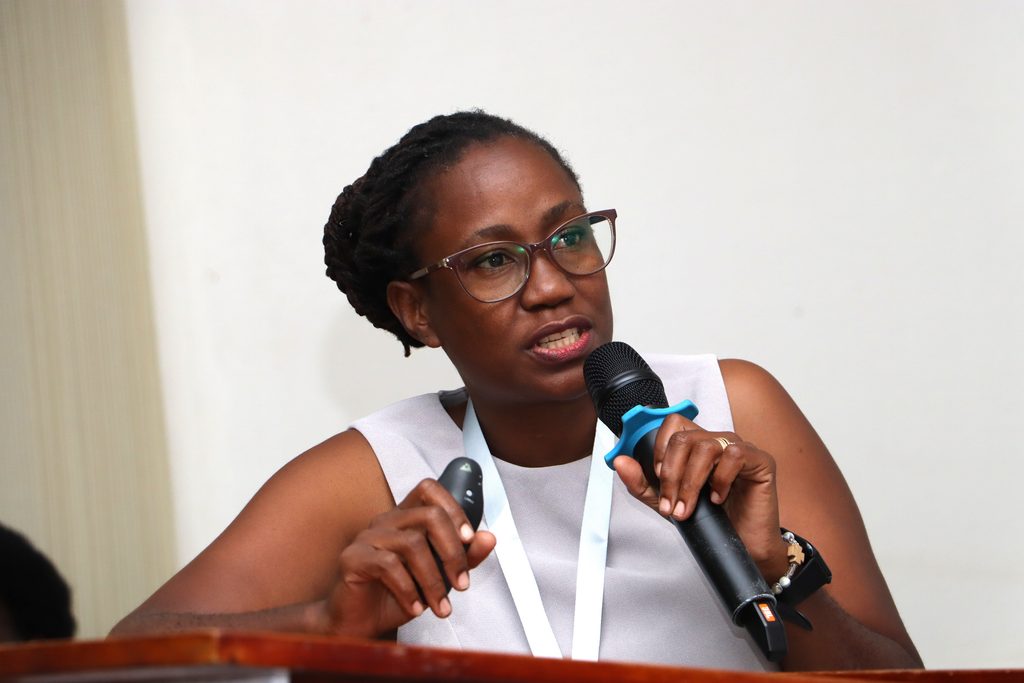
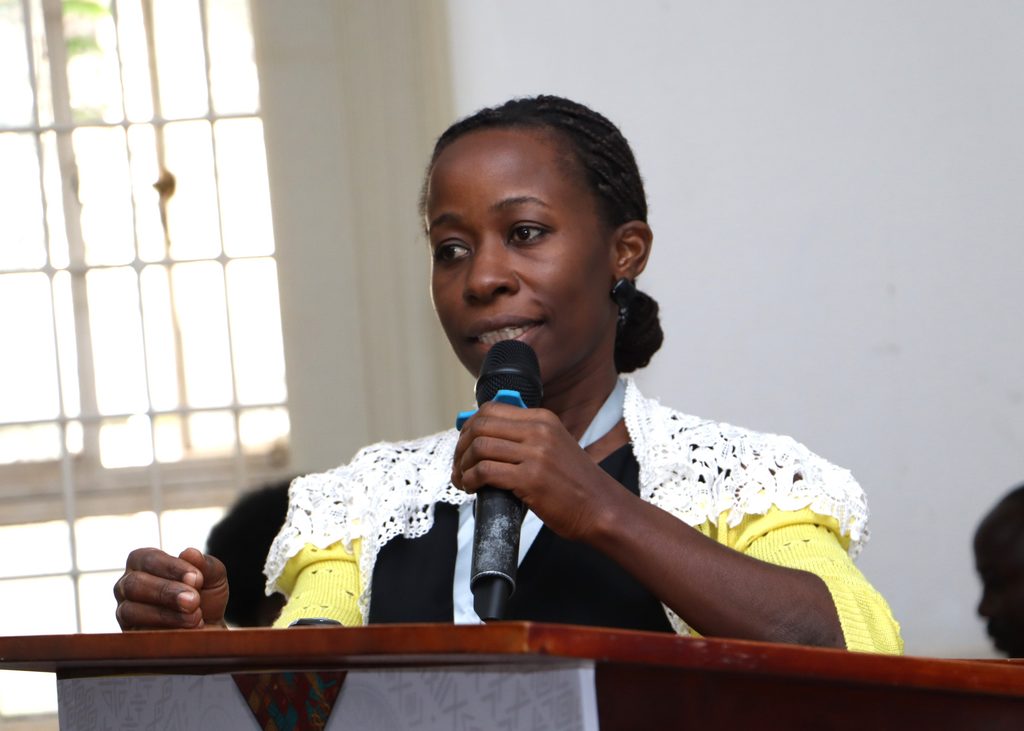
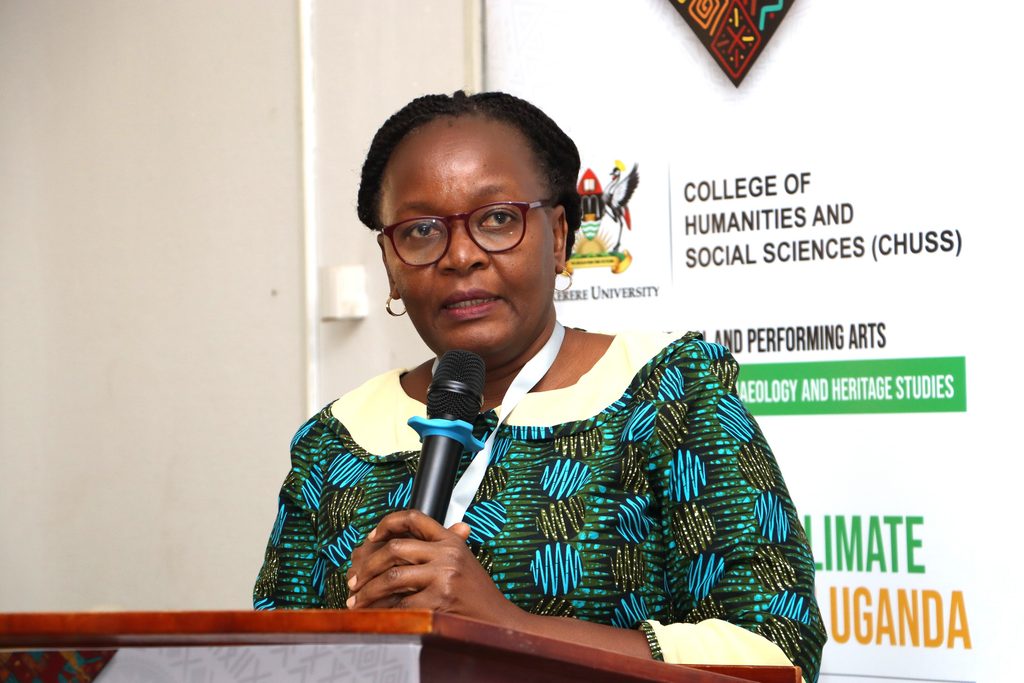
While Mwenyi focused on the policy challenges facing government, Dr. Pamela Khanakwa’s research presented the human consequences of poorly planned or inadequately supported resettlement.
Presenting her paper, “From Bududa to Kiryandongo and Bulambuli: Landslides, Displacement and Governance Intervention,” Khanakwa examined the experiences of communities affected by landslides in Bududa in 2010 and 2018 and the subsequent government interventions.
She said the March 2010 landslide in Bududa killed hundreds of people and displaced thousands, triggering rescue operations and the provision of food, clothing, medicine and temporary shelter. Government also deployed the military to support rescue efforts and promised to relocate affected communities to safer areas.
However, Khanakwa said the relocation process was complicated by the absence of a clear policy framework at the time. She noted that Uganda subsequently developed and adopted the National Policy for Disaster Preparedness and Management in September 2010.
The first group of survivors was relocated to Kiryandongo in October 2010, where each family was allocated about two and a half acres of land. Government also promised to construct houses for the relocated families, although temporary shelters were initially provided.
For some survivors, Khanakwa said relocation provided an opportunity to escape the trauma associated with the landslide and begin new lives. She cited the experience of one woman who lost her husband and children in the disaster and welcomed relocation because she could no longer bear living in the place where her family had died.
“I could not stand living in the house alone after my husband and children had perished in the landslide,” the woman told the researcher.
The woman regarded relocation as an opportunity to rebuild her life. However, Khanakwa said not all survivors viewed relocation positively.
Land, livelihoods and culture shaped resistance to relocation
Some residents refused to move because they feared losing access to fertile land and livelihoods. Khanakwa said many Bududa residents regarded their home area as agriculturally productive, with reliable water sources and environmental conditions to which they were accustomed.
For some, therefore, moving to an unfamiliar environment presented a greater uncertainty than remaining in an area exposed to landslides. One resident reportedly questioned whether the alternative settlement would provide sufficiently fertile soil. Others objected to the different climatic conditions in Kiryandongo.
“For us, we are used to living in a cold and wet place. Kiryandongo is dry,” one resident said, according to Khanakwa’s research.
Khanakwa said these concerns demonstrated that relocation cannot simply involve moving people from one geographical location to another.
Instead, successful resettlement must take into account the economic, social, cultural and environmental conditions that sustain communities.
She said some of the fears expressed before relocation were later reinforced by conditions experienced at the settlement.
Residents reported shortages of water, with some claiming that a single water source was being used by hundreds of people.They also complained about schools and health centres being located far from the settlement.
Khanakwa said members of the Bududa Women Association in Kiryandongo used songs to express their frustrations over poor soil conditions, inadequate shelter, food shortages and limited access to health services.
The women also expressed concerns about language barriers, saying they struggled to communicate in English and Swahili, which were used in the settlement. According to Khanakwa, the songs offered an important insight into how displaced communities communicate when they feel disconnected from government authorities.
She said researchers therefore have an important role in documenting community experiences and ensuring that the voices of displaced people reach policymakers.
Unfulfilled government promises triggered return to Bududa
Khanakwa said some survivors eventually returned to Bududa after becoming dissatisfied with conditions in Kiryandongo.
One woman returned after waiting for a government-promised house that had not been constructed.
She subsequently resumed cultivation on her former land in Bududa, where she found the soil remained productive.
The experience, Khanakwa said, illustrates the difficult choices faced by displaced communities whose livelihoods remain tied to their places of origin.
It also demonstrates how prolonged displacement can contribute to family separation and disrupt social and economic networks.
Khanakwa further identified irregularities in the registration of people for relocation.
Her interviews indicated that some people directly affected by the 2010 landslides were not registered for relocation, while some people who had not been directly affected were included in the resettlement programme.
Such inconsistencies, she said, raise questions about beneficiary identification and can undermine confidence in government interventions.
Delays and land disputes complicated resettlement
The researcher also traced subsequent government efforts to acquire land in the Mount Elgon region for people living in high-risk areas.
Government eventually acquired more than 2,000 acres of land in Bulambuli for resettlement, but Khanakwa said disputes over land ownership emerged.
The resettlement programme was further complicated by delays in moving communities before additional landslides occurred.
She noted that the 2018 landslides occurred before people living in high-risk areas had been fully relocated to the land acquired by government.
The disaster subsequently triggered renewed criticism of the government’s response, with different groups blaming either residents for failing to move or government for failing to implement relocation plans quickly enough.
Khanakwa said this created a cycle of blame that obscured the deeper structural problems surrounding disaster preparedness and resettlement.
She argued that the Bududa experience demonstrates the need for government to engage communities more closely before designing relocation programmes.
Research-policy link central to Makerere workshop
The presentations formed part of a wider Makerere University effort to bring researchers and policymakers together to examine climate change and migration from multiple perspectives.
Dr. Charlotte Mafumbo , who welcomed Mwenyi to the workshop, said the event was supported through collaboration involving Makerere University, the University of Cambridge and Makerere University.
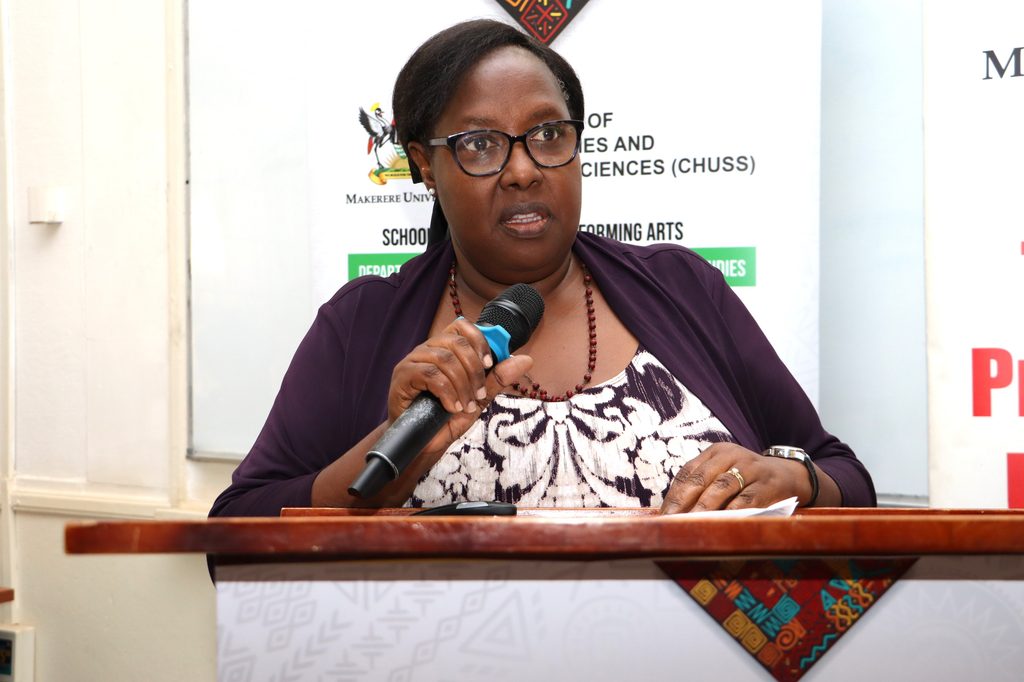
She said the workshop deliberately brought government stakeholders into conversations with researchers so that policy discussions could be informed by evidence from communities and academic research.
The workshop brought together scholars from history, archaeology and heritage studies, political science, public administration, gender and development studies, education and other disciplines.
The interdisciplinary approach also incorporated the experiences of people from refugee settlements and graduate researchers working on climate and migration issues.
The project is supporting six graduate students and three people from refugee settlements, while researchers from universities in Uganda and abroad are participating in the wider programme.
Dr. Mafumbo said the workshop is expected to produce policy papers and policy briefs that can contribute to government planning and future interventions.
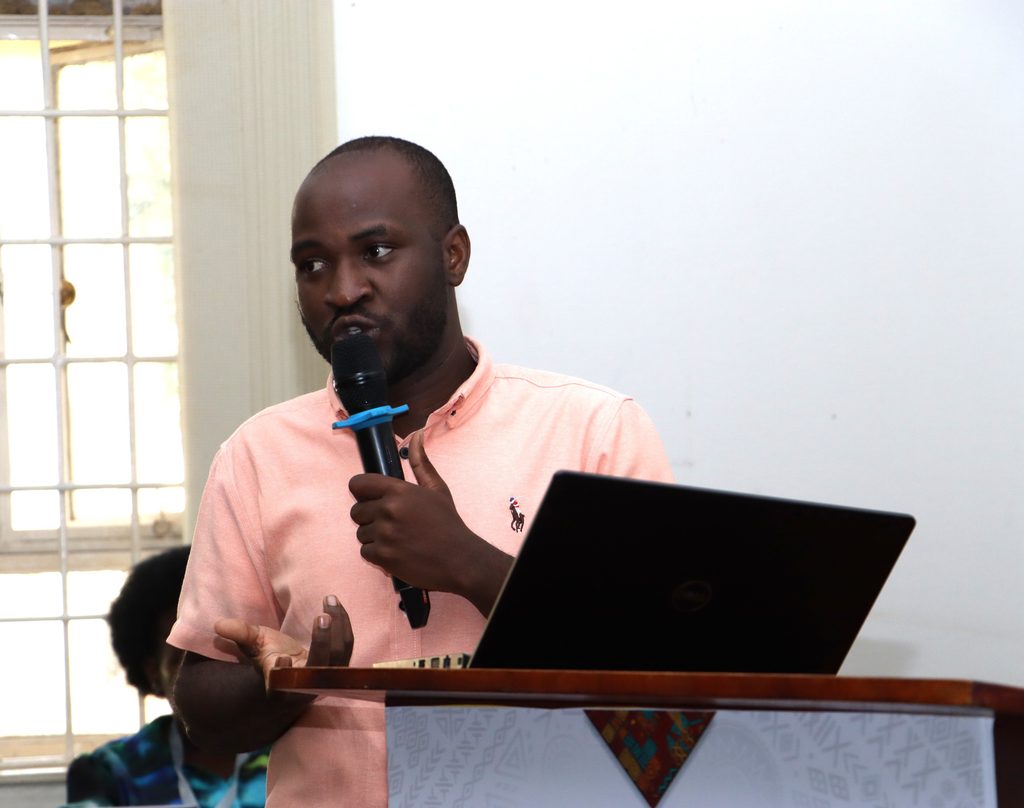
The expectation, she said, is that the research will provide practical evidence for policymakers rather than remain confined to academic discussions.
The engagement between Makerere and the Office of the Prime Minister therefore marked an important step towards connecting academic research with disaster-management policy.
For Mwenyi, the need for such collaboration is increasingly urgent as climate change continues to expose communities to displacement.
“We should move away from waiting for disasters to come,” he said, urging government, researchers and communities to focus on preparedness, credible information and practical approaches to resettlement.
The experiences documented by Khanakwa, meanwhile, suggest that preparedness must go beyond moving people out of danger. It must also ensure that displaced communities can access land, water, health services, education, livelihoods and social networks in their new settlements.
Together, the government and academic perspectives point to a growing need for Uganda to treat climate-induced migration not simply as an emergency-relief issue, but as a long-term development, governance and policy challenge.
By Jane Anyango, Peninah Nalubega, and Joseph Buwule