

Call for Abstracts
We warmly invite presentations, posters, workshops, symposia, IGNITE talks, panels and community dialogue sessions for our inaugural conference at Makerere University, Kampala. Submissions are made by email with your abstract attached, and you do not need to be an academic to send one.
Send us an email.
Every abstract is sent as an attachment to one inbox, sorted by its subject line. Please keep the subject format exactly as shown so your submission reaches the right reviewers.
- 1
Prepare your abstract
Write it as one document covering the seven elements under What to include, within the word limit for your category. English only.
- 2
Email it as an attachment, with the right subject
Attach your abstract and send to africa.gmhconference@gmail.com with this subject:
[ACGMHC2027 ABSTRACT] CATEGORY - Lead author surname
Replace CATEGORY with one of: ORAL, POSTER, SYMPOSIUM, WORKSHOP, IGNITE, PANEL or COMMUNITY VOICES.
- 3
Hear back from the Scientific Committee
Every submission is peer-reviewed. Authors are notified by 30 December 2026, and accepted presenters confirm by Feb 2027.
Choose how you want to be heard
Seven ways to take part. Pick the format that fits your work, and use its name as the category in your email subject.
Oral presentation
Showcase completed or emerging research, implementation experiences, innovations or policy initiatives.
15 min talk · 5 min discussion · 250–300 words
Poster
Share findings, implementation experiences and community innovations in an interactive format. Strongly encouraged for students, early-career researchers, community organisations, and pilot and implementation projects.
250–300 words
Symposium
Several presenters address a shared topic, challenge or innovation in global mental health, with a coordinated theme and a chairperson.
60–90 min · 3–5 presenters · 400–500 words
Workshop
Skills-building and participatory learning. Suggested areas: psychotherapy training, implementation science, grant writing, supervision systems, community facilitation skills, monitoring and evaluation, digital mental health and trauma-informed care.
400–500 words
IGNITE session
Big ideas. Bold voices. Five minutes. A fast, high-energy talk of 20 slides that advance on their own. See how it works.
20 slides · 5 min · 250–300 words
Panel or dialogue
Cross-sector discussion and shared problem-solving. We especially encourage service user panels, youth-led discussions and policy dialogues.
400–500 words
Community voices and storytelling
Storytelling, community testimony, arts-based presentations, film and photography, poetry and spoken word, digital storytelling and participatory dialogue.
400–500 words
IGNITE: Big Ideas. Bold Voices. Five Minutes.
A high-energy format for innovative ideas, emerging research, implementation reflections and transformative perspectives in community and global mental health.
slides, prepared in advance.
so the pace is set for you.
from first slide to last.
Topics may include
- Pilot studies
- Community innovations
- Youth-led initiatives
- Lived experience perspectives
- Policy and advocacy ideas
- Digital mental health innovations
- “What if?” future-oriented ideas
- Creative and interdisciplinary approaches
Why IGNITE
- Amplify emerging voices
- Encourage creativity and innovation
- Make presenting more accessible
- Create dynamic audience engagement
- Share ideas rapidly across disciplines
Especially encouraged for
- Students and trainees
- Early-career researchers
- Community organisations
- Lay counsellors
- Service users and advocates
- Innovators testing new ideas
What we are looking for
Submissions are invited under, but not limited to, these areas, grouped under the three major conference themes. See Conference Themes for the full descriptions. Cross-thematic work is strongly encouraged.
Strengthening Equitable & Community-Based Systems
Community Mental Health Systems
Task-sharing and lay counsellor models, primary healthcare integration, psychosocial interventions.
Child, Adolescent & Youth Mental Health
School programmes, peer-led interventions, university mental health, arts and sports.
Humanitarian & Refugee Mental Health
Trauma-informed care, forced displacement, resilience, post-conflict recovery.
Suicide Prevention & Crisis Response
Prevention systems, decriminalisation, bereavement, postvention, crisis models.
Innovation, Technology & African-Led Solutions
Psychotherapy & Intervention Innovation
IPT-G, Foundational Helping Skills, evidence-based adaptation, group and scalable therapies.
Digital Mental Health & Innovation
Tele-mental health, digital supervision, mobile tools, AI and mental health systems.
Implementation Science & Policy
Monitoring and evaluation, scaling interventions, evidence-to-policy translation, national systems.
Culture, Resilience & Social Healing
Culture, Faith & Indigenous Systems
Cultural understandings of distress, faith-based initiatives, indigenous healing, community dialogue and stigma reduction.
Voices from the Community
Lived experience, service user leadership, lay counsellor experiences, youth and community storytelling.
Align your submission with one or more tracks.
- Research
- Practice & Implementation
- Community Voices
- Youth
- Policy & Systems
- Humanitarian Mental Health
- Digital Innovation
- Arts, Storytelling & Creative Expression
What to include
The same seven elements apply to every format. Longer formats get more room to say them.
Submissions must be in English.
- 01Title
- 02Author(s) and affiliation(s)
- 03Background and context
- 04Objectives
- 05Methods or approach
- 06Findings or key insights
- 07Implications for practice, policy or research
How we review
The Scientific Committee peer-reviews every submission against:
- Relevance to conference themes
- Scientific and practical quality
- Innovation and originality
- Community relevance and impact
- Equity and inclusion perspectives
Special consideration goes to African-led research and practice, community-based approaches, youth participation and lived experience contributions.
Ethical standards
Submissions involving human participants should follow applicable ethical standards and institutional review processes. Please disclose:
- Funding sources
- Conflicts of interest
- Use of generative AI tools, where relevant
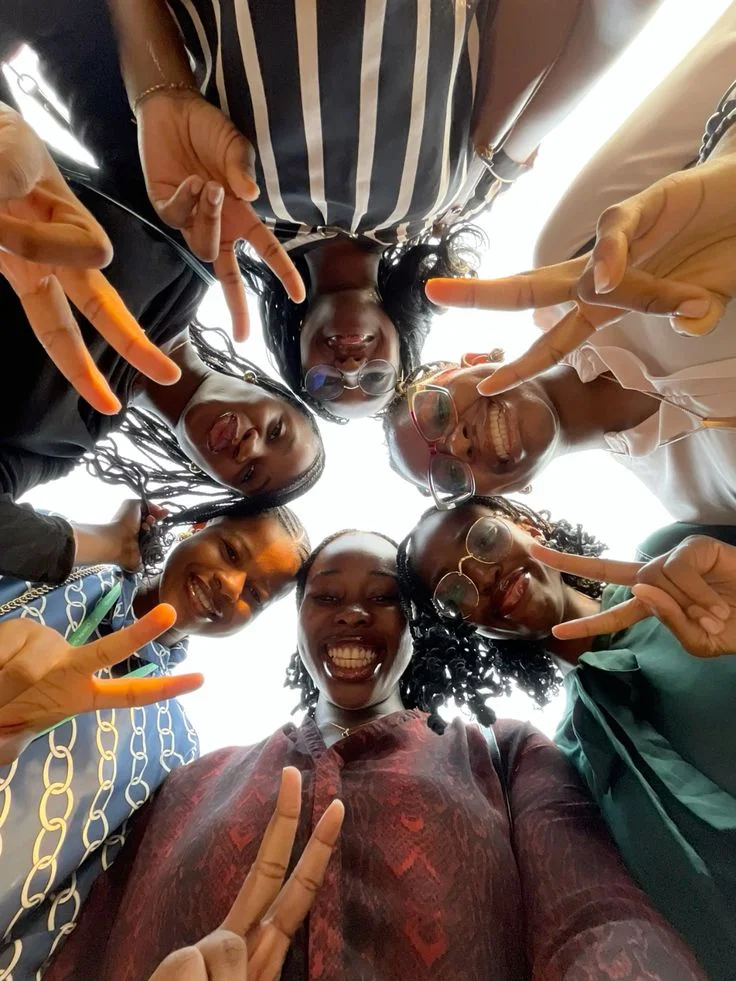
You do not need to be an academic researcher to submit.
The conference deliberately makes room for lived experience and community narratives. We warmly welcome service users, youth groups, community organisations, lay counsellors, advocates and frontline implementers.
Community impact stories, lessons learned, practice innovations, grassroots solutions, advocacy and culturally grounded approaches are all strongly encouraged. Arts, poetry, film and photography are welcome.
Share your story to africa.gmhconference@gmail.com
Submission timeline
Mark these dates carefully. The call is open now.
Call for submissions opens.
Submission deadline. Final date for abstracts and proposals.
Notification of acceptance.
Presenter confirmation deadline.
Pre-conference workshops.
Conference at Makerere University, Kampala, Uganda.
Two days of hands-on learning
Intensive, practical sessions before the main conference. Certification may be available for selected workshops. To lead one, submit it as a workshop.
- Interpersonal Psychotherapy for Groups (IPT-G)
- Foundational Helping Skills (FHS)
- Implementation science
- Supervision systems
- Grant writing
- Monitoring and evaluation
- Digital mental health tools
- Trauma-informed care
Excellence, recognised
- Best Oral Presentation
- Best Student Poster
- Best Community Innovation
- Best Youth Presentation
- Excellence in Implementation Science
- Community Leadership Recognition
- Lived Experience Leadership Award
Beyond the conference
Selected submissions may be considered for conference proceedings, policy briefs, implementation briefs, special journal issues and the inaugural African Community Mental Health Journal. Further details will be announced.
Why present at ACGMHC 2027
- Share African-led innovations
- Influence policy and practice
- Connect with regional and global experts
- Build collaborations and partnerships
- Showcase scalable community mental health solutions
- Amplify lived experience and community voices
Open to everyone who can contribute
Scholarships & travel support
Limited travel support and bursaries may become available for students, early-career researchers, community representatives, and service users and advocates. Details will be announced.
Hybrid participation
We are exploring virtual presentations, digital posters, session recordings and online participation to widen access. The final position will be communicated in later announcements.
Accessibility & inclusion
We particularly encourage African researchers and practitioners, early-career professionals, community organisations, people with lived experience and underrepresented voices in global mental health.
Code of conduct. Participants are expected to uphold respectful engagement, anti-harassment principles, inclusivity and equity, confidentiality where appropriate, and professional and ethical conduct. A full code of conduct will be published before the event.
Before you send
How do I submit?
Attach your abstract to an email addressed to africa.gmhconference@gmail.com and use the subject format shown under How to submit.
Do I need to be an academic researcher?
No. Service users, youth groups, community organisations, lay counsellors, advocates and frontline implementers are warmly welcome.
Which format suits a student or early-career researcher?
Posters and IGNITE sessions are especially encouraged for students, trainees and early-career researchers.
What language must I use?
Submissions must be written in English.
When will I hear back?
Authors are notified by 30 December 2026, after peer review by the Scientific Committee.
Can I present online or get travel support?
Both are being explored. Hybrid options and limited bursaries may become available, and details will be announced.
Ready to share your work?
Email your abstract as an attachment to africa.gmhconference@gmail.com before 16 November 2026.
For anything else, write to the Conference Secretariat.
College of Humanities and Social Sciences (CHUSS), Makerere University · Kampala, Uganda