
Makerere University has joined an international research consortium implementing a €3.9 million European Union-funded project to improve access to hypertension and type 2 diabetes care for an estimated 4,480 people across 160 villages in Uganda and Rwanda.
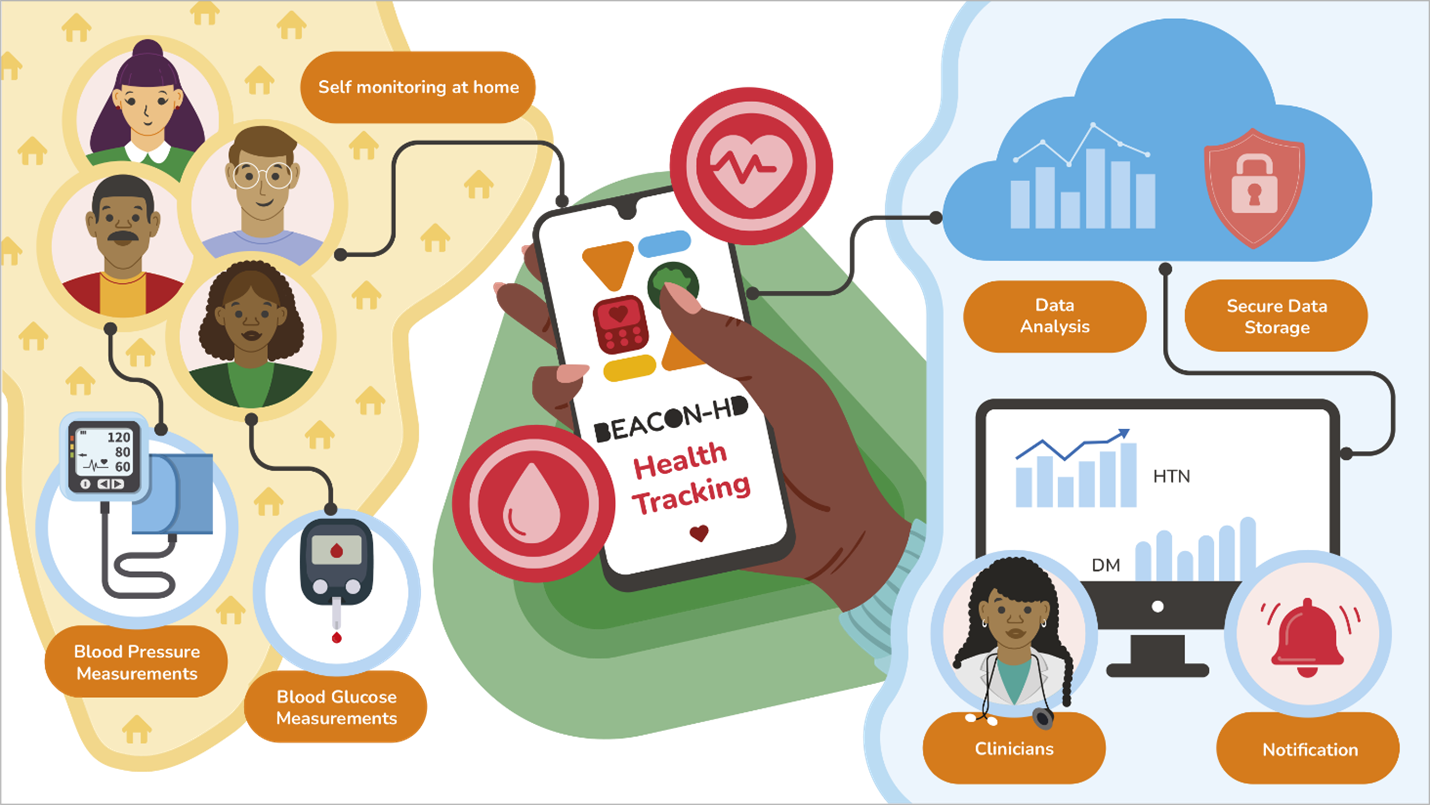
The four-year project, known as BEACON-HD, will test a decentralised healthcare model that combines telemedicine, patient self-monitoring and community-based medication delivery to bring essential services closer to rural communities.
Funded under the European Union’s Horizon Europe programme, the project will develop and evaluate the model through a cluster-randomised trial, generating evidence on its effectiveness, affordability and feasibility for possible integration into national public health systems.
The initiative seeks to address barriers that prevent rural populations from accessing consistent care, including overstretched health workforces and the cost of repeated journeys to distant health facilities.
According to the project, cardiovascular disease is the leading cause of death from non-communicable diseases in sub-Saharan Africa, despite the availability of affordable treatments for conditions such as hypertension and type 2 diabetes.
BEACON-HD will use CarePulse, a telemedicine platform co-designed with local clinicians and communities, to connect patients’ self-monitored blood pressure and blood glucose readings with remote clinical reviews. Community health workers will support medication delivery and follow-up care closer to patients’ homes.
Under the study, community health workers will recruit participants living with hypertension, diabetes or both conditions and follow them for 12 months. The research will also examine implementation feasibility, cost-effectiveness and equity to inform policymakers on the potential for wider adoption.
“We already have effective ways to prevent serious complications from hypertension and diabetes. The challenge is ensuring that everyone can access and sustain the care they need, regardless of where they live,” said Prof. Nikkil Sudharsanan, BEACON-HD project coordinator at the Technical University of Munich.
“Through BEACON-HD, we will work directly with healthcare workers, communities and policymakers to develop practical, community-based solutions that strengthen health systems,” he added.
The Technical University of Munich coordinates the 12-partner consortium, which brings together institutions from Europe, the United States, Uganda and Rwanda. The partners contribute expertise in clinical research, digital health, implementation science, health economics and public policy.
The consortium includes Makerere University, the African Community Center for Social Sustainability (ACCESS) in Uganda, the University of Global Health Equity in Rwanda, Partners In Health, Erasmus University Rotterdam, the University of Birmingham, Emory University, Northwestern University, the Bavarian Research Alliance, InoSens and bSpoke Solutions.
The project’s findings are expected to provide evidence on whether combining digital health technologies with community-based care can improve the long-term management of hypertension and diabetes in rural settings.
More information about the project is available at https://beacon-hd.org/.
Also attached is the press release.