
Makerere University is in advanced stages of procuring biometric attendance machines that will be installed in lecture rooms to monitor the attendance of both staff and students, University Secretary Mr. Yusuf Kiranda has disclosed.
Kiranda said the biometric system is part of efforts by the University to strengthen accountability and address concerns over staff and student attendance during teaching and learning.
He made the disclosure while presenting on the new College Statute and policy matters during the College of Humanities and Social Sciences (CHUSS) Top Management Retreat held at Kalanoga Resort, Busabala. on August 7 2026, under the theme “Driving Institutional Success and Growth through Strategic Leadership.”
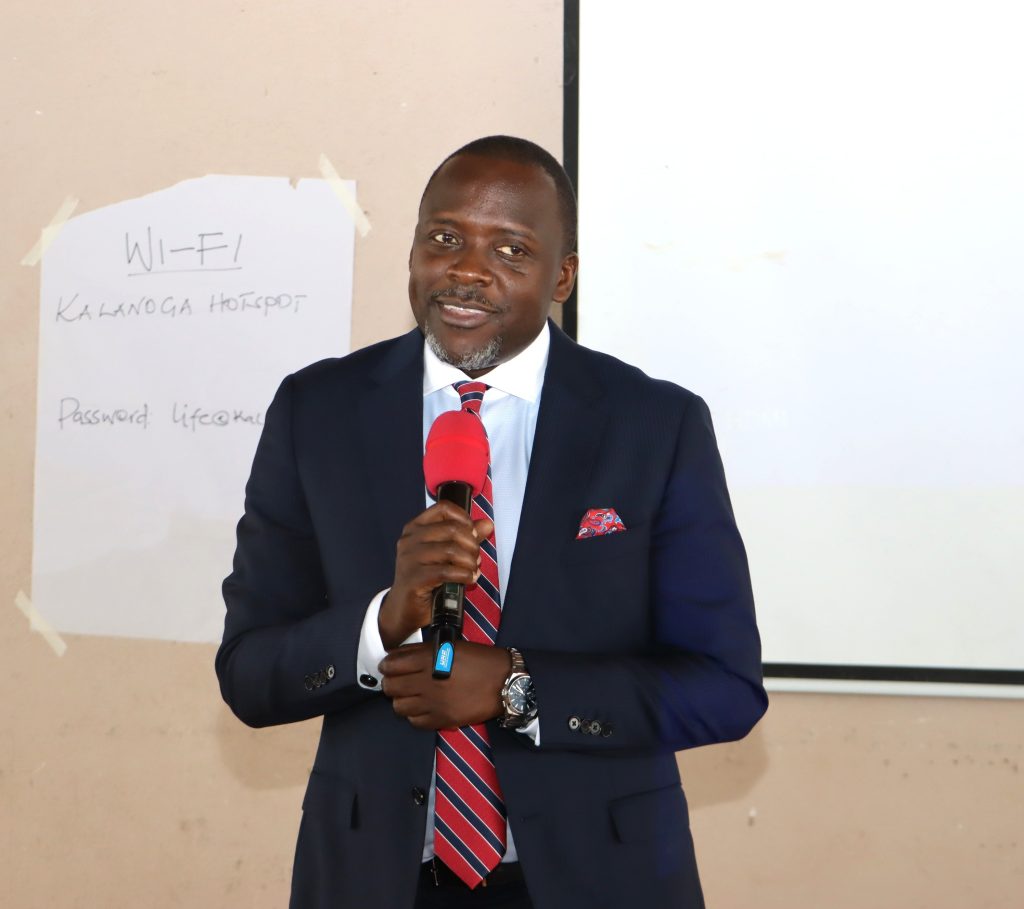
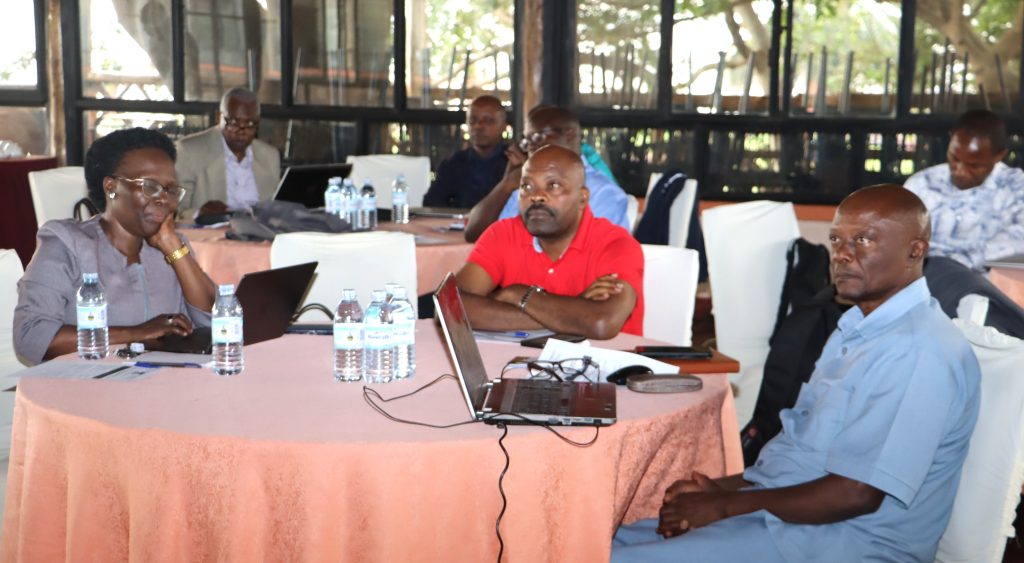
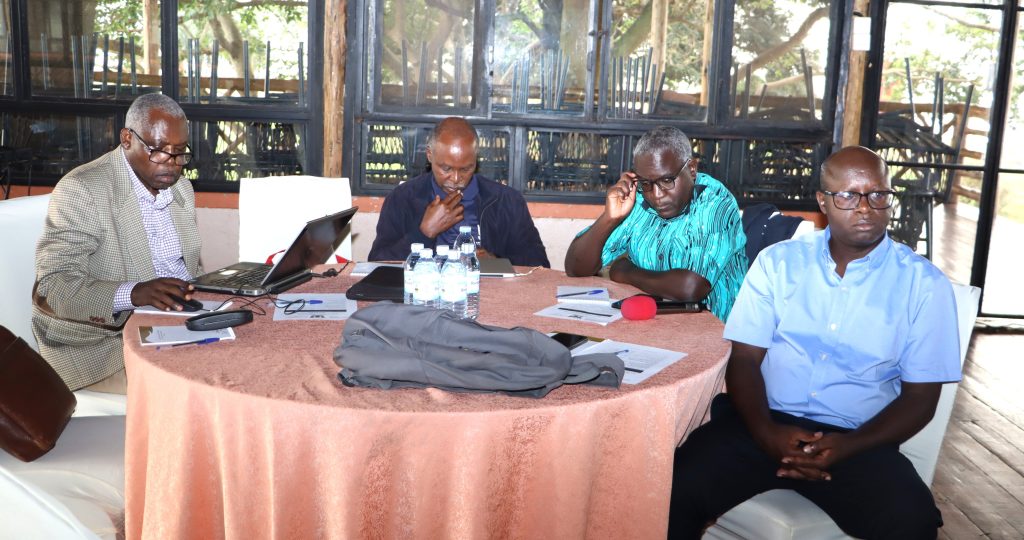
The retreat organized by the Office of the Principal, provided an opportunity for members of Top Management to reflect on institutional leadership, strategic direction, organizational culture, accountability, team performance, and the changing demands of leadership in a rapidly evolving environment.
According to Kiranda, management has over time received reports of lecturers recording their attendance at the University but failing to report to lecture rooms to teach, while students and academic staff have also exchanged accusations over non-attendance.
“Management has received reports that some lecturers clock in and do not go to class to teach,” Kiranda said.
“There also have been counter accusations between staff and students on non-attendance. So we want to clear this,” he added.
The University Secretary said the biometric system is intended to provide more reliable information on participation in teaching and learning and help address disputes over attendance.
However, Kiranda cautioned that monitoring attendance alone should not be the ultimate objective of the system, saying the University’s focus should be on productivity and accountability.
He argued that measurable outputs agreed upon between academic staff and their heads of department could provide a more meaningful basis for assessing performance than simply establishing whether an employee was physically present at the University.
Kiranda’s remarks come amid broader efforts by Makerere University to strengthen accountability through digitisation and performance monitoring.
He said the University was already digitising several processes to reduce paperwork, improve transparency, clarify responsibility and minimise delays.
The biometric attendance system is expected to provide the University with verifiable information on attendance in lecture rooms, potentially helping management distinguish between physical presence and actual participation in teaching and learning.
Kiranda also stressed that accountability should apply across the institution and should be accompanied by systems that enable staff to deliver their responsibilities efficiently.

He called for stronger collaboration between academic and administrative staff, noting that effective teaching, research and student services depend on administrative systems that facilitate rather than delay academic work.
The planned biometric system therefore represents part of a wider push by the University to strengthen evidence-based monitoring, accountability and service delivery while ensuring that performance is assessed against measurable institutional responsibilities.
Leaders urged to lead through trust, integrity and influence
College leaders were urged to move beyond positional authority and build institutional success through trust, integrity, influence and the deliberate development of people.
In her presentation on “The Changing Landscape of Leadership: Leadership in an Era of Rapid Change, Complexity and Uncertainty, and What is Expected of a Leader Today,” Mrs. Nkwanzi Aidah Mwebaze told participants that leadership is not simply about holding a position or title, but about earning the confidence of others and influencing them towards shared goals.
“Leadership begins when people start trusting an individual,” she said.
Mwebaze observed that the leadership environment has changed significantly as employees, students and other stakeholders become more knowledgeable, confident and willing to question authority. She said contemporary leaders must therefore be prepared to listen, engage and adapt rather than rely solely on hierarchy and formal power.
She identified rapid technological advancement, including the growing influence of Artificial Intelligence, changing expectations among employees and students, multigenerational workplaces, increasing demands for results and heightened expectations for ethical leadership as some of the major factors reshaping leadership.

According to Mwebaze, effective leadership requires qualities such as vision, integrity, accountability, courage, humility, emotional intelligence and strategic thinking, alongside the ability to inspire and influence others.
She challenged CHUSS managers to reflect on the kind of legacy they would leave after their tenure, arguing that leadership should be judged by the impact a leader has on people and the institution rather than by titles, offices or awards.
Mwebaze singled out integrity and trust as essential foundations of credible leadership. She encouraged leaders to honour commitments, communicate honestly, maintain confidentiality, take responsibility for their actions and act ethically even when no one is watching.
She also cautioned leaders against behaviours that can undermine institutional culture, including gossip, abuse of influence, financial dishonesty, sexual harassment and abuse of office.
“A leader’s greatest legacy is not the position held but the reputation built while occupying that position,” Mwebaze said.
The facilitator further challenged managers to demonstrate emotional intelligence when dealing with staff, particularly when addressing poor performance. She urged leaders to understand the circumstances behind a problem before taking disciplinary action, noting that underperformance can sometimes result from excessive workload, inadequate resources or lack of capacity.
She also encouraged leaders to manage their emotions, warning that anger may achieve immediate compliance but can damage trust and long-term commitment.
Mwebaze highlighted the need for leaders to understand generational differences in modern workplaces, particularly the expectations of younger employees and students. She urged managers not to automatically interpret questioning or demands for greater participation as disrespect, but to respond through constructive engagement and openness to learning.
On organisational culture, she argued that leaders shape workplace behaviour largely through their own example. Leaders who are consistently punctual, accountable, respectful and ethical are more likely to encourage similar behaviour among those they supervise.
The presentation also focused on building high-performing teams. Mwebaze urged leaders to develop staff who can make decisions, solve problems and take responsibility without depending on the leader for every decision.
She encouraged managers to create opportunities for employees to speak up, make suggestions, question existing practices, participate in decision-making and develop their leadership capacity.
She challenged participants to ask themselves whether their teams remain capable and effective when they are not present.
For Mwebaze, leadership is ultimately about stewardship and improving the lives and capacities of others. Leaders, she said, should serve before expecting to be served, listen to others, restore relationships, demonstrate compassion and treat people with dignity.

She also called on managers to value support staff, including cleaners, drivers, secretaries and office assistants, arguing that respectful treatment of all members of an institution contributes to stronger relationships and a healthier organisational culture.
The presentation concluded with a reflection on leadership legacy, challenging managers to consider whether people become better because of their leadership and whether they leave their institution better than they found it.
CHUSS Urged to harness Humanities to drive Makerere’s global ambitions
The College was challenged to strategically position itself as a key driver of Makerere University’s ambition to become the leading university in Africa.
Dr. Christine Amito of the Directorate of Planning told the College leadership that Makerere University must move beyond simply responding to change and instead position itself to drive transformation at national, continental and global levels.
She challenged participants to think beyond the immediate future by asking what the University should look like in five, 10 and 20 years, and what role individual staff and academic units would play in achieving that vision.
“What will our university look like in five, ten, and twenty years?” she asked, urging staff to link their personal professional ambitions to the broader institutional strategic direction.

She said the question of “What is next?” should guide Makerere’s thinking as the University implements its 2025–2030 Strategic Plan.
Dr. Amito said Makerere’s ambition to move from its current position among Africa’s leading universities to becoming the continent’s number one institution would require a significant transformation in the way the University operates.
She pointed to the University of Cape Town as an example of an African institution that has maintained a strong position and urged Makerere to examine what leading universities are doing differently.
According to Dr. Amito, the University’s strategic priorities for 2025–2030 centre on teaching and learning, research and innovation, partnerships and community engagement, and institutional capacity.
She said CHUSS has a critical role to play in all four areas and should align its own strategic objectives, activities and performance indicators with the wider University plan.
Dr. Amito particularly defended the strategic importance of humanities and social sciences, arguing that national development cannot be achieved through science and technology alone.
She said scientific and technological solutions require an understanding of people, institutions, cultures and societies if they are to be effectively adopted, governed and sustained.
“Science provides solutions, while the humanities help ensure that those solutions are adopted, understood, governed, and sustained,” she said.
She identified governance, public policy, peace and conflict resolution, communication, gender, culture, social development and understanding human behaviour as areas where humanities and social sciences make an important contribution to national transformation.
Dr. Amito urged CHUSS to capitalise on its academic strengths in areas such as history, sociology and archaeology and use them to develop a distinctive institutional identity and competitive advantage.
She said the College should position itself as an intellectual hub for understanding people, institutions, cultures, governance and societies while contributing to evidence-based policy and social transformation.

The College, she added, can contribute to Makerere’s strategic priorities through high-quality teaching, high-impact research, policy briefs, social innovation, graduate training, international collaborations and community engagement.
She also encouraged greater interdisciplinary collaboration between humanities and social sciences and other disciplines, citing possible partnerships between medicine and psychology, business and communication, natural sciences and climate governance, and engineering and sociology.
Such collaboration, she said, would increase the relevance and impact of university research and enable Makerere to address complex national and global challenges more effectively.
Dr. Amito also highlighted CHUSS’s existing contribution to Makerere. She said the College accounted for approximately 15 percent of total University enrolment and had a substantial postgraduate population.
In 2024, CHUSS recorded approximately 1,538 undergraduate admissions, 728 postgraduate admissions and total enrolment of 3,673 students. The College also recorded 1,673 graduates, including about 385 postgraduate graduates.
During the same period, CHUSS produced about 120 publications, representing approximately nine percent of the University’s publication output, while its 265 academic staff accounted for about 18 percent of Makerere’s academic staff.
The College had a budget of approximately Shs2.87 billion for the 2024/25 financial year.
Dr. Amito said these figures demonstrate that CHUSS already makes a significant contribution to Makerere and has the capacity to contribute even more to the University’s strategic ambitions.
She urged the College to establish clear targets for undergraduate and postgraduate enrolment, timely PhD completion, accredited programmes, indexed publications, graduate employability, staff recruitment, academic mobility and international student and staff exchanges.
She also encouraged CHUSS to strengthen its contribution to national priorities through research and policy engagement in areas such as climate governance, migration, gender and social development.
According to Dr. Amito, improving Makerere’s position in global and African university rankings will require more than increasing publication numbers. The University will also need to demonstrate research impact, strengthen international partnerships, improve graduate outcomes and enhance its reputation among employers and wider society.
She said CHUSS should therefore view its strategic plan not as a standalone document but as part of Makerere’s broader institutional agenda.
The presentation challenged the College to translate the University’s strategic priorities into measurable actions and targets, with every CHUSS objective clearly demonstrating how it contributes to Makerere’s overall vision.
Dr. Amito said the College’s distinctive contribution to the University’s future lies in its ability to provide the human and social dimension of development while generating knowledge that can shape policy, strengthen institutions, promote social cohesion and prepare ethical leaders for a rapidly changing world.
Makerere moves to align employment practices with Amended 2026 Law
Makerere University is reviewing its employment policies, contracts and procedures to align them with the amended Employment Act, 2026, Chief Human Resource Officer Mr. Deus Tayari Mujuni said.
Mujuni said the new law introduces significant changes affecting both employers and employees, including stronger protection against sexual harassment and pregnancy-based discrimination, new provisions for casual and domestic workers, changes to probation and sick leave, and tighter requirements for employment documentation and disciplinary procedures.
While presenting on the key changes in the amended Employment Act, 2026, Mujuni said the Employment Act, originally enacted in 2006, remains the principal legal framework governing employment relationships, but the 2026 amendments require institutions to review their employment practices to ensure compliance.

He disclosed that Makerere is currently reviewing its Human Resource Manual to align it with the amended law.
The Chief Human Resource Officer urged managers and heads of departments to familiarise themselves with the new requirements, warning that failure to follow proper procedures could expose the University to employment disputes before labour authorities or courts.
Among the significant changes is the strengthening of protection against sexual harassment in the workplace. The amended law removes the previous threshold that limited certain sexual-harassment prevention obligations to employers with more than 25 employees.
Under the new framework, every employer, regardless of the number of employees, is required to establish measures to prevent sexual harassment and prominently display them at the workplace.
Mujuni said Makerere already has a sexual harassment policy and trained personnel to handle related cases, but encouraged staff to familiarise themselves with the available reporting and response mechanisms.
The amended law also strengthens protection against workplace intimidation and harassment, including verbal, written and physical abuse.
Pregnant employees have also received stronger statutory protection.
Mujuni cautioned managers and supervisors against discriminating against, disciplining or unfairly treating employees on pregnancy-related grounds.
He said where pregnancy-related illness affects an employee’s attendance or performance, the matter must be handled fairly and in accordance with the law.
Another important change concerns sick leave. The amended framework provides for full wages during the initial period of sick leave, followed by half wages during the subsequent period, subject to statutory requirements.
After the prescribed six-month period, medical termination may be considered, but only after the required medical assessment and procedures have been followed.
Mujuni stressed that an employer cannot simply terminate an employee on medical grounds without following the prescribed process.
The law has also introduced a six-month limit on continuous casual employment. According to Mujuni, employers cannot keep workers on casual arrangements indefinitely.
Where casual employment effectively continues beyond the prescribed period, the worker may need to be converted to a formal employment arrangement or lawfully disengaged. Employers cannot avoid the requirement by temporarily terminating and subsequently re-engaging the same worker where the engagement is effectively continuous.
The amended law also explicitly brings domestic and casual workers within statutory employment protection and recognises piecework arrangements, under which employees are paid according to work completed rather than time worked.
Mujuni urged staff employing domestic workers such as housekeepers, cooks, gardeners and guards to ensure that they are treated in accordance with the law.
The amendments have also changed probation requirements.
The notice period applicable during probation has been increased from seven days to one month.
Mujuni warned managers against allowing probationary periods to expire without taking appropriate action. Where an employee’s probation expires and the employer continues retaining and paying the employee without formally extending the probation or taking other appropriate action, the employee may effectively become confirmed.
He therefore urged heads of departments and supervisors to monitor probation periods and submit recommendations for confirmation or other appropriate action before the prescribed period expires.
The amended Act also clarifies requirements surrounding termination, dismissal and summary dismissal, with redundancy, organisational restructuring, technological changes and prolonged sickness among circumstances that may result in termination where the legal requirements are met.
Mujuni stressed that a dismissal can be substantively justified but still be wrongful if the employer fails to follow the required procedure.
He therefore urged managers to properly document warnings, disciplinary proceedings, employee responses and other employment decisions.
“Proper documentation is essential because employment decisions may subsequently be challenged before labour authorities or courts,” he said.
The amended law further introduces stronger regulation of migrant workers, requiring employers to ensure that foreign employees have valid work permits, are informed of their employment terms and are recruited through lawful procedures.
It also gives the responsible Minister powers to designate categories of employment that may be reserved for Ugandan citizens, potentially affecting future recruitment involving non-Ugandan employees.
Mujuni said the changes place greater responsibility on managers and supervisors because employment disputes can arise from decisions made at departmental level.
He advised managers to seek guidance from the Human Resources and Legal departments whenever they are uncertain about how to handle employment matters.
The Chief Human Resource Officer also encouraged employees to read and understand the amended Employment Act, saying awareness of the law would enable both staff and managers to better understand their rights and responsibilities.
He emphasised that while Makerere’s Human Resource Manual and other institutional policies provide guidance on employment matters, they must ultimately conform to the amended Employment Act, which remains the superior legal framework. The two-day retreat concluded with team-building games with inspiration messages on building teams and trust for successful leadership