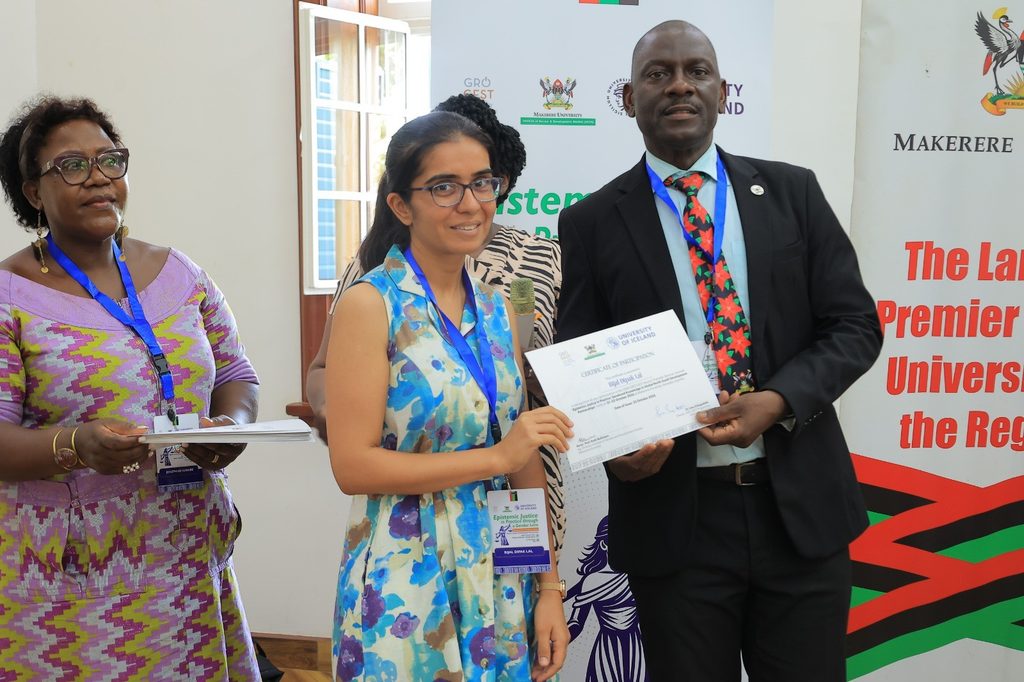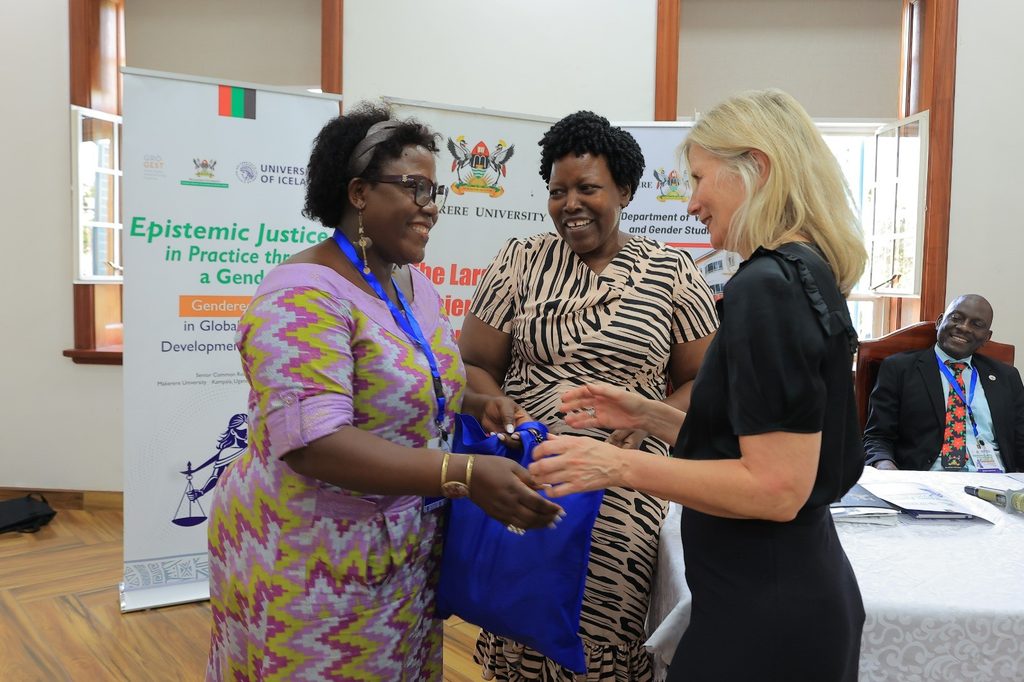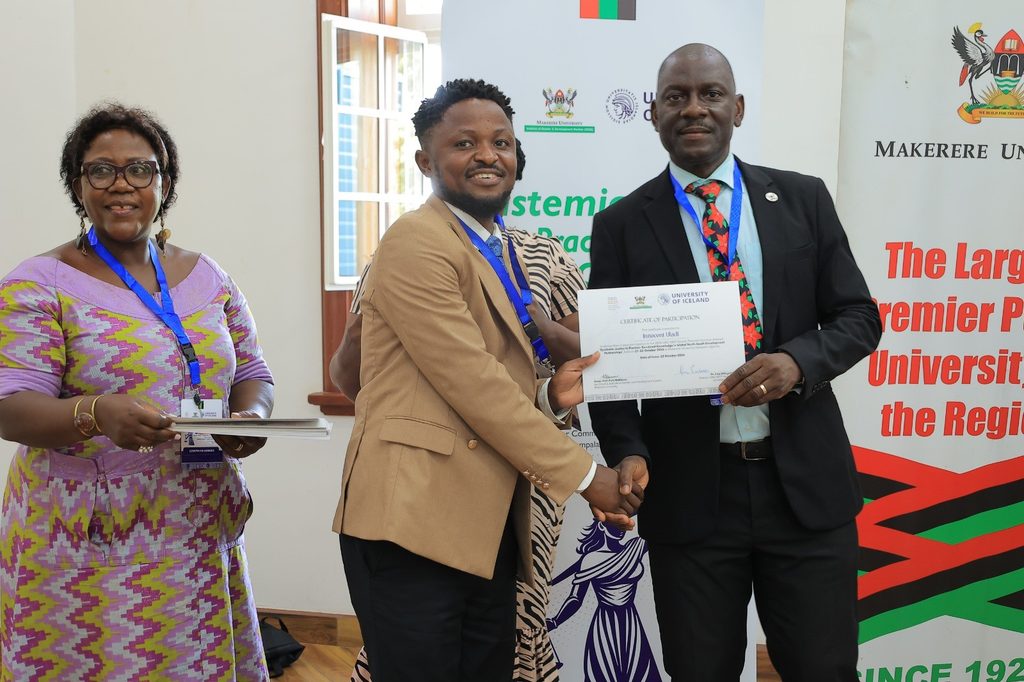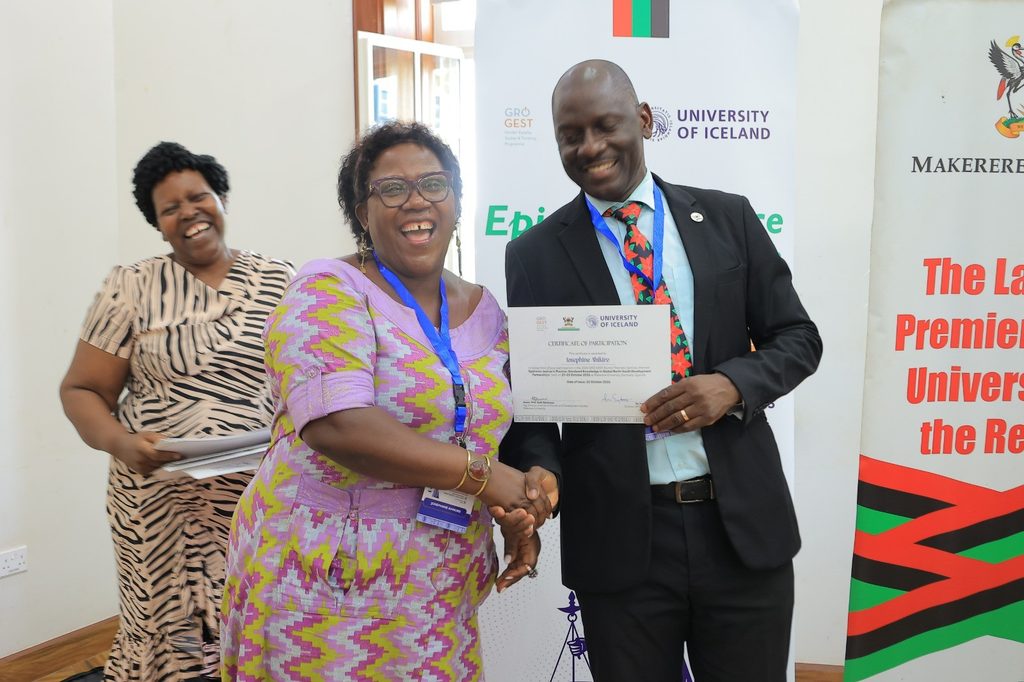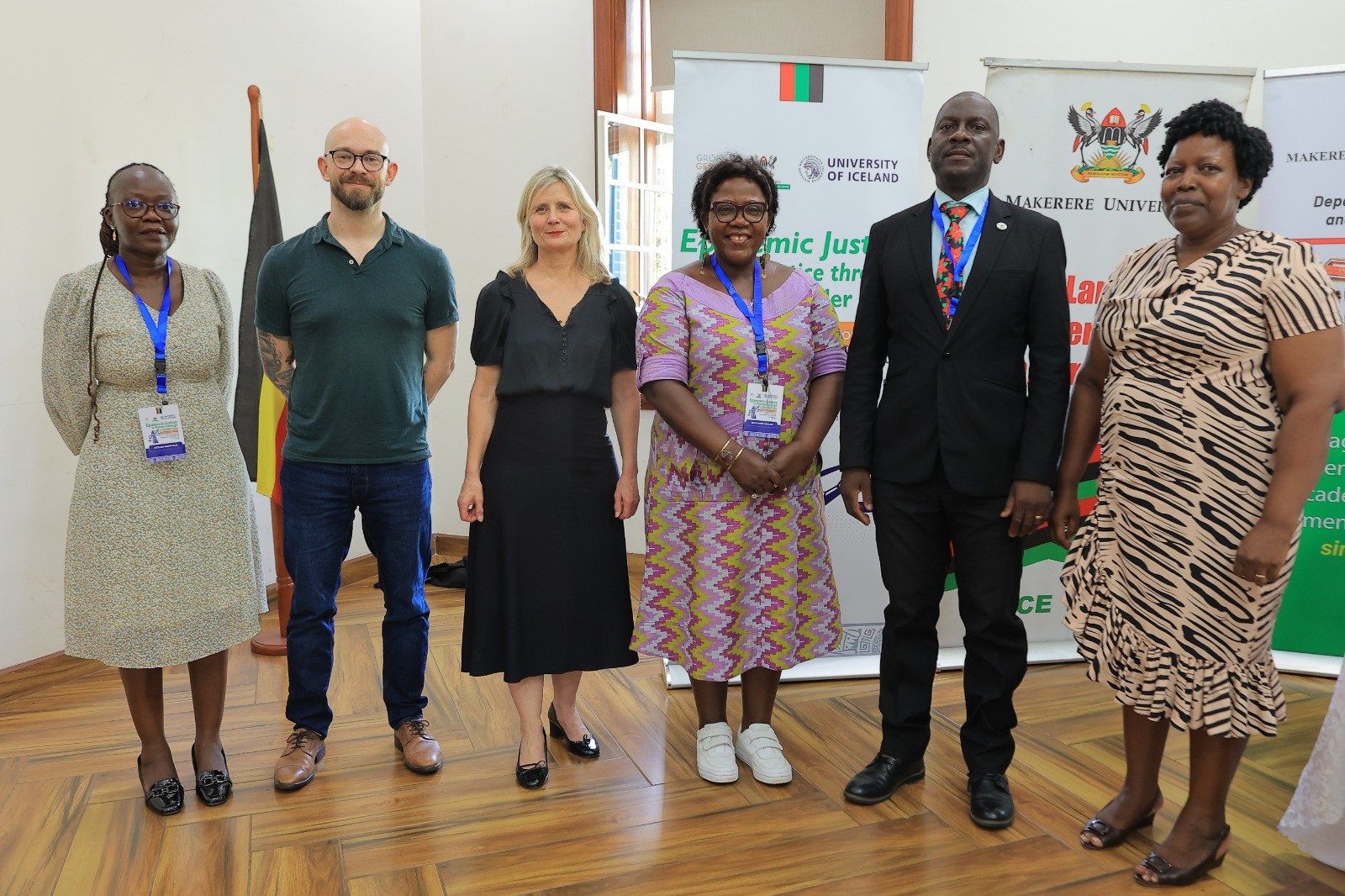
Makerere University and the Government of Iceland have called for more equitable research and development partnerships that recognise locally generated knowledge, amplify marginalised voices and ensure that communities participate in shaping policies and solutions to challenges affecting their lives.
The call was made during the closing ceremony of the 2026 GRÓ Gender Equality Studies and Training (GEST) Alumni Thematic Seminar at Makerere University on October 22, 2026. The two-day seminar brought together more than 100 participants, including researchers, policymakers, development practitioners, alumni and scholars from Uganda and other countries.
Held under the theme “Epistemic Justice in Practice: Co-Creating Contextualised Solutions in Global North–South Development Partnerships Through a Gender Lens,” the seminar examined how power relations, colonial legacies and gender inequalities influence whose knowledge is recognised, whose experiences shape research and who determines development priorities.
The discussions emphasised the need to move beyond treating communities as recipients of research and development interventions to recognising them as knowledge producers capable of informing research, public policy and practical solutions.
Partnerships must give local knowledge a meaningful place in policy
Delivering the closing address on behalf of Makerere University, Deputy Vice-Chancellor for Academic Affairs Prof. Julius Kikooma called on researchers, development partners and policymakers to build partnerships grounded in mutual respect, shared responsibility and genuine intellectual exchange.
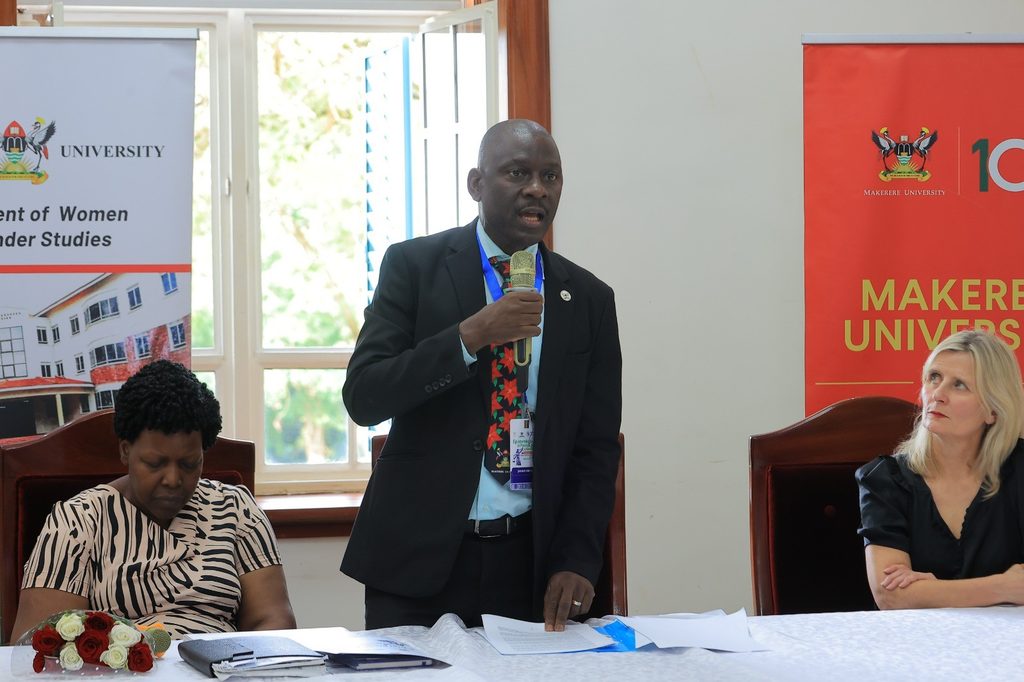
Kikooma challenged institutions to examine whether communities were genuinely involved in defining their problems and designing interventions intended to address them, particularly in areas such as gender-based violence, climate change, sexual and reproductive health and rights, disability inclusion and inequalities in education.
“The task is not only to apply knowledge, but also to produce knowledge that reflects the realities of the people we serve,” Prof. Kikooma said.
He noted that the seminar had brought together more than 100 participants, including the Ambassador of Iceland to Uganda, GRÓ GEST alumni, academics, policymakers, students and development partners, demonstrating that advancing gender equality requires collaboration across institutions, disciplines and national borders.
Prof. Kikooma urged alumni to use their professional networks and experiences in universities, government, civil society and communities to influence decisions that advance gender equality and inclusive development.
He also called for three practical commitments: listening more deliberately to marginalised communities, strengthening collaboration through joint research and mentorship, and translating knowledge into action through teaching, research, institutional practices and development interventions.
As a research-intensive institution, he said, Makerere University had a responsibility to ensure that research informed policy and practice while creating academic spaces in which emerging scholars and diverse perspectives could contribute to important debates.
He commended the partnership between Makerere University’s Institute of Gender and Development Studies and the GRÓ GEST Programme at the University of Iceland for strengthening professional capacity, facilitating knowledge exchange and building networks across national borders.
Prof. Kikooma emphasised that the success of international partnerships should not be measured only by meetings held, participants trained or reports produced, but also by whose knowledge shaped decisions and the positive changes arising from the collaboration.
Collaboration can help overcome barriers to community-generated knowledge
The Director of the GRÓ GEST Programme at the University of Iceland, Dr. Irma Erlingsdóttir, said collaboration between academic institutions and community practitioners was essential to challenging the tendency to question knowledge generated by young people and other marginalised groups.
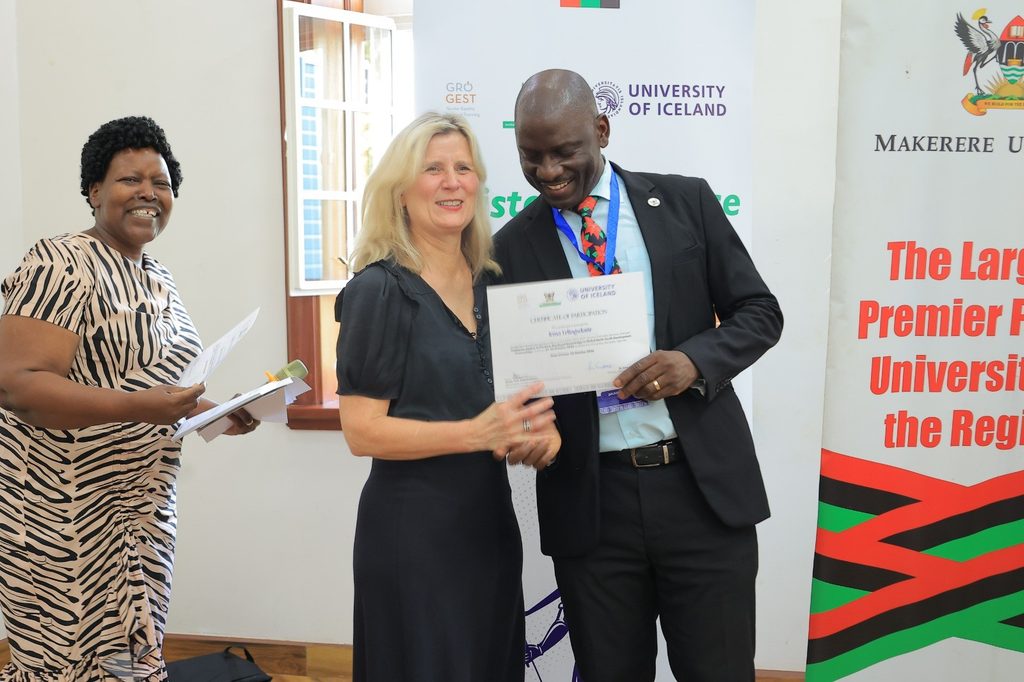
Drawing on experiences from community engagement and youth-led research, she observed that information generated by young people about their lived realities was often questioned for credibility when produced independently.
However, she said, partnering with academic institutions could help the same information gain recognition and enter policy discussions.
She cited experiences with youth-led research methodologies, in which young people generate insights about their communities to inform district plans and national policies.
“The main takeaway from these two days is the value of collaboration,” Dr. Erlingsdóttir said, noting that epistemic injustice could not be overturned within a few days but required sustained partnerships.
She urged institutions to work together to ensure that community-generated knowledge reached the policy frameworks and decision-making spaces where it could influence development.
Reflecting on the seminar, Dr. Erlingsdóttir also commended the partnership between Makerere University and the University of Iceland, describing the gathering as an affirmation of the value of academic collaboration, solidarity and friendship.
She thanked Makerere’s academic staff, students, researchers, keynote speakers and support teams for contributing to the discussions, which challenged participants to rethink how colonial and patriarchal power structures continue,