
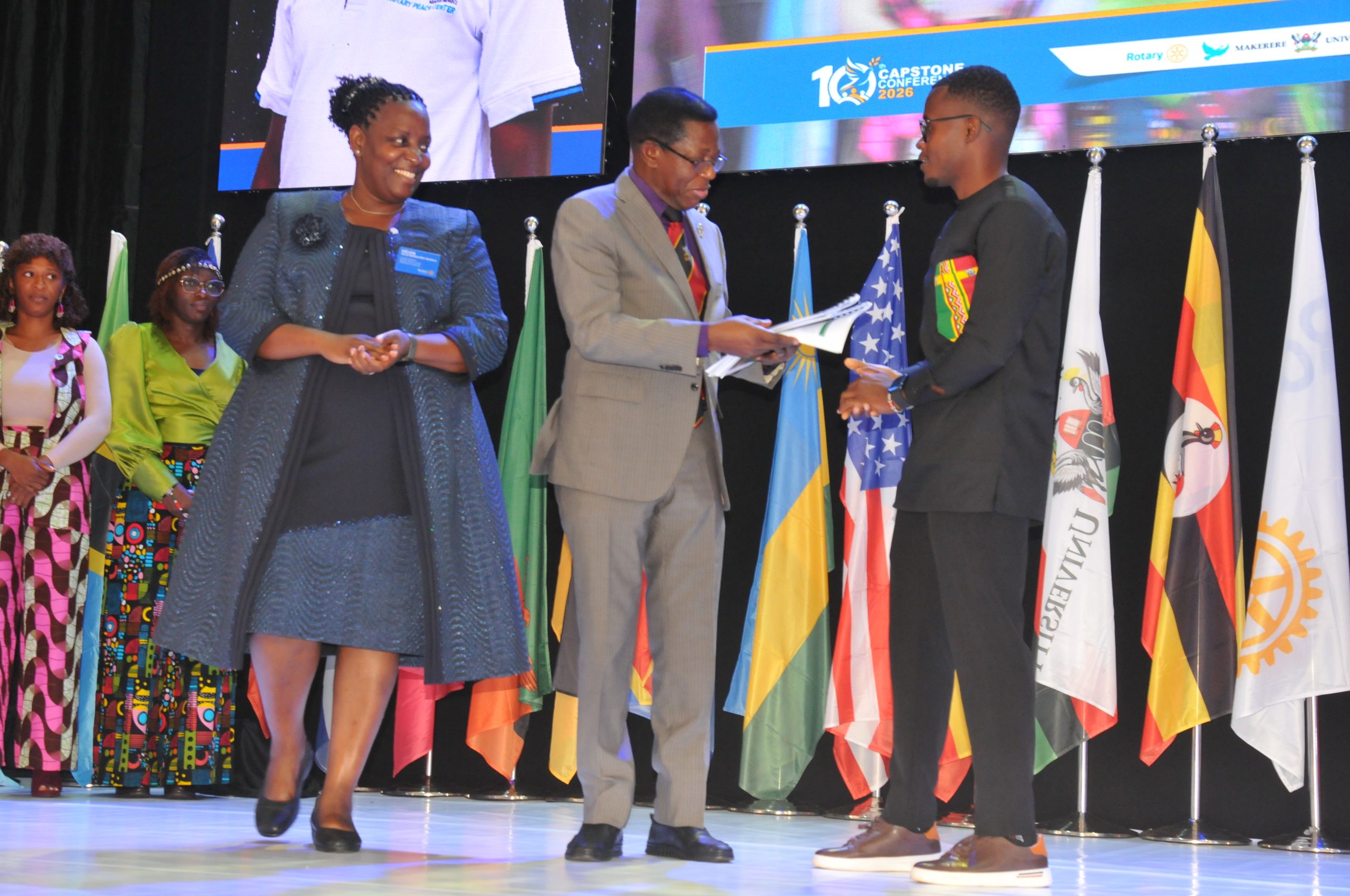
10th Capstone Conference celebrates a decade of partnership with Rotary International and 168 social change initiatives across 52 countries
Makerere University’s Rotary Peace Centre has graduated 16 fellows from Cohort 10 and welcomed 17 incoming fellows under Cohort 12, marking a decade of partnership with Rotary International in training peacebuilders and advancing community-led social change.
The milestones were announced during the Centre’s 10th Capstone Conference 2026, held under the theme Collaborative Peacebuilding for Societal Transformation. The conference celebrated the fellows’ contributions to peacebuilding and highlighted the Centre’s role in equipping leaders to address conflict, strengthen governance and promote sustainable development.
The Cohort 10 fellows completed two-and-a-half months of intensive face-to-face engagement at Makerere before undertaking field research on specific peacebuilding initiatives. The Centre has hosted fellows from 52 countries across its 12 cohorts and supported 168 social change initiatives in areas including peace and security, governance, health, livelihoods, youth, women, the environment and media.
Peacebuilding requires practical action
Presiding over the ceremony, Makerere University Academic Registrar Prof. Buyinza Mukadasi said peace was fundamental to human dignity and sustainable development, calling for collective action to translate peacebuilding knowledge into practical solutions.
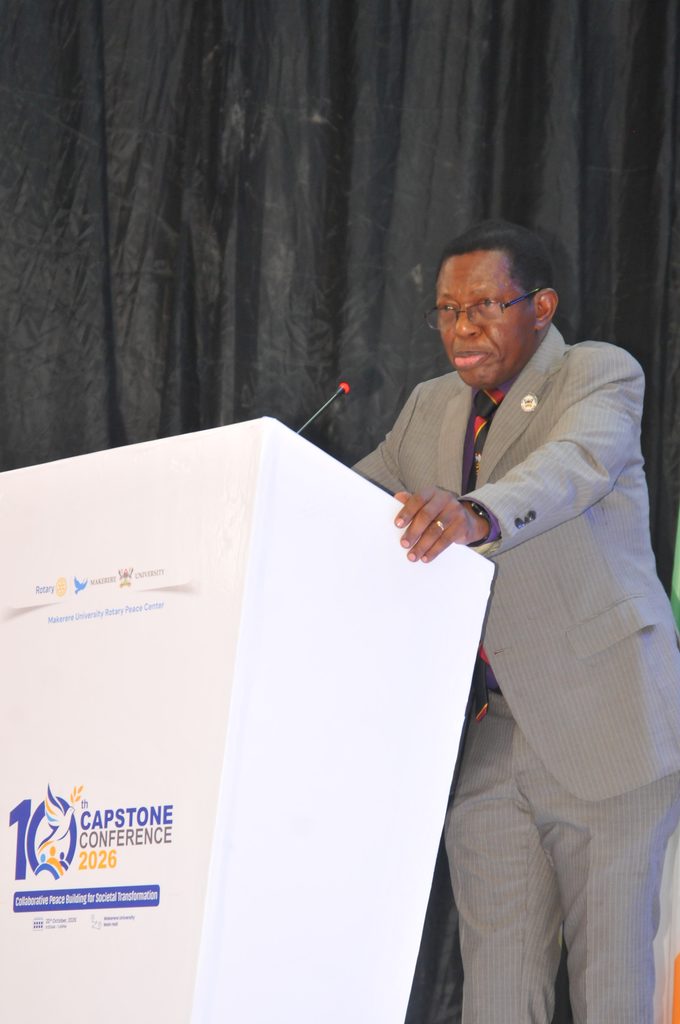
He said Makerere had a responsibility to promote peace not only through teaching and research but also through responsible leadership and interventions that improve people’s lives.
“Peace building is a collective endeavor. None of us singularly can really promote and even deliver peace,” Prof. Buyinza said.
He challenged peacebuilders to measure their impact by the changes they create in communities rather than the number of events held or reports produced.
“The true measure of peace building is not really measured by the number of events undertaken or reports we have written, but by interventions we undertake to restore trust, prevent violence, build sustainable relationships, and improve people’s lives,” he said.
Prof. Buyinza also commended Rotary International and Makerere University leadership for sustaining the fellowship programme, noting that Cohort 10 would be conferred in January 2027, while Cohort 11 was undertaking field activities and Cohort 12 had arrived.
Africa needs catalysts of change
The Coordinator of the Makerere Rotary Peace Centre and Principal of the College of Humanities and Social Sciences, Prof. Hellen Nambalirwa Nkabala, called on the fellows to apply their knowledge and skills to address the continent’s persistent peace and security challenges.
She recounted the Centre’s resilience during the COVID-19 pandemic, when its advisory board resolved to receive fellows in 2021 despite uncertainties surrounding the lockdowns.
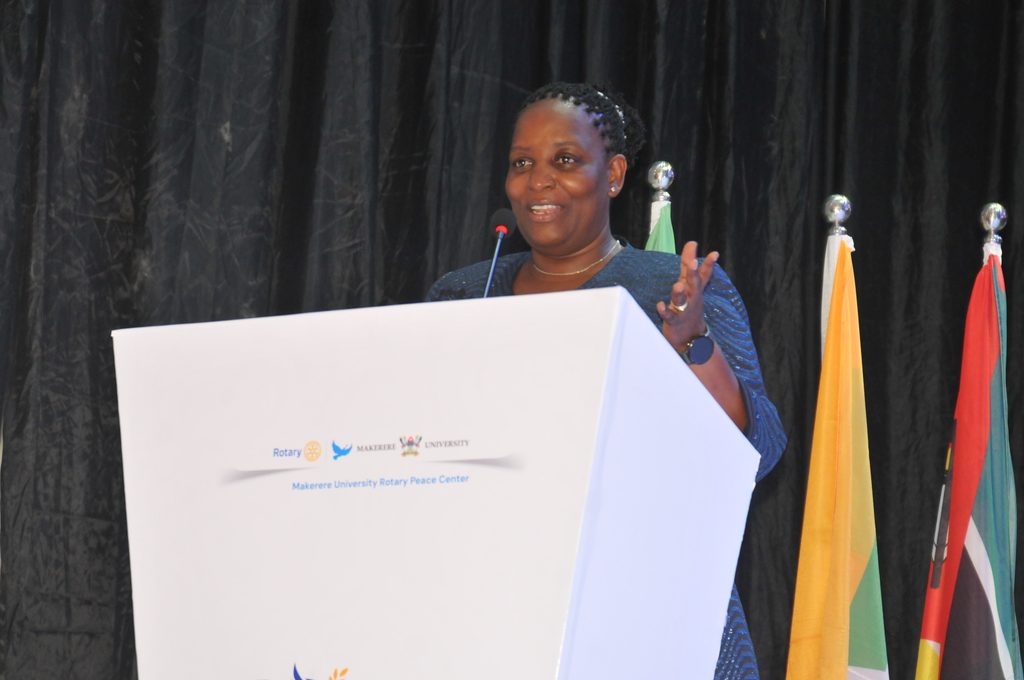
“Africa is bleeding. Africa is looking for catalysts of change,” Prof. Nkabala said.
She noted that the Centre’s approach emphasises sustained engagement with its fellows, even after they complete the programme, describing them as lifelong members of a growing peacebuilding network.
“At the Rotary Peace Centre we never say goodbye. They are only walking out of the gates of Makerere, but they will be coming back,” she said.
Prof. Nkabala thanked Rotary International for supporting the initiative and reaffirmed the Centre’s commitment to promoting peace through everyday actions that strengthen communities and prevent violence.
Centre selects and nurtures future peacebuilders
Prof. Grace Bantebya, Chairperson of the Academic Committee of the Centre’s Advisory Board, said the selection process was highly competitive, with applicants assessed on academic merit and their potential to lead social change.
She explained that the Centre’s responsibility extends beyond selecting qualified candidates to equipping them with the knowledge and skills needed to deliver measurable community impact.
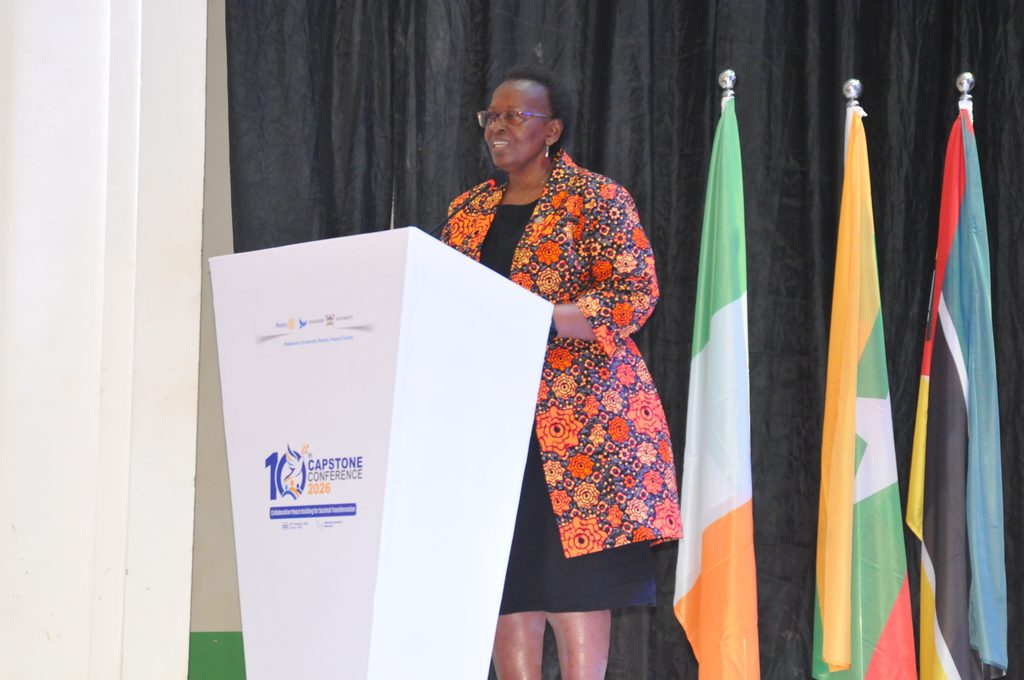
“We don’t only stop at selecting the best, but we also nurture,” Prof. Bantebya said.
She added that the programme is designed to encourage fellows to think critically, innovate and strengthen their own initiatives so that their work produces tangible results in the communities they serve.
Rotary proud to support peacebuilding
Representing Rotary Uganda, Rotarian Fred Massadde said Rotarians had supported the Centre from the initial bidding process to establish it at Makerere through participation in governance, fellow selection and hosting.
He said the partnership had enabled peacebuilding initiatives to reach communities beyond the university, with thousands of people benefiting from the fellows’ work.
“We are immensely proud to play a very tiny part in making that possible,” Massadde said.
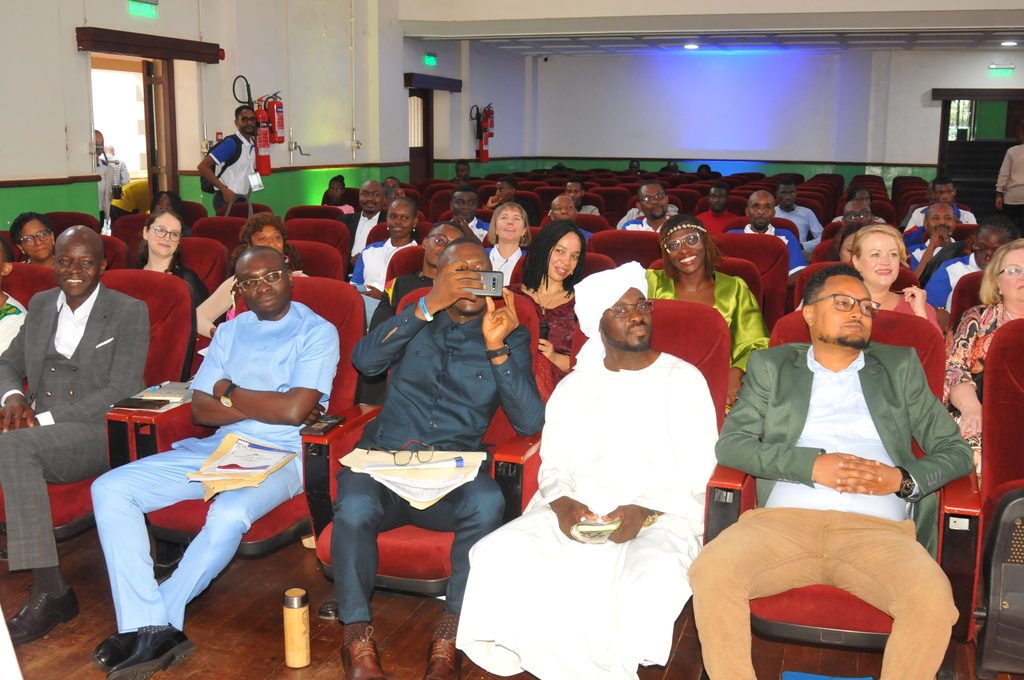
He reaffirmed Rotary’s commitment to the partnership, recognising the contribution of fellows and mentors in advancing peace and social transformation.
Incoming fellows ready for the challenge
Cohort 12 President Pedmia Shatu said the 17 incoming fellows had settled in and were prepared for the demanding academic and practical engagements ahead.
She said the fellows had joined the programme with a clear purpose: to strengthen their capacity to respond to conflict and other challenges affecting communities across Africa and beyond.
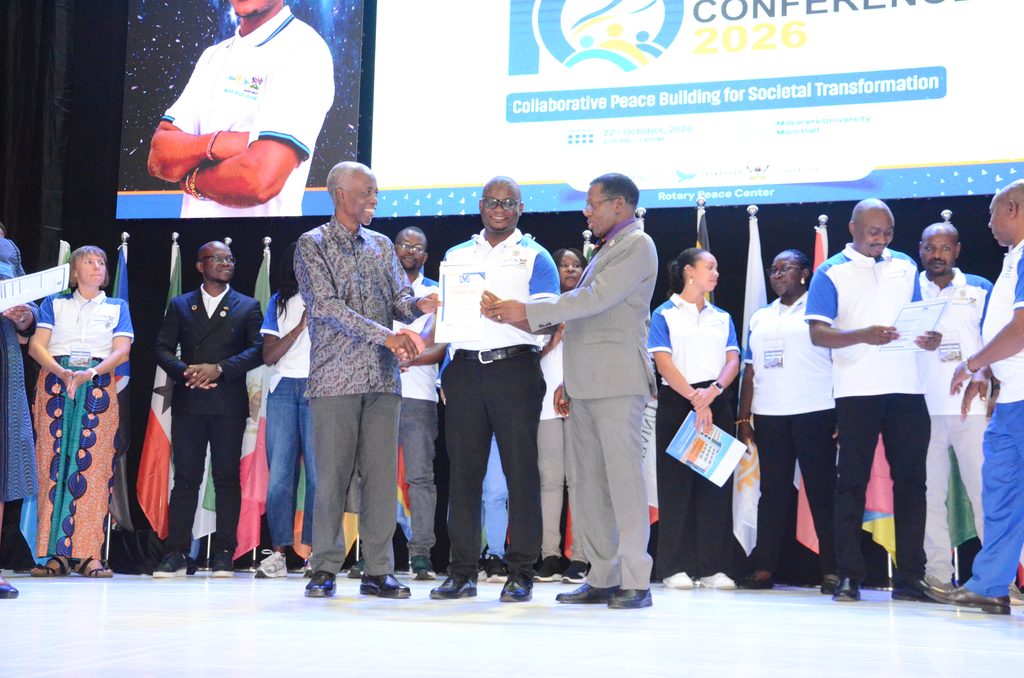
“We did not fly across oceans to come for a safari trip. We came for a reason. From the Sahel to the Horn, from the Great Lakes to the Gulf of Guinea, our communities bleed,” Shatu said.
She pledged the cohort’s commitment to purposeful dialogue and rigorous work, emphasising the need to turn learning into meaningful interventions.
“We pledge our continuous and intentional support to intentional discourse and rigorous work,” she said.
Cohort 10 ready to advance peace
Cohort 10 President Ilugo Chukwuemeka Cletus described the graduating fellows as a diverse group whose experiences and backgrounds had enriched their shared commitment to peacebuilding.
The cohort included participants from countries such as Finland, Canada, Australia, South Africa, Ethiopia, South Sudan, Kenya, Sierra Leone, Zimbabwe, the United States, Nepal and Nigeria.
Cletus thanked Rotary International, Makerere University’s leadership and the programme’s mentors for equipping the fellows with the skills to become peace ambassadors.
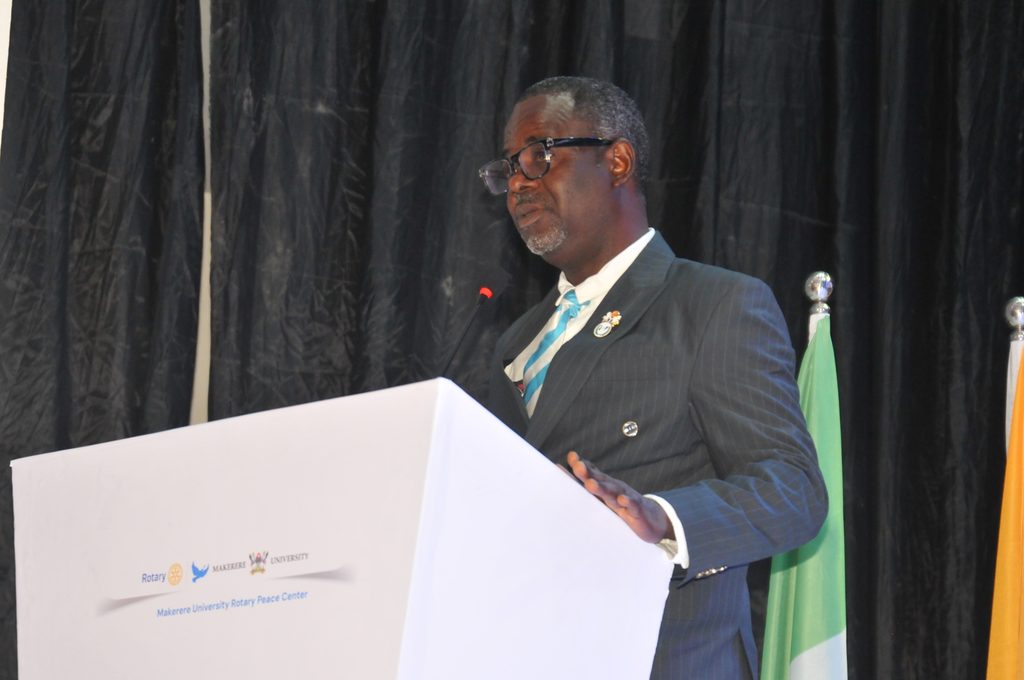
“We have been equipped to become peace ambassadors. Africa needs you and I to make it what it needs to be,” he said.
He urged the incoming fellows to sustain the programme’s legacy and continue developing practical responses to conflict, invoking Nigerian author Chinua Achebe’s Things Fall Apart to underscore the importance of nurturing peace to sustain society.
As Cohort 10 transitions into the Centre’s alumni network and Cohort 12 begins its training, Makerere University and Rotary International reaffirmed their commitment to developing peacebuilders whose work restores trust, prevents violence and strengthens community resilience.
The conference underscored the importance of collaborative peacebuilding grounded in everyday action, with the Centre’s decade-long experience demonstrating how academic training and community initiatives can contribute to lasting social transformation.