
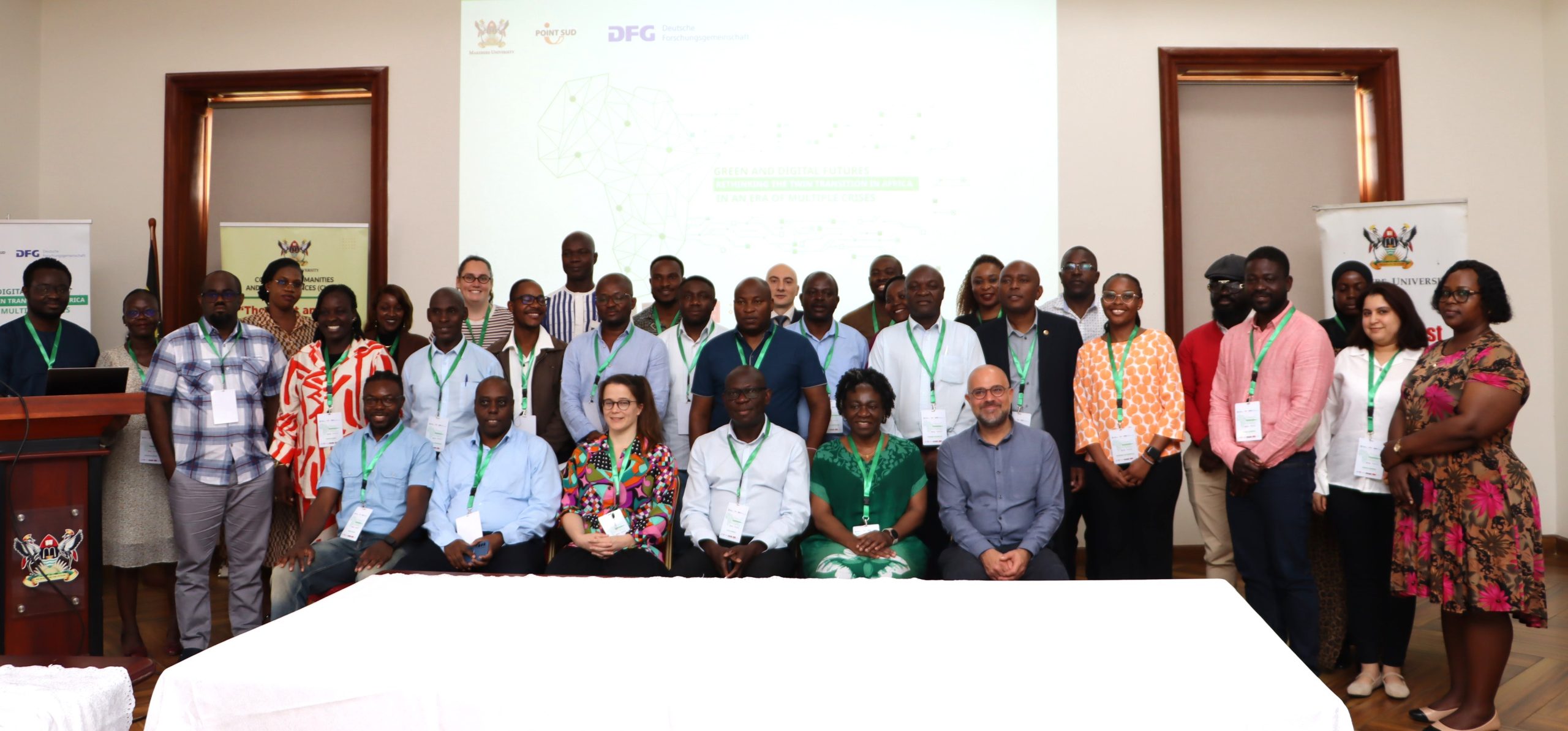
International scholars challenge conventional growth models and urge Africa to rethink competitiveness, innovation and inclusion in the digital and green era.
KAMPALA May 20 2026
Scholars and policy experts at an international conference hosted by Makerere University have called for Africa to chart a more inclusive and sustainable path to development as the continent navigates climate pressures, digital transformation and widening inequalities.
The five-day conference, running from May 18 to 22 under the theme “Green and Digital Futures: Rethinking the Twin Transition in Africa in the Era of Multiple Crises,” brought together researchers and practitioners from across Africa, Europe and North America to debate the continent’s future development trajectory.
The conference is part of the Point Sud programme funded by the German Research Foundation and convened in collaboration with University of Frankfurt and Makerere University.
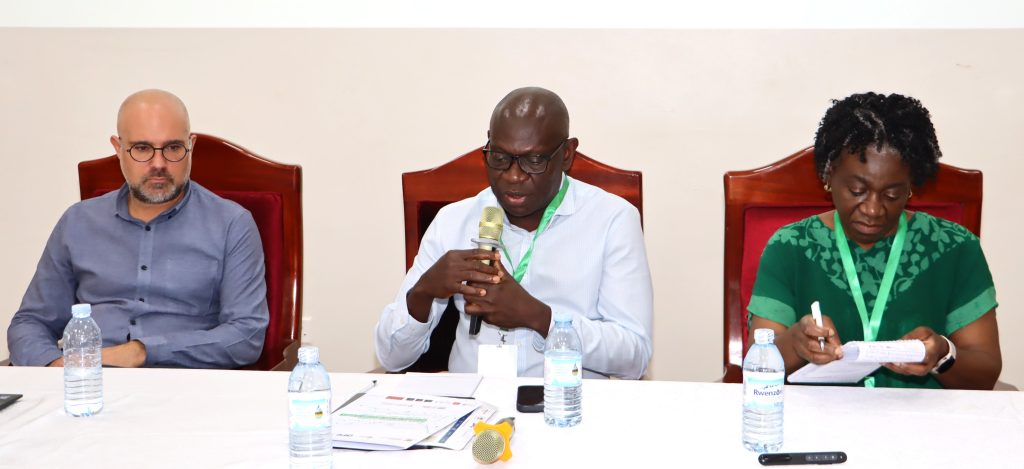
For the three consecutive days from Monday 18th to Wednesday 20th May, each day opened with key note addresses on different topics under the theme culminating into a keynote conversation moderated by Hanna Berkel from Maputo Mozambique.
Araba Sey Questions Africa’s Obsession With Global Competitiveness
Delivering the opening keynote titled “Digital Inequality, Policy Agendas and the Politics of Inclusion in Africa’s Twin Transition,” Araba Sey from Edinburgh Futures Institute , US challenged African governments and scholars to reconsider whether global competitiveness should remain the central goal of development.
Sey argued that the current global economic system has often reinforced exclusion and inequality, warning that Africa risks reproducing the same patterns if it follows traditional industrialisation models without questioning their underlying assumptions.
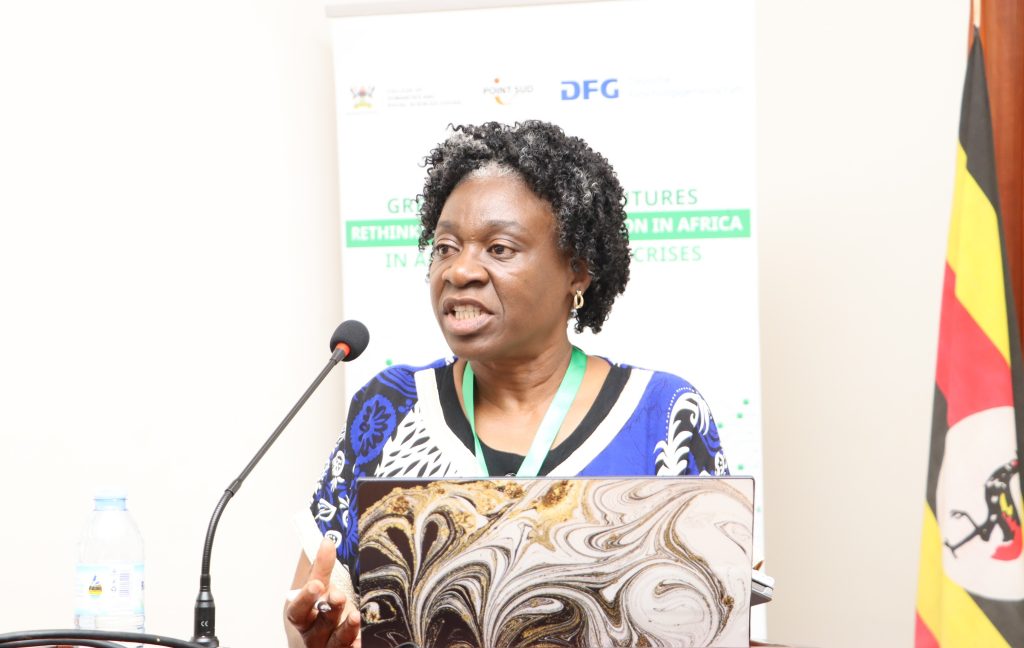
“Does Africa have to be globally competitive?” she asked during the keynote conversation. “We have accepted the global economy as it operates and all we are trying to do is fit into it.”
She said African countries should instead explore development pathways grounded in inclusion, sustainability and equity, adding that the continent could become a model for alternative forms of growth that prioritise wellbeing over narrow economic indicators such as GDP.
Sey also criticised the persistent gap between policy rhetoric and implementation across African governments, arguing that solutions to inequality and exclusion are already well known but often undermined by weak execution and corruption.
“We need to eliminate the depth of corruption that exists in African governments,” she said. “If that is not addressed, implementation cannot be effective.”
She urged policymakers to “design for the lowest common denominator rather than the highest” in order to ensure green and digital transitions benefit marginalised communities rather than technologically privileged elites.
Chux Daniels Urges Governments to Nurture Grassroots Innovation
In his keynote titled “Africa’s Green Transition in a Time of Crises,” Chux Daniels from University of Sussex/ university of Pretoria UK/ South Africa emphasized that meaningful transformation requires long-term institutional change supported by experimentation and policy innovation.
Chux acknowledged that green and digital transitions can take decades, but argued that governments should focus on identifying and scaling up existing innovations already emerging within communities, ministries and small enterprises.
“There are transformations going on, systems are evolving, things are changing,” Daniels said. “The question is how to detect these changes happening and help navigate and scale them up.”
He explained that many promising green and digital innovations remain confined to small “niche” spaces because they lack institutional support and protection. According to Daniels, governments should create safe spaces and networks that connect innovative actors across sectors so they can influence broader systemic change.
Chux also stressed the importance of “directionality” in policymaking, arguing that governments must deliberately steer innovation toward socially beneficial outcomes rather than allowing technology adoption alone to define progress.
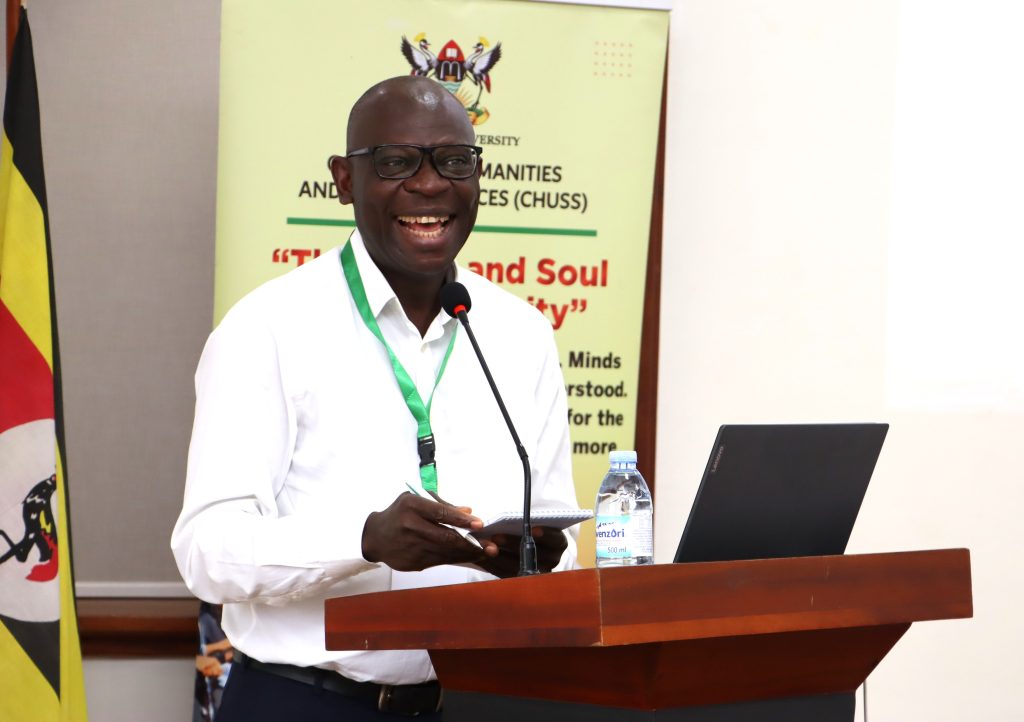
Using urban mobility as an example, he argued that replacing petrol cars with electric vehicles would not solve broader challenges such as congestion and urban planning.
“How do people move?” he asked. “Mobility becomes a service. It is not just about replacing petrol with electric cars.”
Chux further noted that young people demanding immediate change should be included in ongoing innovation processes through stronger communication and visibility for successful grassroots initiatives.
Rasmus Lema Calls for Selective Integration Into Global Economy
The final keynote speaker, Rasmus Lema, from the University of Johannesburg, South Africa delivered a presentation titled “Green and Digital Futures: Rethinking the Twin Transition in Africa in the Era of Multiple Crises.”
Lema argued that while Africa must rethink conventional models of competitiveness, complete disengagement from the global economy is unrealistic.
“I do think integration and relationship with the global economy will still be an important feature of future development,” he said.
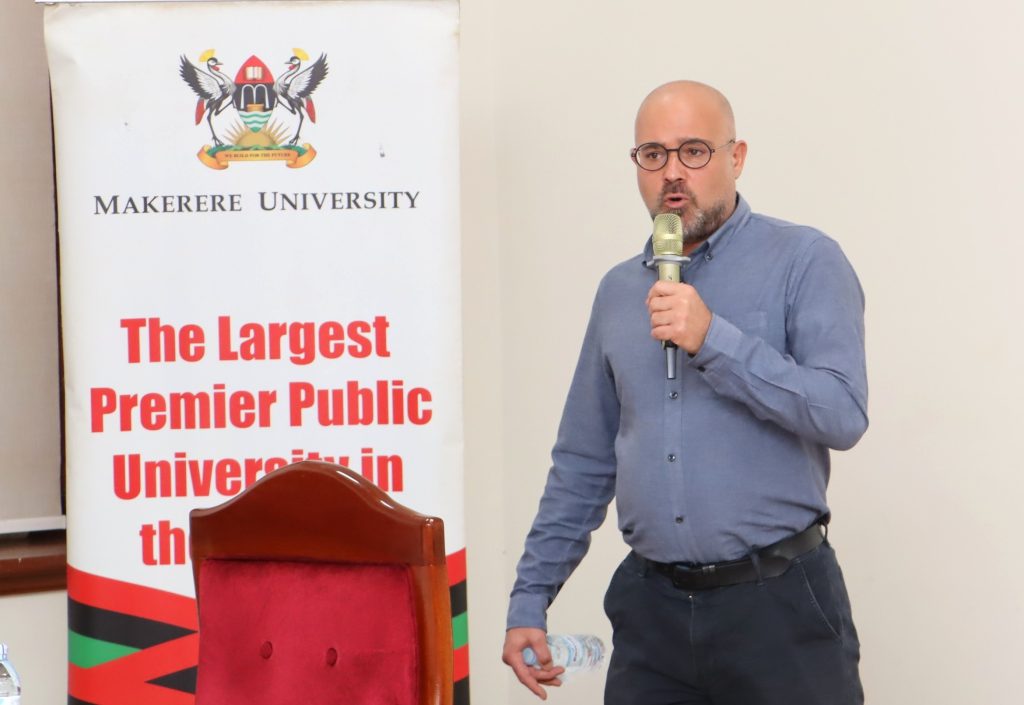
However, he warned against blindly adopting emerging technologies without first defining national development priorities and long-term visions.
“We should think first about the direction, the visions and where we want to go,” Lema said. “Then we have to think about which digital technologies become relevant.”
He said African countries should focus on building competitiveness in selected sectors where they hold strategic advantages rather than attempting to replicate industrial pathways followed by countries such as China or South Korea.
Lema also highlighted the need for stronger regional markets and locally competitive firms capable of meeting domestic demand while participating selectively in global value chains.
Moderator Highlights ‘Industries Without Smokestacks’
The keynote conversation was moderated by Hanna Berkel from Maputo, Mozambique, who reflected on the need to rethink development beyond traditional industrialisation.
Berkel referenced the 2019 publication Industries Without Smokestacks, which explores alternative engines of structural transformation in Africa, including tradable service sectors capable of generating productivity growth and employment without relying heavily on manufacturing.
She said the discussions throughout the conference pointed to persistent institutional and inequality challenges but also revealed opportunities for Africa to pioneer new models of sustainable and inclusive development.
The conference continues through May 22 with panel discussions, research presentations and policy dialogues focused on Africa’s digital and green futures.