
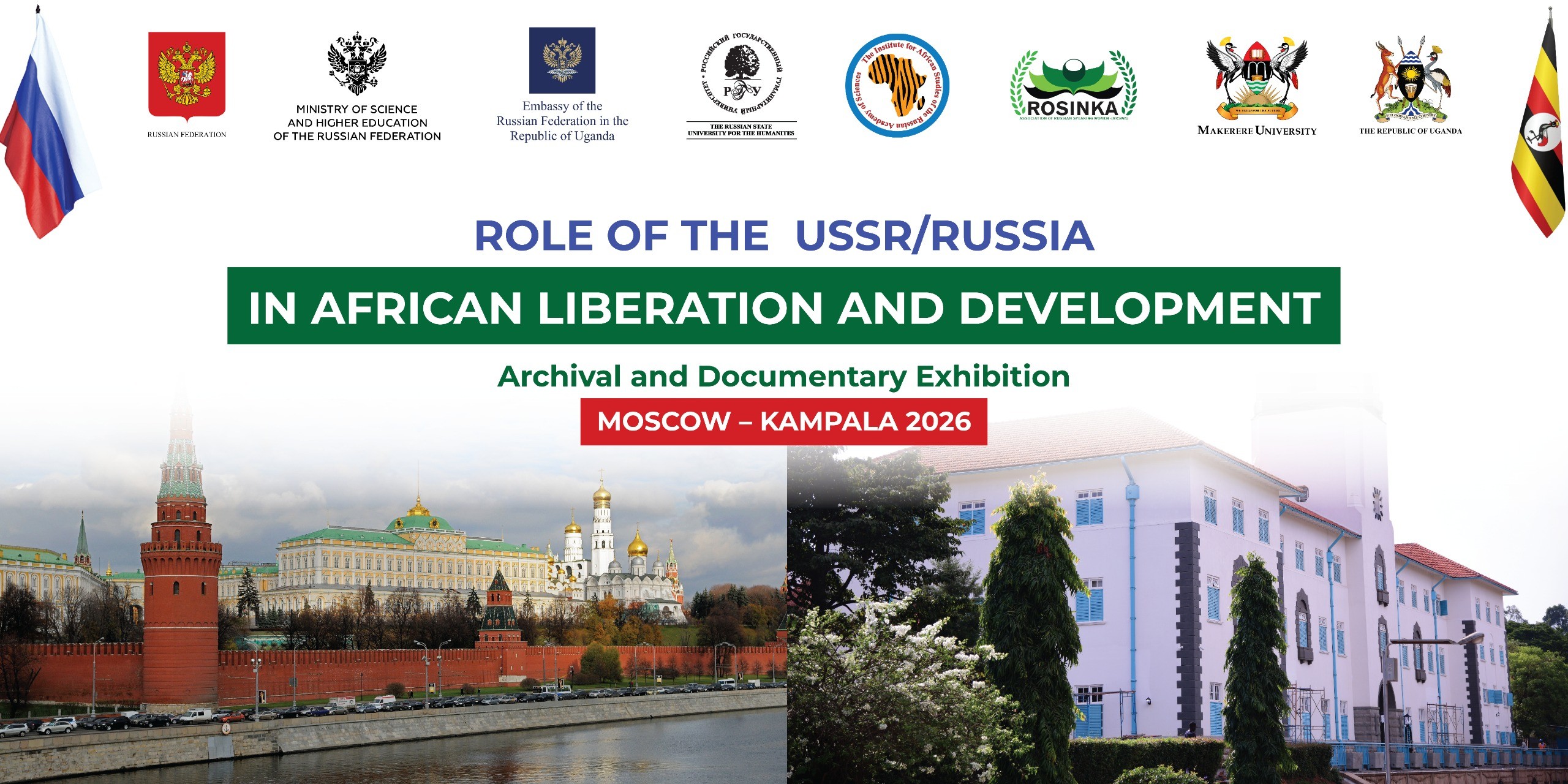
Makerere University is expected to host an archival and documentary exhibition in October 2026 examining the former Soviet Union’s role in Africa’s liberation struggles, post-independence development and relations with Uganda.
The exhibition, titled “The Role of the USSR/Russia in the Liberation of Africa,” will bring together historical photographs, archival documents and recorded interviews with Soviet participants in African liberation struggles, according to a concept note outlining the planned event.
The venue and opening date are yet to be confirmed.
The exhibition is being organised jointly by the Russian State University for the Humanities (RSUH), Makerere University and the Coordinating Council of Russian Compatriots in Uganda.
Organisers say the exhibition will examine the Soviet Union’s involvement in anti-colonial movements across Africa, as well as its contributions to education, healthcare, infrastructure, politics, culture and sports.
Uganda will have a dedicated section focusing on its historical relations with the Soviet Union and Russia, including assistance in science, medicine and agriculture.
The exhibition is expected to feature about 30 display boards, with approximately 85 per cent of the material comprising photographs and the remainder consisting of copies of archival documents. The organisers estimate that the exhibition will require between 120 and 200 square metres of space.
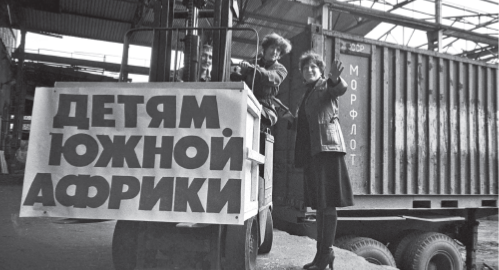
Multimedia content, including interviews with Soviet participants in African liberation struggles, will also be presented through television screens and QR codes linking visitors to interviews in English.
The concept note identifies Uganda, South Africa, Angola, Mozambique and Namibia as key areas of focus, while leaving room for material on other African countries.
It traces the expansion of Soviet engagement with Africa to the period after the Second World War, when European colonial powers faced growing pressure from nationalist movements demanding independence.
The note also highlights the 1957 World Festival of Youth and Students in Moscow as an important moment in expanding opportunities for African students to study in the Soviet Union.
During the subsequent decades, the Soviet Union supported several African governments and liberation movements, including those opposed to Portuguese colonial rule in Angola and Mozambique and those fighting apartheid in South Africa and minority rule in what was then Southern Rhodesia, now Zimbabwe.
The Soviet Union also supported anti-colonial and political movements in other parts of the continent, including the Congo crisis of 1960–1965, during which Patrice Lumumba, the country’s first prime minister, was killed.
The proposed exhibition is intended to document these historical relationships through material being sourced from archives across the Russian Federation.
Uganda-Russia relations in focus
The Uganda section will examine Soviet and Russian contributions to Uganda’s post-independence development, particularly in education, healthcare and agriculture.
According to the concept note, Soviet and Russian specialists supported the development of Busitema University, while Soviet medical personnel contributed to efforts to establish Uganda’s healthcare system.
The organisers describe contemporary relations between Uganda and Russia as constructive and based on mutual trust and respect.
However, the concept note does not provide details of specific projects, funding figures or the individual institutions and personnel involved in the historical cooperation. Further documentation and independent historical accounts would help establish the scale and impact of the contributions to be presented.
The exhibition comes as Uganda and Russia continue to maintain diplomatic relations, with the planned event offering an opportunity to examine the historical foundations of those ties.
Beyond commemorating past cooperation, the exhibition is expected to provide students, researchers and members of the public with access to historical records on the political, educational and cultural links between Africa and the former Soviet Union.
Its final programme, opening date and confirmed venue at Makerere University remain subject to confirmation.