
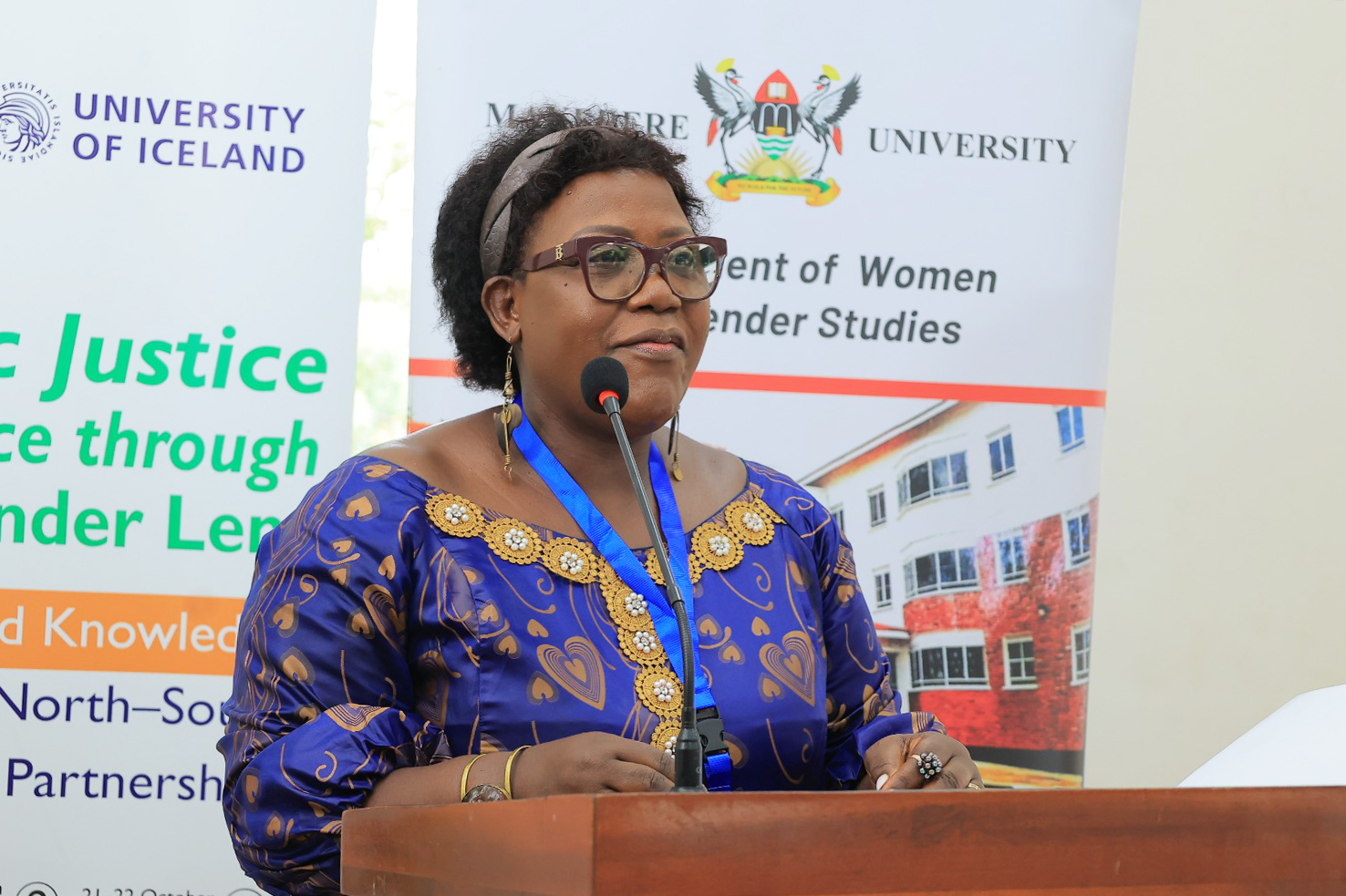
Makerere gender scholar challenges Western-dominated research frameworks, calls for scholarship grounded in African experiences and indigenous knowledge systems.
Professor Josephine Ahikire has urged African scholars to reclaim their role in producing and shaping knowledge by grounding research in local experiences, indigenous knowledge systems and the realities of the communities they study.
She argued that global knowledge systems often position scholars in the Global South as data collectors while theories, conceptual frameworks and research priorities are developed elsewhere, undermining African intellectual agency and limiting the contribution of locally generated knowledge to policy and development.
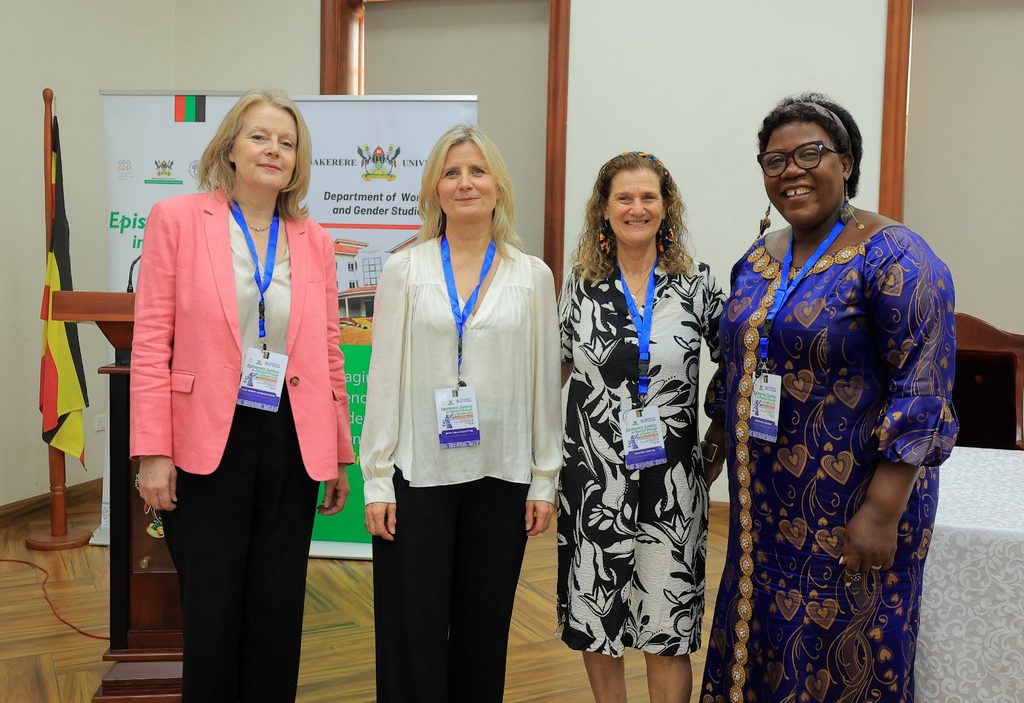
Prof. Ahikire made the call while delivering a keynote address at Makerere University Senior Common Room during the 2026 GRÓ GEST Alumni Thematic Seminar on epistemic justice, organised by Makerere University’s Institute of Gender and Development Studies in partnership with the GRÓ Gender Equality Studies and Training Programme at the University of Iceland.
Speaking under the broader theme of living epistemic justice and scratching beyond the surface, she challenged scholars to question whose knowledge counts, whose experiences shape research agendas and who determines what qualifies as authoritative knowledge.
“Epistemic justice cannot be provided, it cannot be granted, it cannot be donated, it has to be fully claimed and legitimated,” Prof. Ahikire said.
She argued that African scholars must move beyond merely applying theories developed elsewhere and instead develop conceptual frameworks that emerge from their own historical, cultural and social contexts.
Prof. Ahikire criticised what she described as neoliberal orthodoxy in knowledge production, which privileges market-driven development, technical problem-solving and policy recommendations at the expense of deeper theoretical inquiry and diverse intellectual perspectives.
She said this approach promotes a single dominant narrative while marginalising alternative ways of understanding human experiences and social realities.
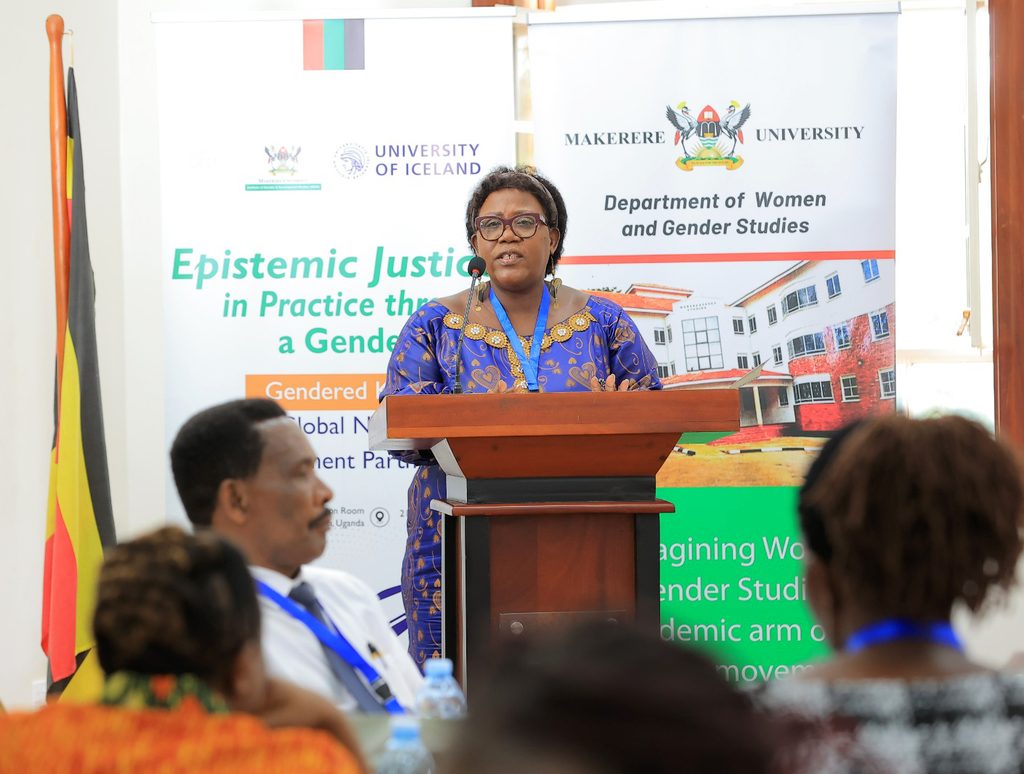
“It is indeed for the very first time in our history where this seamless kind of knowledge production and where everybody seems to agree with everybody else, especially at the dominant level,” she said.
According to Prof. Ahikire, the pressure on researchers to produce immediate, measurable policy outcomes has increasingly reduced scholarship to quick fixes, consultancy assignments and standardised recommendations, leaving limited space for developing original theories.
She observed that even disciplines such as literature are increasingly expected to justify their value through policy recommendations, regardless of their particular research objectives.
She warned that such expectations risk reducing scholars to service providers rather than independent intellectuals capable of interrogating assumptions, challenging dominant ideas and generating new knowledge.
Research must be grounded in African realities
Prof. Ahikire said meaningful epistemic justice requires African scholars to begin research with questions arising from their own locations and everyday experiences rather than relying exclusively on universal categories developed in different contexts.
“Research questions must start with one’s location. Questions about the world that puzzles you from your vantage point,” she said.
She explained that everyday experiences can provide important starting points for developing theories that illuminate wider social, political and economic questions.
Drawing on her ongoing work on motherhood and gender relations in Uganda, Prof. Ahikire demonstrated how examining ordinary community experiences can reveal forms of knowledge and social power that conventional research frameworks may overlook.
She cited studies and community dialogues on land ownership, family relations and cultural practices to illustrate how women’s roles and influence may differ from assumptions that portray them uniformly as powerless.
In one example, she described community discussions on customary land ownership in which men expressed concerns about losing influence over land associated with their mothers.
The accounts challenged conventional assumptions about women’s position in land ownership and highlighted the need for closer examination of how authority, inheritance and family relationships operate within particular communities.
Prof. Ahikire said such findings demonstrate the importance of listening to communities before drawing conclusions about their social arrangements.
She also referred to practices among the Acholi, where mothers play significant roles in marriage negotiations, and among the Bagisu, where mothers participate in preparations for male circumcision despite the practice commonly being understood as a predominantly male affair.
She argued that these roles deserve deeper documentation and analysis because they reveal dimensions of women’s social influence that may remain absent from mainstream accounts.
However, she cautioned against romanticising women’s power or assuming that influence in particular cultural spaces necessarily translates into broader gender equality.
The task, she said, is to examine these social arrangements critically, recognising their complexity without replacing one set of generalisations with another.
Scholars urged to move beyond decolonisation as a buzzword
Prof. Ahikire also challenged African scholars to interrogate how they approach decolonisation, arguing that the concept can become counterproductive when colonialism remains the central framework through which all African historical experiences are interpreted.
Reflecting on scholarship on African historiography, she discussed the concept of historical self-grounding, which she described as an approach that allows the historical experiences of African societies to generate the primary questions, categories and explanations used to understand them.
She explained that this approach does not dismiss colonialism or its continuing effects, but cautions against allowing it to become the automatic organising principle for interpreting every aspect of African experience.
“The more decolonisation is used as a buzzword, colonialism then remains the organising epistemic principle,” she said.
Prof. Ahikire argued that African scholars should examine colonialism where it provides a meaningful explanation for historical and contemporary realities, while also recognising experiences, intellectual traditions and social developments that cannot be adequately explained through colonial encounters alone.
She said historical self-grounding offers an opportunity to broaden African scholarship by placing local histories and intellectual traditions at the centre of analysis.
For her, the approach also challenges the tendency to treat indigenous knowledge as an alternative or secondary category that must seek acceptance within dominant knowledge systems.
She urged scholars to recognise African concepts, values, systems of thought and ways of being as important intellectual resources capable of contributing to global scholarship.
Gender scholarship must resist quick-fix approaches
Reflecting on her experience as a gender scholar, Prof. Ahikire said feminist scholarship had generated significant intellectual debate in earlier decades, but warned that some of its critical foundations risk being weakened by development agendas that prioritise technical interventions and measurable outputs.
She observed that concepts such as gender mainstreaming can become procedural exercises when they are adopted without sustained engagement with the power relations and social structures they are intended to address.
She called for renewed attention to theoretical work that examines how gender relations are constructed, negotiated and experienced in specific contexts.
Prof. Ahikire said research on motherhood, for example, should go beyond biological definitions to examine the institution’s emotional, social, economic and political dimensions.
She argued that such inquiry can generate new perspectives on care, family relationships, land ownership and women’s agency.
Her examples illustrated how local experiences can challenge established assumptions and provide a foundation for more context-sensitive approaches to gender equality.
She nevertheless stressed that locally grounded scholarship must remain open to criticism and should not create new intellectual orthodoxies or reinforce cultural stereotypes.
Global partnerships must address inequalities in knowledge production
Prof. Ahikire said international academic and development partnerships must examine the power relations that determine research priorities, conceptual frameworks and evaluation standards.
She noted that partnerships between institutions in the Global North and Global South can reproduce existing inequalities when external actors determine the questions to be investigated while local scholars are primarily responsible for collecting data.
She welcomed the GRÓ GEST alumni seminar as an opportunity to confront these challenges through critical engagement among scholars, practitioners and development partners.
She commended the programme for maintaining engagement with alumni beyond graduation and creating space for them to reflect on the intellectual challenges arising from their professional experiences.
Prof. Ahikire said such initiatives could strengthen the contribution of African scholars to global debates by encouraging them to develop and defend arguments grounded in their own contexts.
She called for a broader understanding of what constitutes knowledge and who is recognised as capable of producing it, arguing that meaningful collaboration requires more than participation in externally defined research programmes.
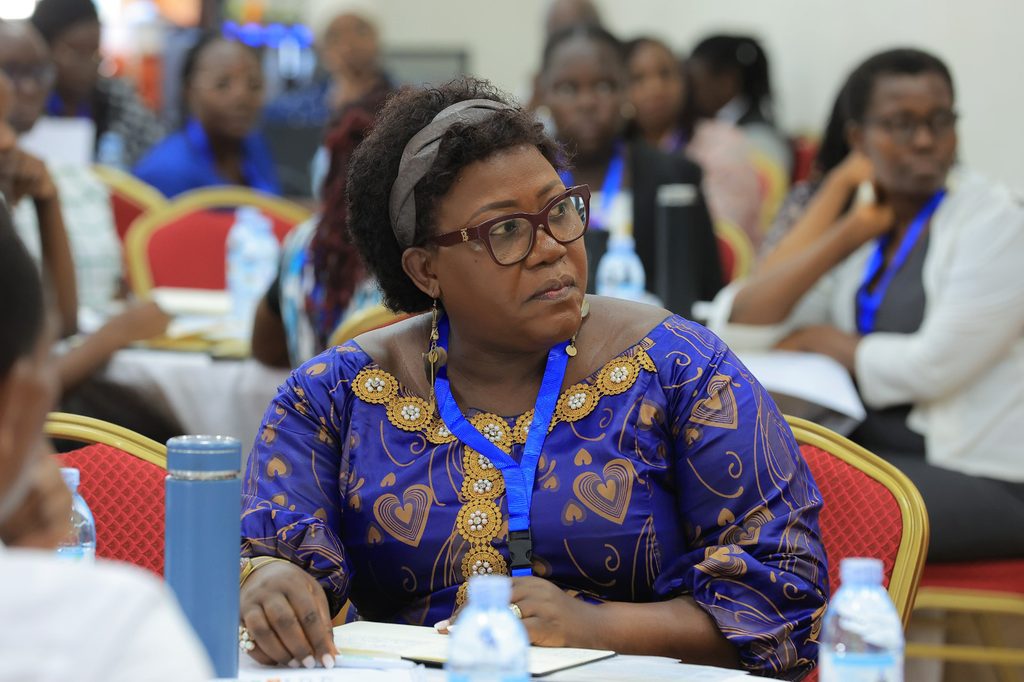
In her concluding remarks, Prof. Ahikire said African feminist scholarship must be grounded in local realities while contributing to a wider understanding of gender relations and social transformation.
She urged scholars to document and theorise diverse experiences, strengthen the visibility of indigenous knowledge systems and ensure that local voices and agency remain central to knowledge production.
Her address reinforced the seminar’s central message that epistemic justice requires a shift from treating African scholars and communities primarily as sources of data to recognising them as intellectual partners capable of shaping theories, policies and development priorities.