
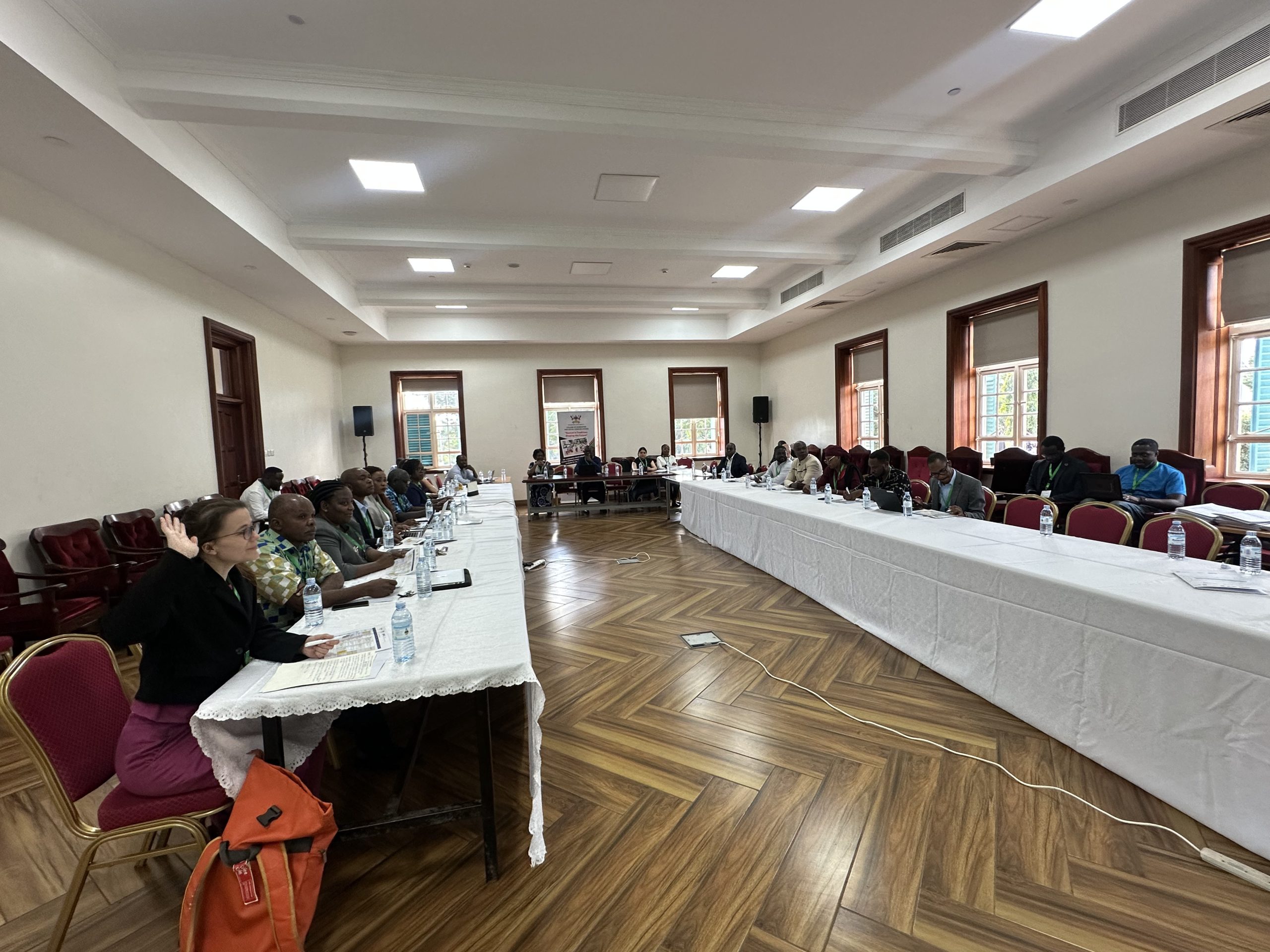
Makerere University has opened a five-day (18-22 May 2026) international conference focused on navigating Africa’s “twin transition” towards green and digital futures amidst a backdrop of global crises.
The event, themed “Green and Digital Futures: Rethinking the Twin Transition in Africa in the Era of Multiple Crises,” opened on Monday 18th at the University’s Main Building. It brings together scholars and practitioners from across Africa, Europe, and North America.
While delivering the welcome speech on behalf of the Vice-Chancellor, Assoc. Prof. Helen Nambalirwa Nkabala, Principal of the College of Humanities and Social Sciences (CHUSS), emphasized the significance of hosting the dialogue at Makerere.
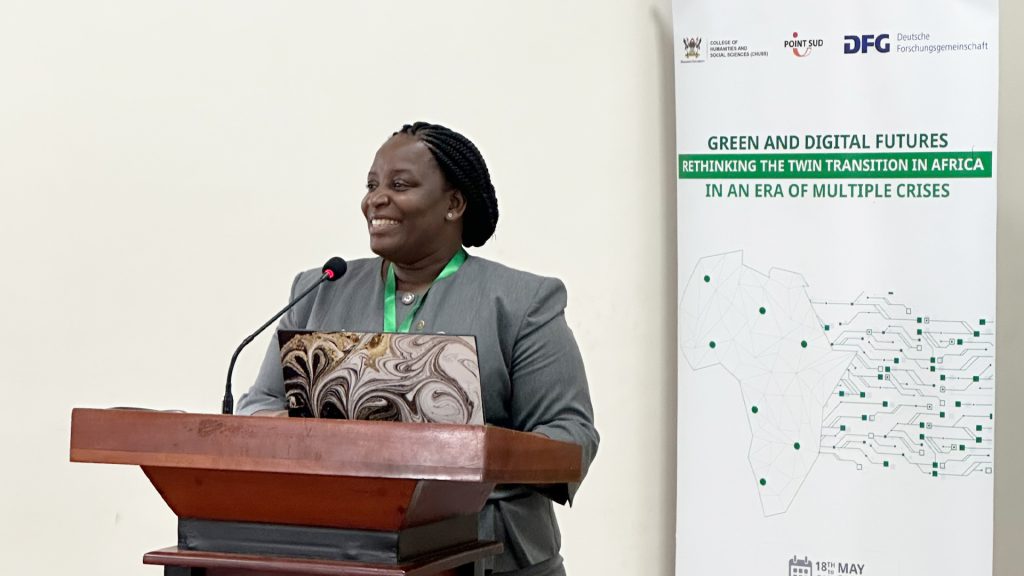
“It is indeed an honour for us as a college to host this workshop conference on Green and Digital Futures here in Kampala,” Nkabala said. “There would be no better venue to host this than our key building. This is the main building.”
The conference is part of the Point Sud programme, funded by the German Research Foundation, and is convened in collaboration with the University of Frankfurt and Makerere University.
Delegates from countries including Ghana, Kenya, Nigeria, South Africa, Zambia, Zimbabwe, Mali, Senegal, Mozambique, Tunisia, Uganda, Germany, the US, Canada, and Georgia are in attendance.
Nkabala highlighted that the discussions would center on two major intersections shaping African political economies: decolonization strategies and the impact of digitalization.
“We are looking at the decolonisation strategies, reconfiguring the development pathways, which means that we have to make choices around industrial policy, land and resource governance, energy pricing, and the new dependencies,” Nkabala told the gathering.
She further noted that the conference would critically examine the role of digitalization, specifically regarding inclusion and exclusion through data extraction and surveillance infrastructures.
The Principal urged participants to look beyond publishing academic papers and focus on “meaningful collaboration” to diagnose the continent’s problems and create viable pathways forward.
“These next five days will create this space where we are going to think, rethink, we are going to have tensions, and we are going to have an environment where we can think together,” she said.
Nkabala also invited the international visitors to explore the University and the surrounding country to gain a better understanding of the local context as they deliberate on solutions for the continent.
Africa Must Define Own Green, Digital Future to Avoid New Dependency
Issa Fofana, the Co-director of Programme Point Sud, has warned that Africa’s green and digital transitions risk becoming new forms of dependency and extraction if they are not shaped by African priorities and realities.
Fofana acknowledged that the continent is currently navigating a difficult historical moment characterized by overlapping crises, including climate change, economic instability, and food insecurity. However, he argued that these challenges present an opportunity to reimagine development pathways.
“The so-called ‘twin transition’ — the green transition and the digital transition — is increasingly shaping global political and economic agendas,” Fofana said. “However, for Africa, the central question is not simply how to participate in these transitions, but rather how to shape them according to African realities, priorities, and aspirations.”
The Co-director issued a stern warning against the uncritical adoption of global strategies. He emphasized that Africa cannot afford transitions that replicate historical inequalities or deepen foreign dependency.
“Africa cannot afford transitions that reproduce old inequalities, deepen dependency, or marginalize vulnerable communities,” Fofana told the gathering. “The green transition must not become another extractive project where African resources are exploited without fair local benefits.”
He further cautioned that the digital transition carries the risk of widening the divide between the connected and the disconnected, as well as between global technological powers and local innovators.
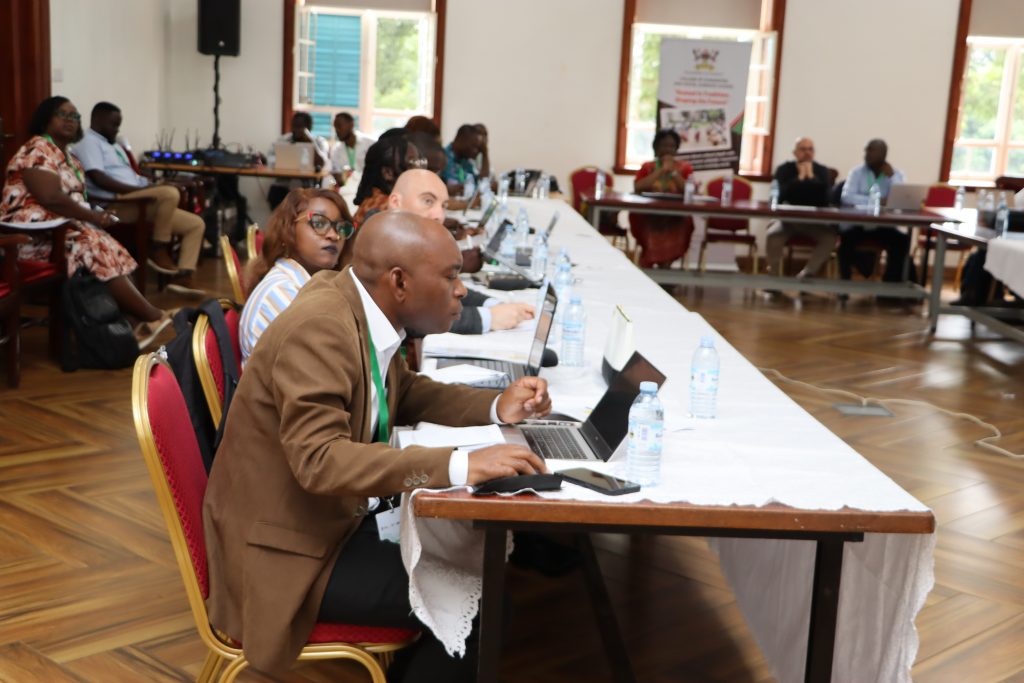
Instead, Fofana advocated for transitions that are socially just, environmentally sustainable, and politically democratic. He stressed the necessity of centering African knowledge systems, innovations, and experiences in global debates.
“At Programme Point Sud, we strongly believe that African-led research and intellectual exchange are essential to producing meaningful and transformative knowledge,” Fofana stated.
He urged participants to look beyond academic theory and focus on practical policy recommendations and long-term institutional collaborations.
“The future of Africa’s green and digital transformation cannot be designed elsewhere and merely implemented here,” Fofana concluded. “It must be imagined, debated, and shaped collectively by Africans themselves, in dialogue with global partners based on mutual respect and shared responsibility.”
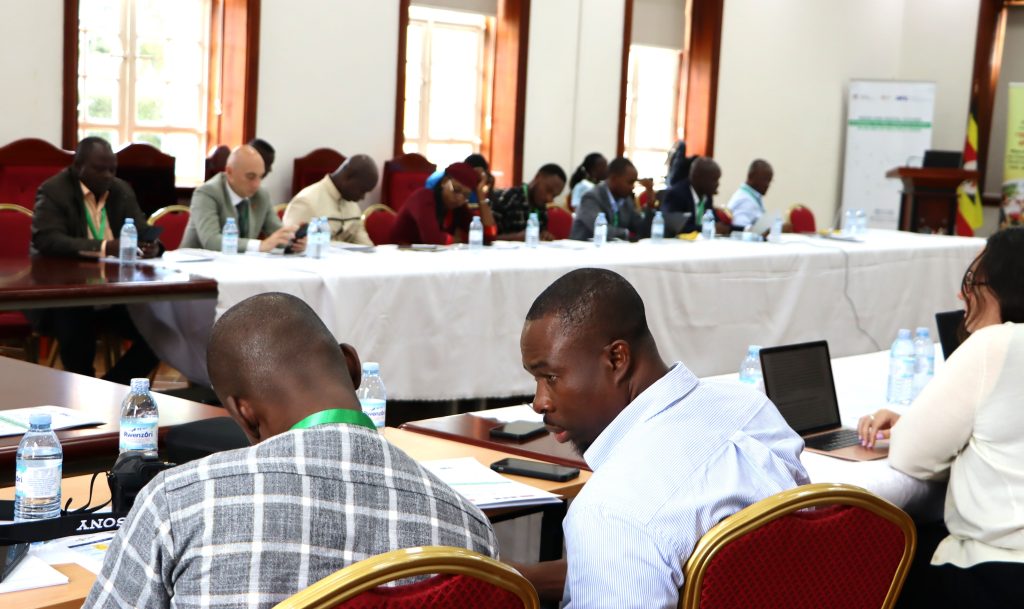
The conference package includes speeches, keynote presentations, panel, plenary and round table discussions , policy and public dialogues on different thematic areas. The workshop will end on Friday 22nd May with a field excursion to Kiira Motors (see programme attached)