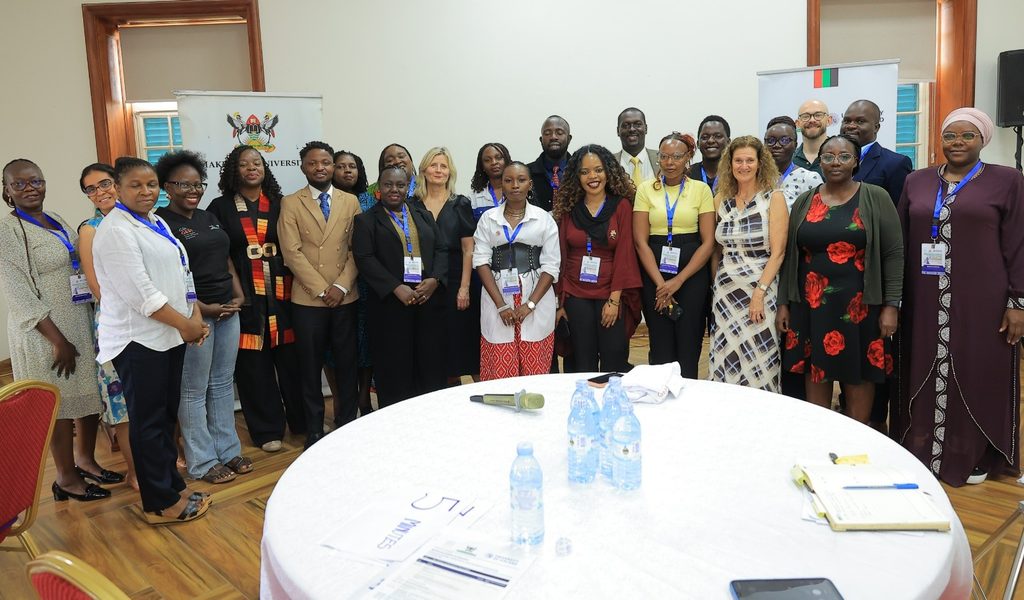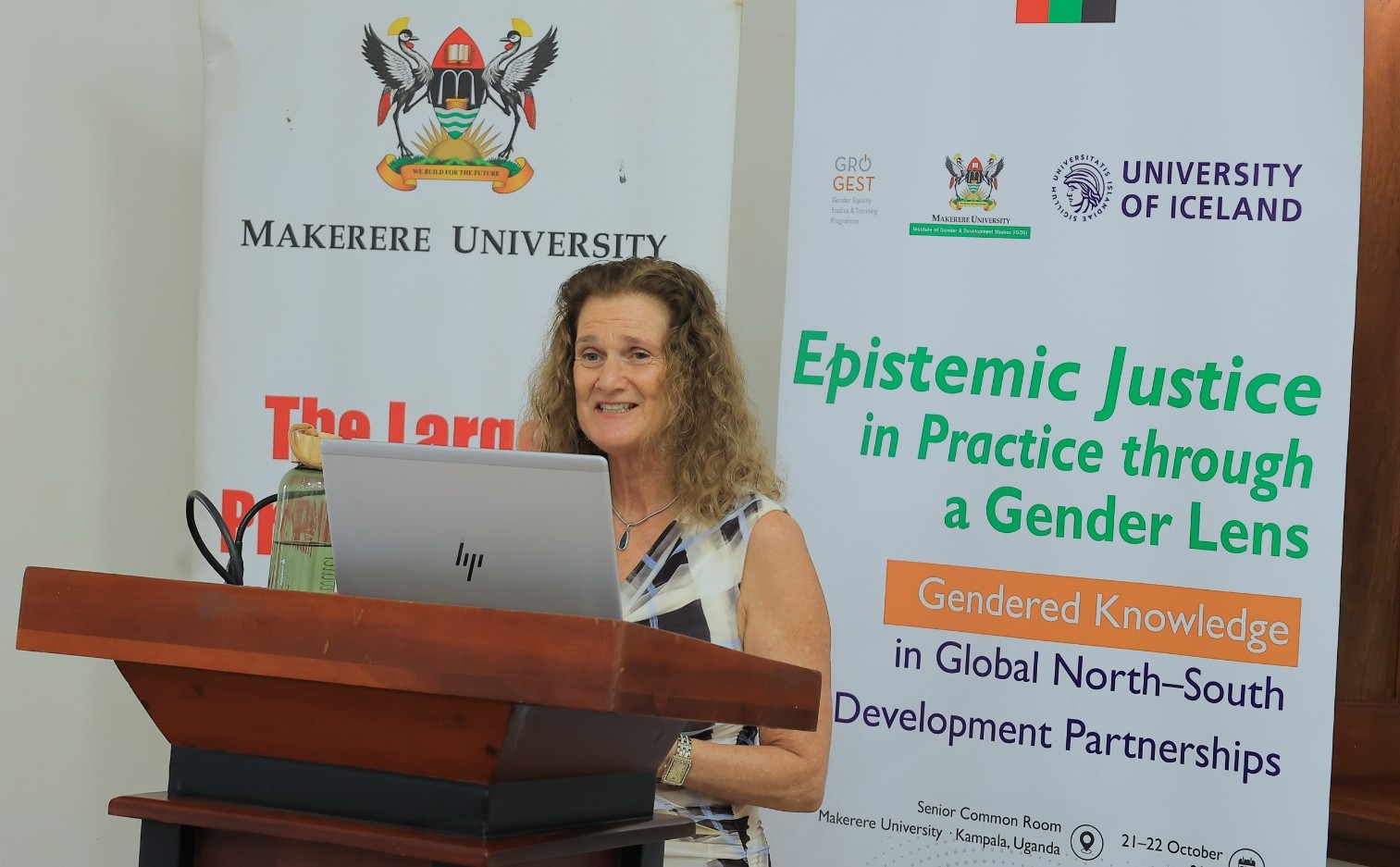
Prof. Tamara Shefer has called for a fundamental rethink of knowledge production and research practices between the Global North and Global South, arguing that international research partnerships must confront colonial power relations, extractive scholarship and the marginalisation of Indigenous knowledge.
Prof. Tamara Shefer is a Senior Professor of Women’s and Gender Studies in the Faculty of Arts and Humanities at the University of the Western Cape in Cape Town, South Africa. Her research focuses on gender justice, sexuality, critical masculinity studies and decolonial feminist perspectives within postcolonial and transnational contexts. She has published extensively on social justice, decolonising knowledge production and feminist scholarship, advocating for more equitable research practices that challenge colonial power relations and recognise diverse knowledge systems, particularly in North–South academic partnerships.
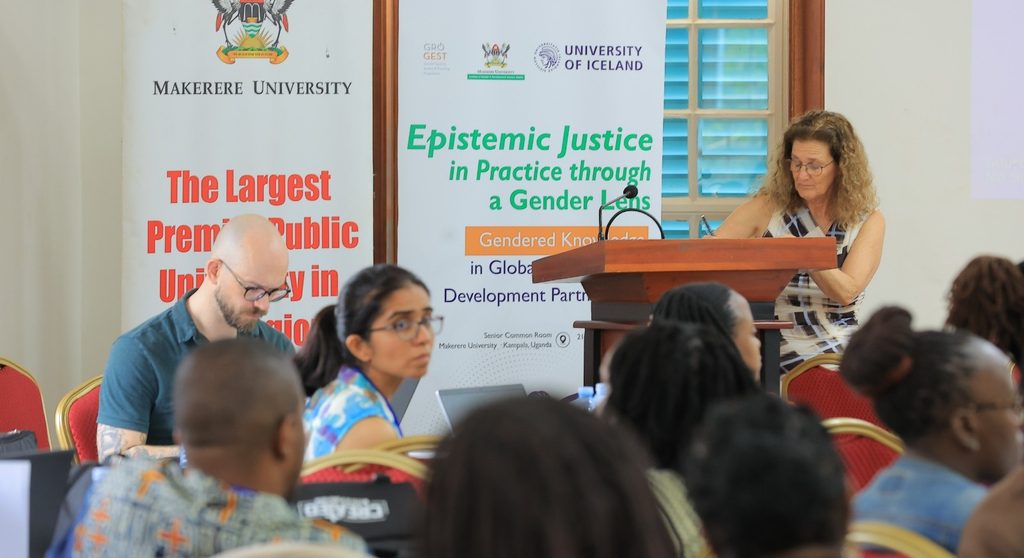
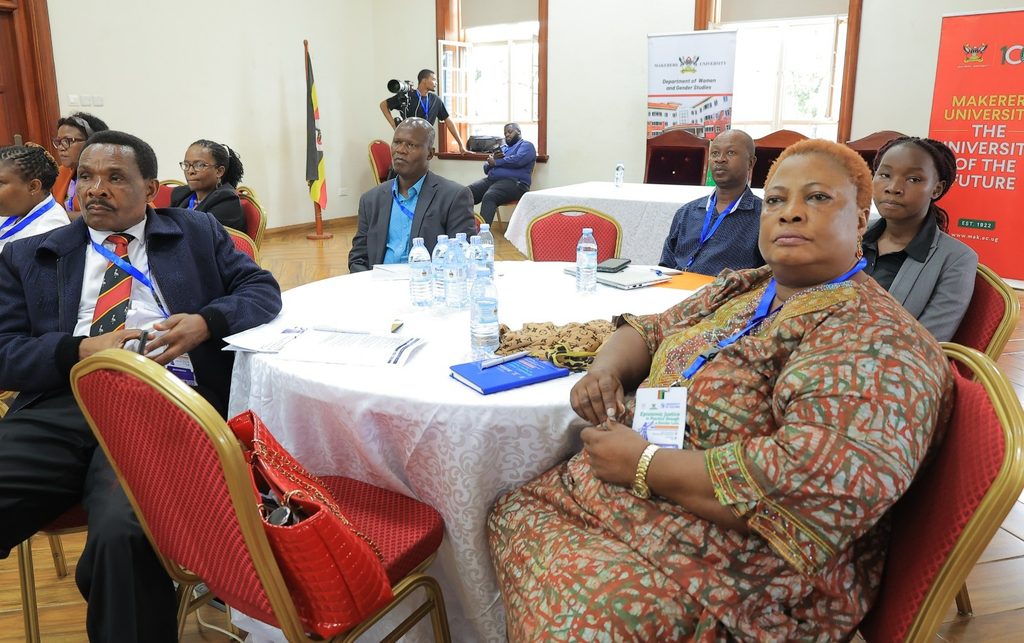
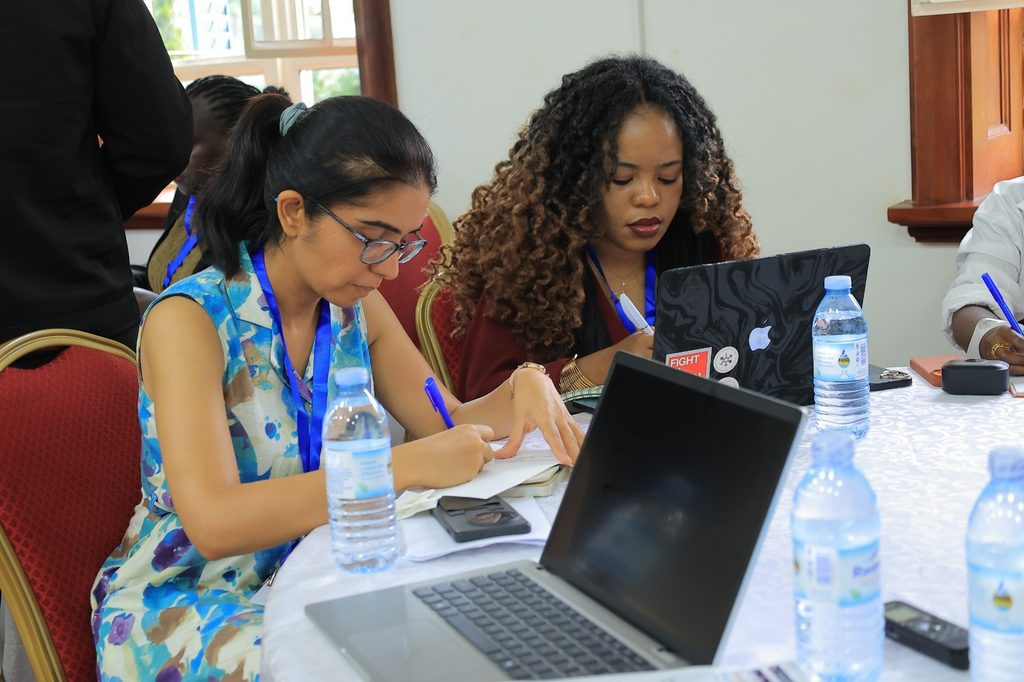
Delivering a keynote titled “Watery decolonial feminist thinking and praxis towards epistemic justice in North–South research” on 22 October 2026 – the second day of the Seminar on Epistemic Justice at Makerere University, Shefer challenged researchers to move beyond superficial changes in collaboration and participation towards transforming the assumptions that determine whose knowledge is recognised, whose experiences are studied and who benefits from research.
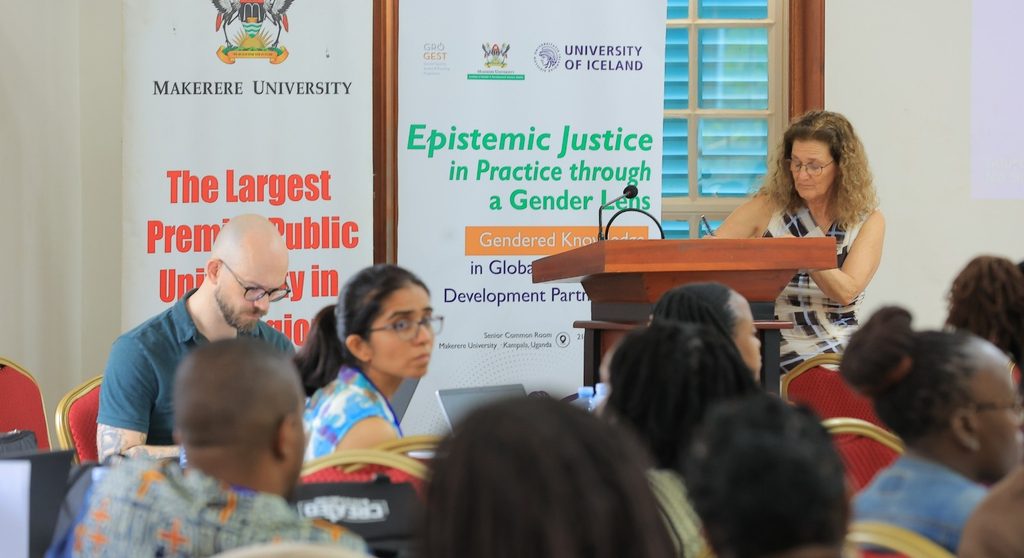
Drawing on her experience as a feminist social scientist researching gender, sexuality and power relations in South Africa and other African contexts, she argued that research involving the Global South has frequently reproduced the inequalities it claims to address.
“What is needed,” she argued, “is a radical rethinking of the logics that underpin our knowledge practices,” beyond simply changing who conducts research, who participates and how researchers collaborate.
Her keynote proposed watery decolonial feminist thinking as an alternative framework for understanding knowledge, drawing on the interconnectedness of human beings, other species, oceans, rivers, lakes and the wider environment to promote more ethical and historically conscious research.
North–South research risks reproducing colonial inequalities
Prof. Shefer traced the problem to longstanding inequalities in research funding, academic authority and internationalisation, which have enabled scholars from wealthier countries to establish research agendas in less privileged regions while benefiting professionally from knowledge and experiences gathered there.
Reflecting on a Finnish–South African research project on young people and gender justice, she recalled how international audiences showed greater interest in the South African researchers’ accounts, particularly those concerning violence, than in experiences from Finland.
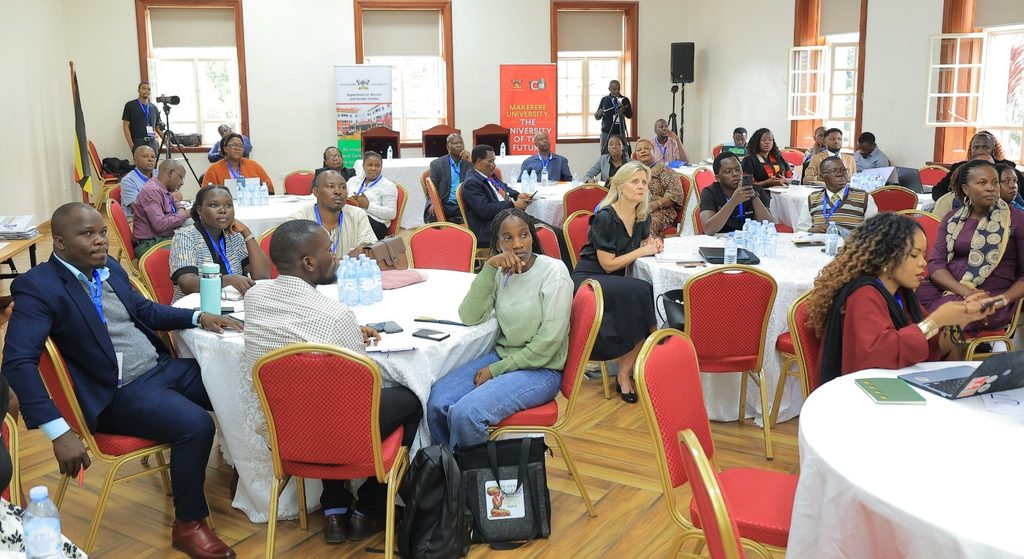
She said this experience prompted reflection on how research presentations could unintentionally reinforce stereotypes about young people in South Africa, portraying them as problematic while allowing Northern societies to escape similar scrutiny.
The experience, she explained, exposed how researchers themselves could contribute to the unequal representation of the Global South, even when their intentions were to promote gender justice and social transformation.
She also criticised research approaches in which scholars from the Global North initiate projects, rely on local researchers and fieldworkers to collect information, and subsequently leave without adequately acknowledging their contributions.
Such practices, she argued, allow international scholars to build their academic careers using the Global South as a source of research material, while institutions and communities in those countries remain disadvantaged by the same global inequalities that shape knowledge production.
Although greater collaboration and participation by Southern researchers are important, Prof. Shefer cautioned that these measures alone would not dismantle the underlying power structures.
She called for a deeper examination of the assumptions that determine what counts as knowledge, who is considered an expert and whose experiences are treated as legitimate sources of understanding.
Binary thinking marginalises Indigenous knowledge
Prof. Shefer further challenged the binary thinking underpinning dominant knowledge systems, which she said reinforces divisions based on gender, race, class and the separation of human beings from the natural world.
She argued that these assumptions privilege Western, white and male perspectives while positioning other people and societies as inferior, underdeveloped or in need of external intervention.
The result, she explained, is a knowledge system that often treats the Global South as a problem to be studied rather than a source of intellectual authority capable of shaping global debates.
She called for greater recognition of Indigenous knowledge systems and African philosophies that understand human existence through relationships with other people, animals and the environment.
Prof. Shefer noted that African and other Indigenous cosmologies have long recognised these connections, challenging the assumption that human beings occupy a position separate from or superior to the rest of the natural world.
She also called for scholarship to embrace creative and embodied approaches, including art, literature, poetry and film, to challenge the exclusion of the body, emotions and spirituality from conventional academic understandings of knowledge.
Water offers an alternative framework for knowledge production
At the centre of her keynote was the idea of thinking with water as a way of reimagining knowledge production and relationships between people, places and the environment.
Prof. Shefer explained that the human body’s dependence on water illustrates the interconnectedness of life and challenges the idea that individuals can be understood as separate from their surroundings.
She argued that this perspective offers a relational understanding of existence in which human beings are connected to shared water systems and therefore bear collective responsibility for their protection.
Water, she suggested, provides an opportunity to develop research approaches that move away from extractive practices and instead recognise the relationships through which knowledge is created.
The approach also challenges the assumption that knowledge must be produced exclusively through detached observation and conventional academic methods.
Drawing on Indigenous feminist scholarship, Prof. Shefer discussed the concept of sea-state epistemology, which explores how embodied experiences of the ocean can generate alternative ways of knowing, interpreting places and understanding relationships with the environment.
She explained that such approaches recognise sensory experiences, collective memories and spiritual connections as meaningful dimensions of knowledge, particularly for Indigenous communities whose worldviews have often been marginalised by dominant Western standards.
Through these perspectives, oceans and other bodies of water become more than physical environments. They can also be understood as sites of memory, knowledge, identity and resistance to colonial power.
Oceans preserve histories of colonialism and injustice
Prof. Shefer further argued that water offers a way to examine how historical injustices continue to shape contemporary relationships between people and places.
She noted that oceans, rivers and lakes can be explored through historical research, critical scholarship and artistic expression to reveal the enduring effects of colonialism, slavery, land dispossession and environmental degradation.
She used South Africa’s history of apartheid to illustrate how access to beaches and coastal spaces was shaped by racial segregation and restrictions on where people could live and move.
These histories, she argued, continue to influence how communities relate to the ocean and how they experience belonging, exclusion and privilege.
To illustrate the role of creative knowledge in confronting these injustices, Prof. Shefer referred to South African poet Koleka Putuma’s poem Water, which explores Black communities’ relationships with the sea against the background of slavery, historical trauma and racial exclusion.
The poem illustrates how collective memories of violence can shape present-day experiences of water, challenging simplistic assumptions about Black people’s relationships with swimming and the ocean.
She also discussed the documentary The Glow in the Water, which draws on conversations with coastal communities in South Africa’s Western Cape to explore the enduring connections between Black communities, the ocean and Indigenous healing practices.
The work demonstrates how communities have maintained their relationships with coastal environments despite historical attempts to sever those connections.
Prof. Shefer highlighted how Indigenous understandings of place challenge rigid distinctions between oceans, mountains and rivers, instead emphasising the interconnectedness of these environments and the communities that depend on them.
Towards more ethical and collaborative scholarship
Prof. Shefer’s keynote placed the responsibility for epistemic justice beyond the inclusion of more Southern researchers in international projects. It called for a transformation of the intellectual assumptions, research methods and institutional arrangements through which knowledge is produced and recognised.
Her argument was that equitable research partnerships must confront the inequalities that allow some scholars to control research agendas and receive academic recognition while others supply the knowledge, experiences and labour on which that scholarship depends.
By bringing decolonial feminist thinking into conversation with water, oceans and Indigenous knowledge, she offered an approach that connects social justice with environmental responsibility and historical accountability.
The keynote challenged researchers to reconsider not only how they work with communities in the Global South, but also how their research understands human relationships, collective histories and the wider world.
Ultimately, Prof. Shefer’s contribution called for knowledge production that recognises interconnectedness, confronts historical injustice and creates space for diverse ways of knowing to shape research and academic practice.